
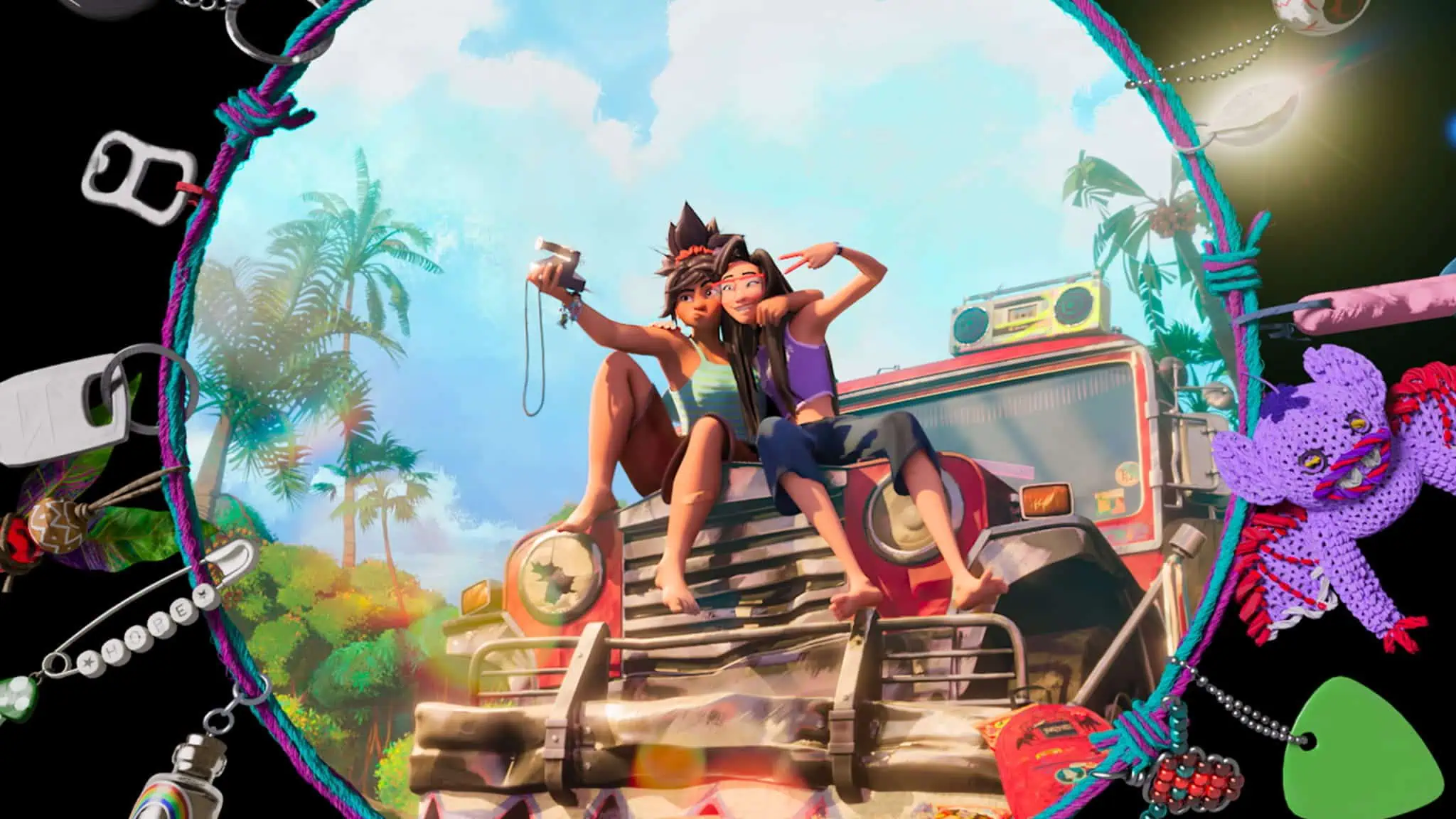
Why we should be watching Filipino animation
With Dreamworks' upcoming "Forgotten Island," as well as series and films out of the Philippines, Pinoy animation is on the rise
"Forgotten Island" is DreamWorks' first-ever Filipino American animated feature.
DreamWorks
Words by Grace Han
We are in the midst of the Filipino animation renaissance.
Dreamworks’ much awaited, first-ever Filipino American animated feature, Forgotten Island, will release in theaters on Friday. The sneak preview in June received a standing ovation at the Annecy International Animation Film Festival in France, where it joined a pantheon of not one, but three other Filipino diasporic projects premiering this year—including an animated documentary, a sold-out queer superhero feature, and a viral web series.
On the surface, this newfound boom of Pinoy animation should make sense. The Philippines is a historic hub for animation production. At its peak in the 1980s, the archipelago produced as much as a quarter of the world’s animation—with people working closely as subcontractors for studios like Toei and Walt Disney Animation. However at the time, many of these Filipino contributors counted as “below-the-line,” or technical labor, and could not own the IP for the animated projects that they worked on. By 2020, there were less than 15 animated features directed and produced domestically in the Philippines within its 100 years of cinema.
In the last few years, however, we have seen a new wave of Filipino-directed stories. In 2020, Avid Liongoren’s furry romantic comedy, Hayop Ka!: A Nimfa Dimaano Story broke records as the first-ever Filipino animated feature to screen on Netflix. Soon after, Netflix acquired Manila-based, mythical crime thriller series, Trese (2021); YouTube web series like Heneral Tuna (2021) and The Filipino Story (2023) have amassed more than 183,000 subscribers. Animated projects from both directors in the Philippines, as well as the diaspora, started to proliferate both online and on the festival circuits, leading us to where we are today.
To find out what changed, I reached out to two independent animation filmmakers on the ground: Liongoren and Carl Joseph Papa. Both pioneers premiered their features at Annecy this year. Liongren showcased his queer superhero romantic comedy, Zsazsa Zsaturnnah, and Papa competed with his animated documentary, 58th. They both have been at the forefront of the indie animation scene in the Philippines for the past decade.
International festivals and domestic support
Liongoren immediately links the rise of Filipino animation to its increased presence on festival circuits. Unlike Hayop Ka!, which had been an entirely domestic production, Zsazsa was developed with a European co-producer. International festivals like Annecy have not only provided a showcase for his work on a global stage, but have been critical to financing future projects. This has not changed how he still has to draw upon his personal personal savings and government grants, however. “This is where I can feel my taxes working for me,” he laughs.
Papa also attributes the rise of Filipino animation to more domestic support. “Once Liza Diño and Jose Javier Reyes stepped in (at the Film Development Council of the Philippines (FDCP)), there was more support for animated projects and their pitches,” he says, referring to the council’s new leadership. “But for private investors, it’s still a tough sell.” Papa recalls when he pitched a 15-20 million-peso project to a film studio. They turned him down, reasoning that they can make three live-action films instead with that budget. “Making animation is expensive,” he says with a sigh.
As a result of the FDCP, Papa’s, and Liongoren’s efforts, however, other local infrastructures have started to develop. Papa points out that live-action logistical difficulties during the COVID-19 pandemic encouraged a boom of animated music videos. Local festivals, such as the FDCP’s I ANIMATE and Gawad Alternatibo, also became watering holes for showcasing domestic animation. Moreover, undergraduate institutions—including Ateneo di Naga University, De La Salle - College of Saint Benilde, and iAcademy—are central to training the next generation of animators.

Carl Joseph Papa competed at this year's Annecy International Animation Film Festival with his animated documentary, "58th."
Courtesy of Carl Joseph Papa
Introducing Filipino culture to the world
Yet, for the pioneers of the Filipino indie animation scene, the struggles continue. Papa says, “Filipinos are not aware that we can make animated films from the Philippines…and we are not used to seeing them, so they keep comparing (Filipino animated films) to Western animation and anime.” This becomes difficult, he explains, when the budgets for a foreign studio production can be vastly different from a domestic film. “This is why we turn to international film festivals, to gain more traction at home,” he says.
Moving forward, both directors have entertained the idea that international co-productions and diaspora connections could help finance future projects. Papa notes how only he and Liongoren regularly reach out to international co-producers, and he encourages other animators to do the same. However, Liongoren says these partnerships can come with their own unique set of hurdles. He recounts how a French co-producer told him that he had to negotiate a character’s body language to suit an international audience because they are “not Japan” for his first feature, Saving Sally (2016).
“When people see Japan, they understand its quirks, and that they are entering a Japanese film. (She told me that) my project, being Filipino, would not be received with curiosity, but just no understanding,” he recalls. “My hope is that whatever our cultural quirks are would be a curiosity, and not just something of disinterest or misunderstanding.”
Diasporic production also seems to present a promising avenue for collaboration. Both animators referenced Oscar-nominated Filipino American director Bobby Pontillas (2018’s One Small Step), who joined them at Annecy with the pilot of his web series, Sunchaser. They also cited Forgotten Island, which will highlight stars including H.E.R., BINI, and Lea Salonga.
Never giving up
In light of all the optimism about the future of independent Filipino animation, I asked about the elephant in the room: artificial intelligence. The opinions between the two directors differed. Papa, who has a background in software engineering, seems more optimistic about how AI could be used as a tool to help animators. He notes how he could use it to optimize his workflow, like summarizing big documents. At the same time, he advocates for government regulation. “If there’s any way to regulate (AI), it’s not going to happen by ourselves or just by industry,” he says. “The government has to help, or the entire filmmaking community has to make a stand to not use it.”
Liongoren, on the other hand, is more pessimistic. “I don’t know what part we are in the narrative arc,” he confesses. “Is this the denouement, or is this the end? Are we approaching the apocalypse—that is, the post-apocalyptic world of this industry—or is this the trying time before things get better?”
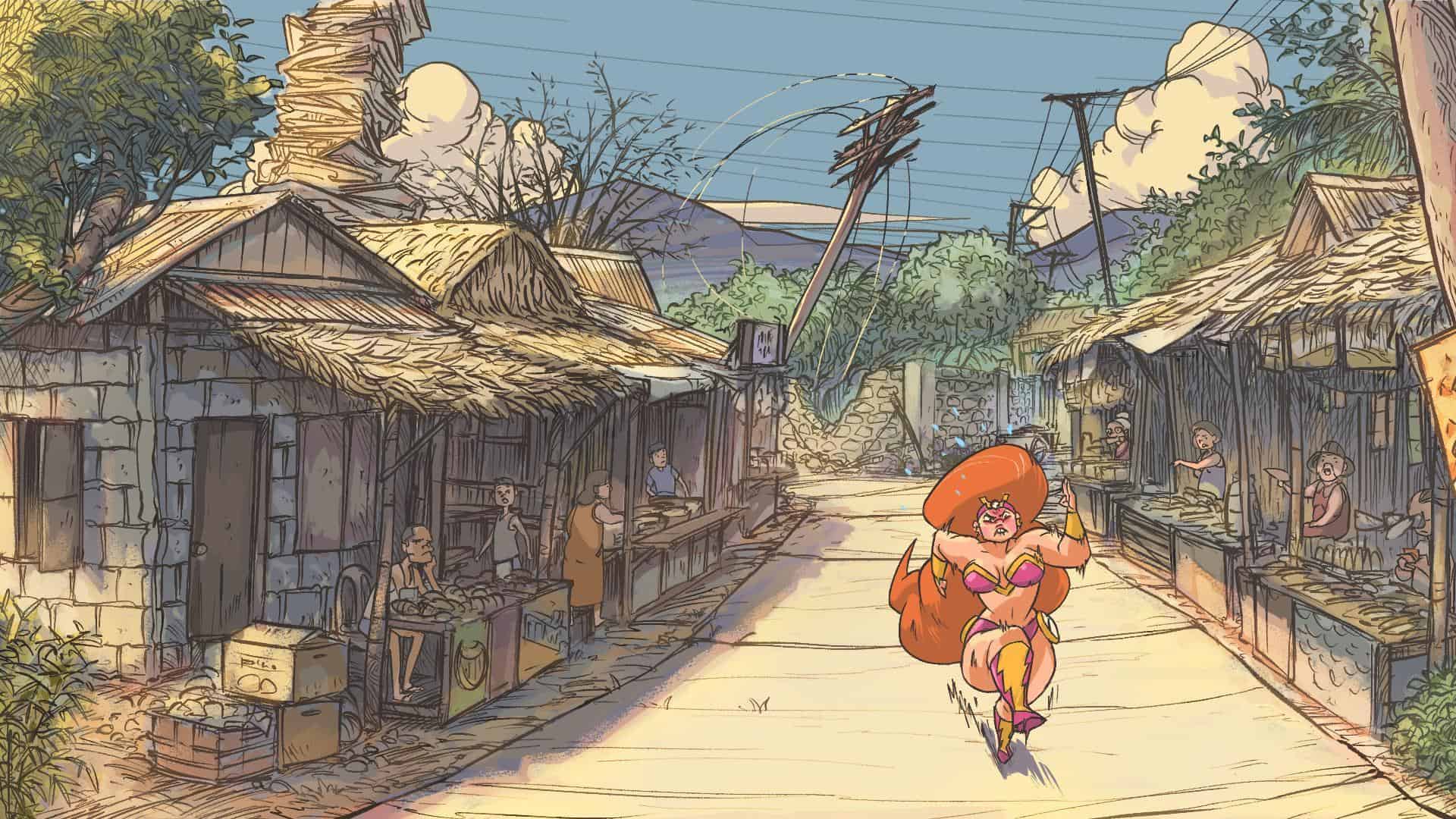
Avid Liongoren's "Zsazsa Zsaturnnah" is a queer superhero romantic comedy.
Courtesy of Avid Liongoren
Regardless, both directors say they could not give up their craft. International interest in independent Filipino animation has started to take root, and now it is time to continue to nurture what they had started. Papa reminds me, “The main goal is for more Filipinos to create more stories for Filipinos by Filipinos.”
Liongoren agrees, and insists that there needs to be more international exposure to Filipino content. “It doesn’t have to be grand. It’s our culture, our stories. It just has to be out there,” he says. “There’s a belief that you need the world to like you, but we don’t need to be liked. We just need to take up space.”
Published on September 21, 2026
Words by Grace Han
Grace Han is a doctoral candidate in art history at Stanford University, where she researches digital animation in contemporary art and film. She is also a Rotten Tomatoes-approved freelance film critic and programmer who specializes in global Asian animation, and currently serves as the secretary for GALECA: The Society of LGBTQ+ Entertainment Critics. Her words can be found in the Korean Film Council's Ko-Pick News, Hyperallergic, Cineuropa, Asian Movie Pulse, among others, and she has been consulted on her areas of expertise by Mubi Notebook, BBC, and Amazon Prime Video.