
Why it took Na Hong-jin 10 years to make ‘Hope’
A decade after his last film, the South Korean filmmaker returns to the big screen with an action-packed creature horror
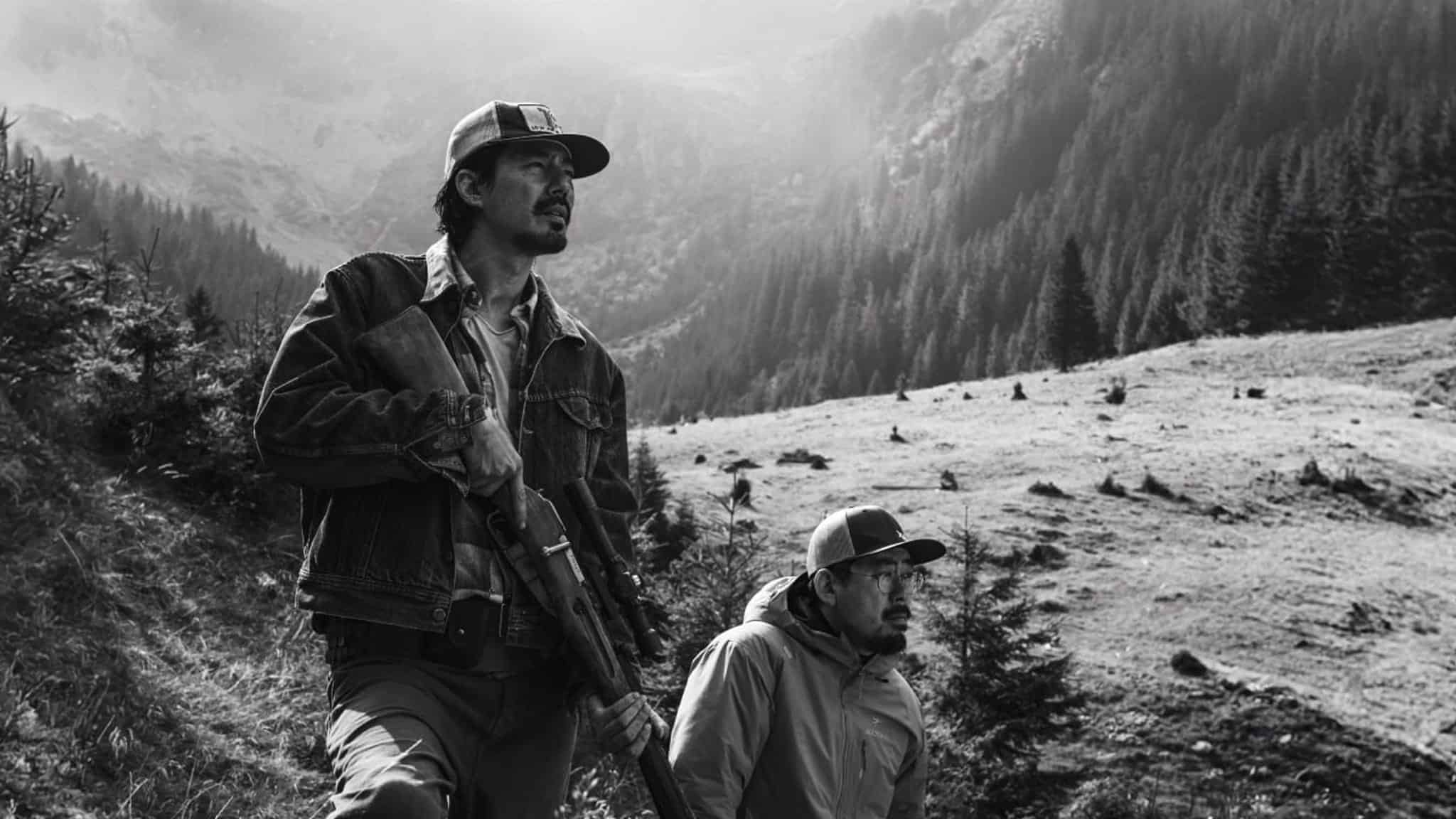
From left, actor Zo In-sun and director Na Hong-jin on the set of "Hope."
NEON

Words by Brandon Streussnig
In the sleepy seaside town of Hope Harbor, the unimaginable lurks. What begins with the investigation of a slaughtered cow quickly turns into something much stranger and more terrifying. After being told it was probably a tiger, police chief Beom Seok (Hwang Jung-min) attempts to determine what kind of creature he’s after and returns to find the village under attack by a gargantuan monster. From there, along with rookie cop Sung-ae (Squid Game’s Hoyeon), Beom Seok finds himself and the village in a fight for their lives against something far worse than just one monster.
Hope is director Na Hong-jin’s first feature in a decade. After crossing over in the West with his horror film, The Wailing (2016), he spent the next 10 years developing Hope. A sprawling, chaotic film, Hope feels as much the start of something much, much bigger as it does a self-contained creature-feature. In a film that’s already baffled and thrilled viewers in equal measure, Hope seems to be just one part of a story that Na hopes to continue. On its own, the film is as exhilarating as action gets. By mixing the CGI creatures into real stunts shot on real locations, Hope immediately stands out in a landscape of blockbuster cinema that appears sludgy and green screened to death. As our heroes race through forests and careen around tight corners in the village, you often lose sight of the fact that these creatures aren’t, in fact, there. The CGI becomes an afterthought next to set pieces that call to mind the most absurd and ecstatic of Michael Bay’s Transformers franchise. A game cast sells it (including Michael Fassbender, Alicia Vikander and Taylor Russell in wild roles), but it’s Hoyeon who walks away with the film. In a breakout role for the ages, she immediately looks right at home firing a giant gun and drifting her police cruiser around the carnage.
With Hope now out in theaters, I sat down with Na during the film’s centerpiece screening at the New York Asian Film Festival back in July.
This interview has been edited for clarity and length.
Brandon Streussnig: This is your fourth film, and it took around 10 years to make. I know you first had the idea sometime after The Wailing. What went into developing the film during that time?
Na Hong-jin: I started writing the script in 2017, and in 2018 I completed a first draft. Then, it started with editing, revising the draft, and also thinking about design, location scouting, and storyboarding. Because the story is much longer than what we see in this film, I felt I needed to prep for what was about to unfold, which is why it took longer. But for this film specifically in 2022, we went into pre-production in 2023, then we shot, and we’ve been in post-production till today, the day we’re speaking.
BS: The action is so intricate in the film. I really appreciated how much of it was shot on real locations, with the CG added afterward. How important was that approach to you, especially given how much blockbuster action is now shot in the volume or in front of green screen?
NH: Absolutely, it’s so important. My vision was for these creatures and VFX elements to coexist with the actual physical action in the film, because I felt that their coexistence would aid not just the storytelling and plot, but also the film's message.
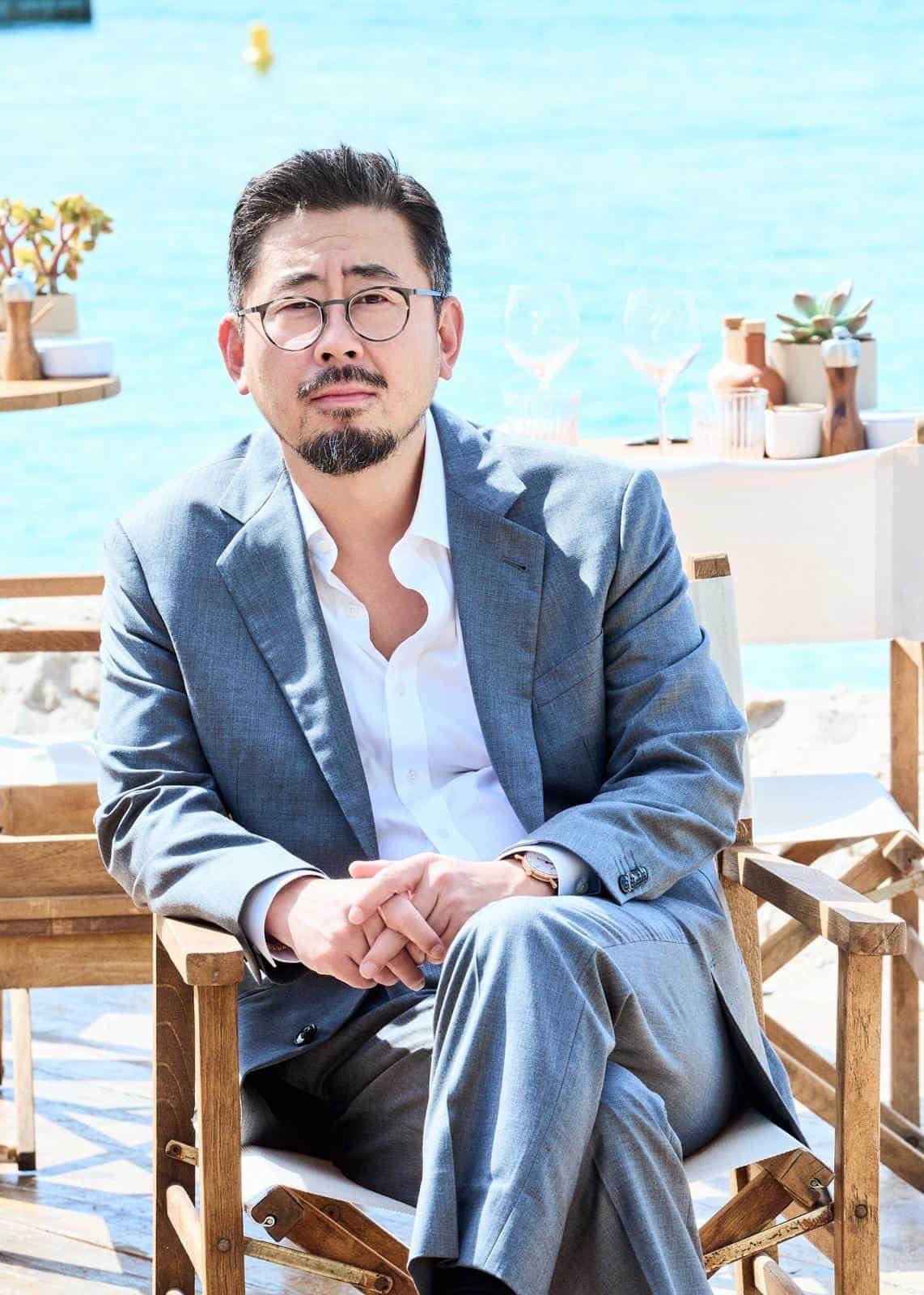
Director Na Hong-Jin
NEON
BS: Another way you accomplish that is through the geography of each scene. You worked with cinematographer Hong Kyung-pyo, with whom you also collaborated on The Wailing. How did you craft the action with him?
NH: I think in terms of the camera work with the action, we were operating from a similar principle or concept throughout. We varied that by finding new locations. Then, in the locations, we wanted to vary how the subject moves differently in a frame. Because the shooting limitations we had for this were pretty clear, we worked with 12-13 setups that we had. Then we varied by altering speed or how a subject moved in that space.
BS: You have a great cast, including Hwang Jung-min, who you worked with on The Wailing. But Hoyeon really blew me away, particularly with how convincing she is in the action. Even the way she handles a gun is incredibly realistic. What was the rehearsal process like with the cast, and specifically with her?
NH: When she was cast in this film, I asked for six months of her time because it was her first time filming a movie in Korea and shooting anything like this. I wanted to give her some time to prepare and acclimate to the filmmaking process in Korea. She actually had firearms training about twice a week. So it was a lot of handling the firearms, even posture, loading, and unloading. Every bit that has to do with firearms, she was training for that. She was also doing a lot of strength training, and she took driving lessons because she had to learn to drive a manual. She got a license for that and was always practicing driving. Even with the drift sequences, she was practicing that as well. So she came super prepared, and I think it's really evident in what you see on screen.
BS: Speaking of the driving, there are several great chase sequences, including the climactic chase with people hanging out of cars and Michael Fassbender’s character pursuing them. How did you build that sequence?
NH: For this film in particular, it is really important to have the actual speed so that it actually reads on screen. Usually in films for car scenes, when you're at 40-50 kilometers per hour, you can achieve that illusion of a higher speed on screen. But we need a lot more for this because it was much faster-paced. The actual speed we were filming at for the cars and the horses was about 60-70 kilometers per hour. When we were shooting Michael's sequences and when he's chasing them, we even went up to maybe 100 kilometers per hour, which is very fast. We needed the horse and the car to accelerate to a speed suitable for shooting.
So for that, for the car and the horse, that would be like 30-40 kilometers per hour. So once we reached that speed, we would bring the actors in, and the cameras would start rolling. It was a long road, obviously, but there was just not enough time. So we sort of divided the road into sections and then went back and forth as we kept on doing multiple takes. I think the whole road was maybe like 11 kilometers. So we split that into thirds, and each section was maybe four or five kilometers. So we were going back and forth and doing that over and over. To protect the actor, especially on horseback, we actually constructed an arm that would hold onto the actor. So whenever the actor felt like he or she was tilting too much or that they would fall, we would have stuntmen hold on and figure out how to get the actor out and off through the arm and into the wires.
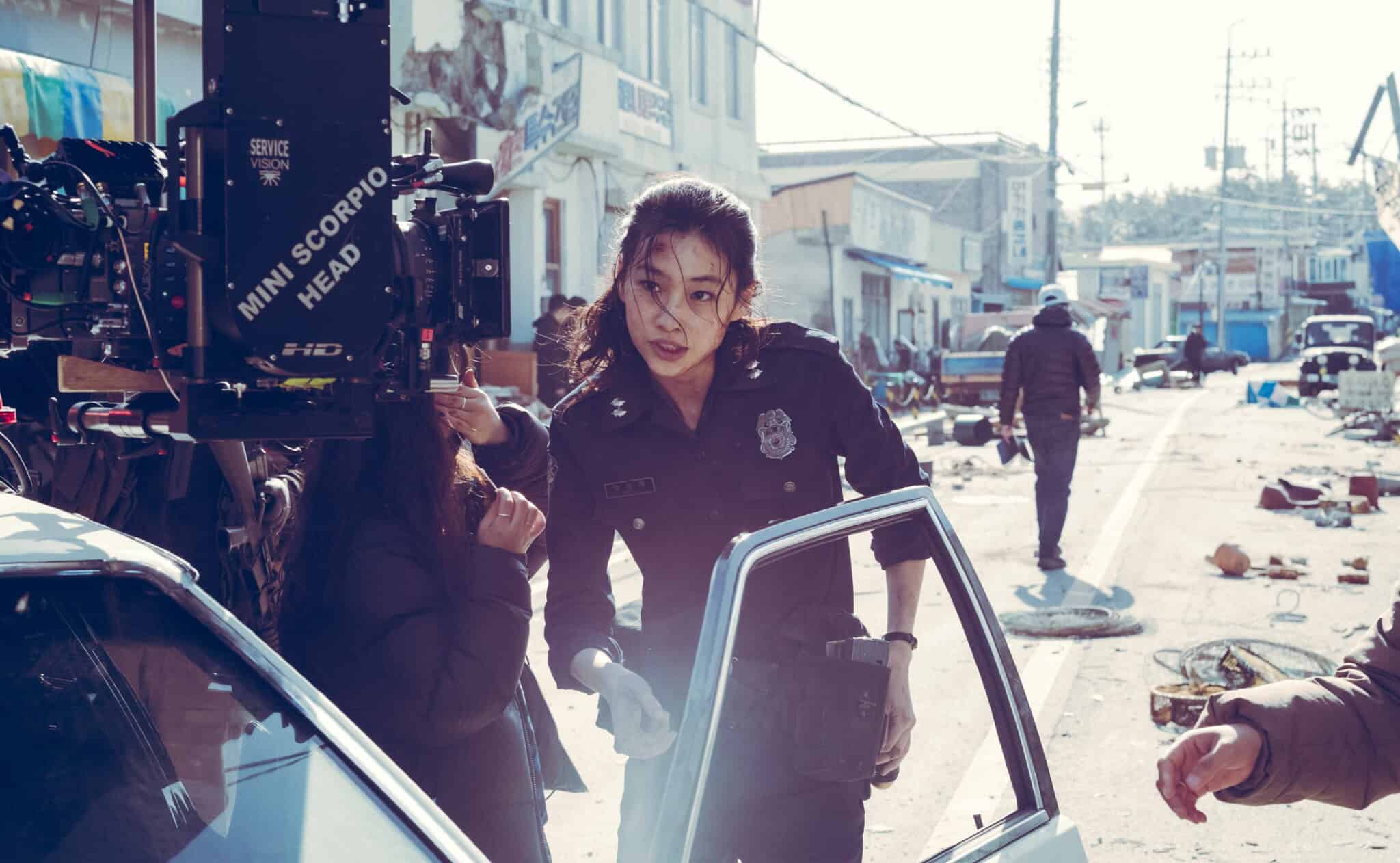
Actress Hoyeon behind the scenes of "Hope."
NEON
BS: Was it always conceived as having Western actors, such as Michael Fassbender and Alicia Vikander, play those characters?
NH: I told the whole story to Alicia, not just the film portion, but the entire story, and she said yes. From then on, I gained confidence to be like, "Oh, okay. I can keep asking other actors as well." There was actually a film Alicia was producing, and we were in talks to produce it together. But then, in that conversation, Hope came up, and that was the natural progression.
BS: You mentioned that this is part of a much bigger story. Without spoiling the ending, there seems to be room for more. Is continuing this story something you’re interested in?
NH: Yeah, I have the entirety of the story prepped. I'm good to go on making the next film, but I'm sort of timing it. I'm testing the waters and seeing how the situation plays out. I also want to work on something a little different, something where the actors are not always running, something where the actors are standing and sitting, something with more night scenes, and something with some blood in it. So that's a different project that I might be working on next.
BS: I read an interview with you where you talked about wanting to push Korean cinema forward, but it feels like you’re really pushing cinema forward more broadly with all of your work. You’re always doing something unexpected. What did it mean to have this film play in competition at Cannes?
NH: I was very pleased to be invited. I had my concerns about, “Oh, is this film too commercial, too simple, or too entertaining,” if there is even such a thing. But yes, being invited to Cannes was such an honor, especially to compete. That was really such an honor.
Published on September 15, 2026
Words by Brandon Streussnig
Brandon Streussnig is a film journalist based in New York City. His bylines include Vulture, GQ, Men's and Women's Health, The Ringer, Letterboxd Journal, and many more.