
‘Wedding Palace’ takes us back to a simpler time for romance
Thirteen years later, the Asian American rom com finds a new audience on JoySauce TV, reminding us what dating was like before all the apps
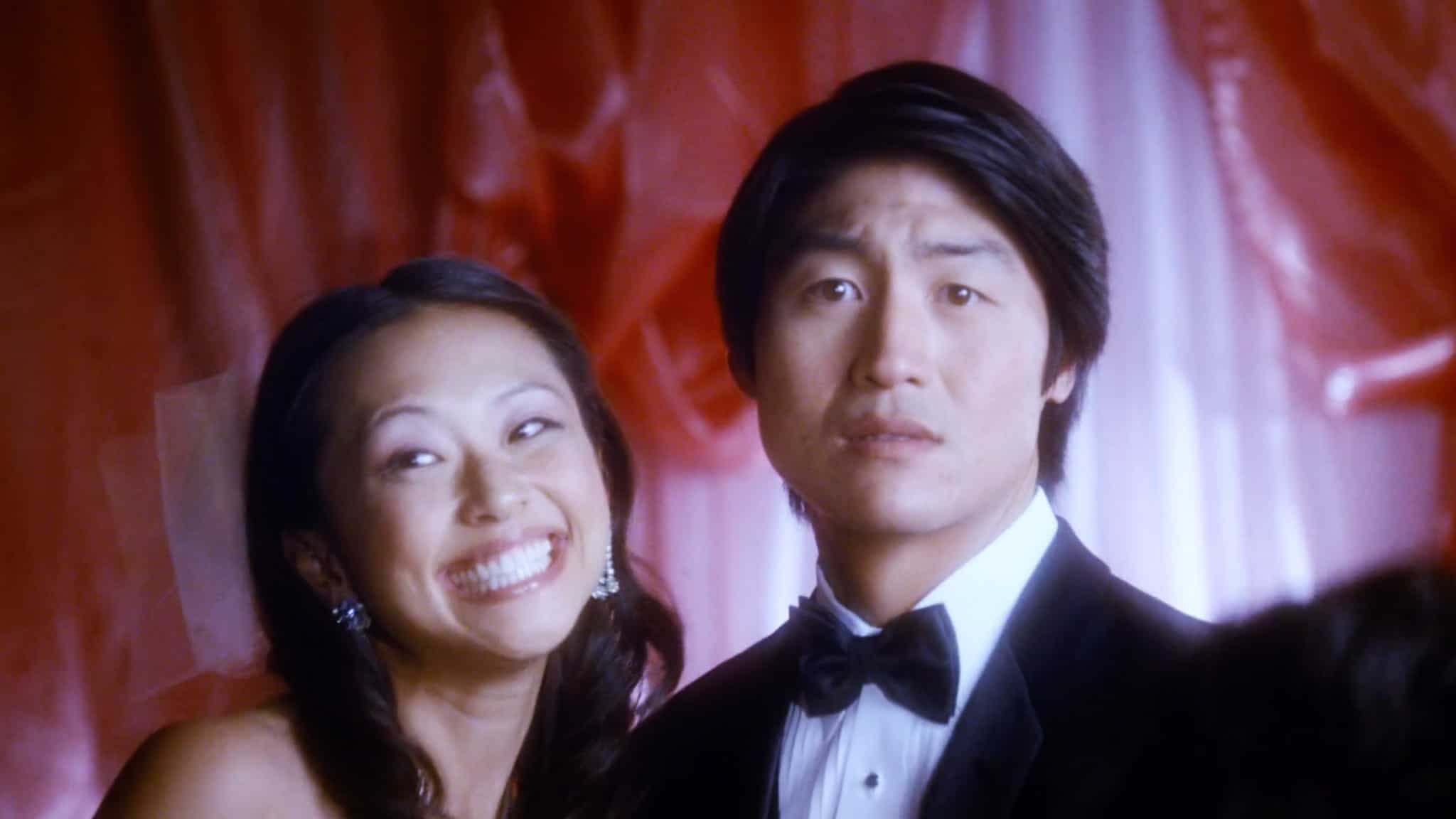
From left, Joy Osmanski as Jinnie and Brian Tee as Jason in "Wedding Palace."
JoySauce TV

Words by Andy Crump
Have you tried dating in 2026? It’s a f*cking nightmare. Text threads on apps like Hinge and Feeld carry on interminably until one of the two parties either loses interest and goes silent, or unceremoniously pauses their account. In both cases, the outcome is the same—though each hits differently in their own unpleasant way. Where did you go wrong? Was it something you said, or something you didn’t say? Did another potential suitor divert your match’s attention away from you? (Did they have an actual real-life emergency that demanded they fall off the face of the online world? That’s forgiveable, if a bummer nonetheless.)
It’s enough to make a lonely heart yearn for the days when we didn’t negotiate romance in digital spaces, though Gen Zers have little to no frame of reference for that period and those spaces have been de rigueur for elder Millennials long enough for the pre-Internet age to have faded into memory. What’s wrong with meeting face-to-face and fostering a relationship through emails and video calls, like Na-young (Kang Hye-jeong) and Jason (Brian Tee), the starstruck paramours of Christine Yoo’s Wedding Palace? Figuring out why the film has found an audience on JoySauce TV takes light lifting; nostalgia’s pull is hard to resist when the valid reasons for feeling nostalgic present themselves. Perhaps things were better, or at least simpler.
Wedding Palace, which had its 13th anniversary on Sunday, commences on the nuptials of Jason and Jinnie (Joy Osmanski), who we barely meet before she up and leaves him for the cake decorator while he’s standing at the altar. In a vacuum, this sucks. In the context of Jason’s family history, it’s deadly: a curse has hounded his family’s name dating back centuries, dooming them to perish if they fail to marry before they turn 30. Yoo shows the audience the curse’s birth through coarsely animated interludes, in which Jason’s great-to-the-umpteenth-power ancestor two-times his bride-to-be on their wedding day—apparently, he had a BDSM fetish—and thus fated all in the family line to either find true love or bite the dust. It’s up to Jason to achieve the former to avoid the latter. No pressure!
His meet-cute with Na-young takes place in South Korea on a business trip. She backs him up during a meeting that nearly goes disastrously for him. Being the sensitive type, he works up an advertisement for his clients selling feminine care products to dudes. His clients, being men and not dudes (there is a difference), receive the work in outrage until Na-young gives her thumbs up as a woman. He’s a modern fellow, that Jason, attuned to what ladies want and need from their partners. In a way, he’s a model for Kylan Heiner’s gentle “Alpha” archetype: he absolutely will not let his partner down, even though, in the case of Na-young, an ocean lies between them. Wedding Palace’s male viewers would do well to take notes from him. (Maybe they already are.)
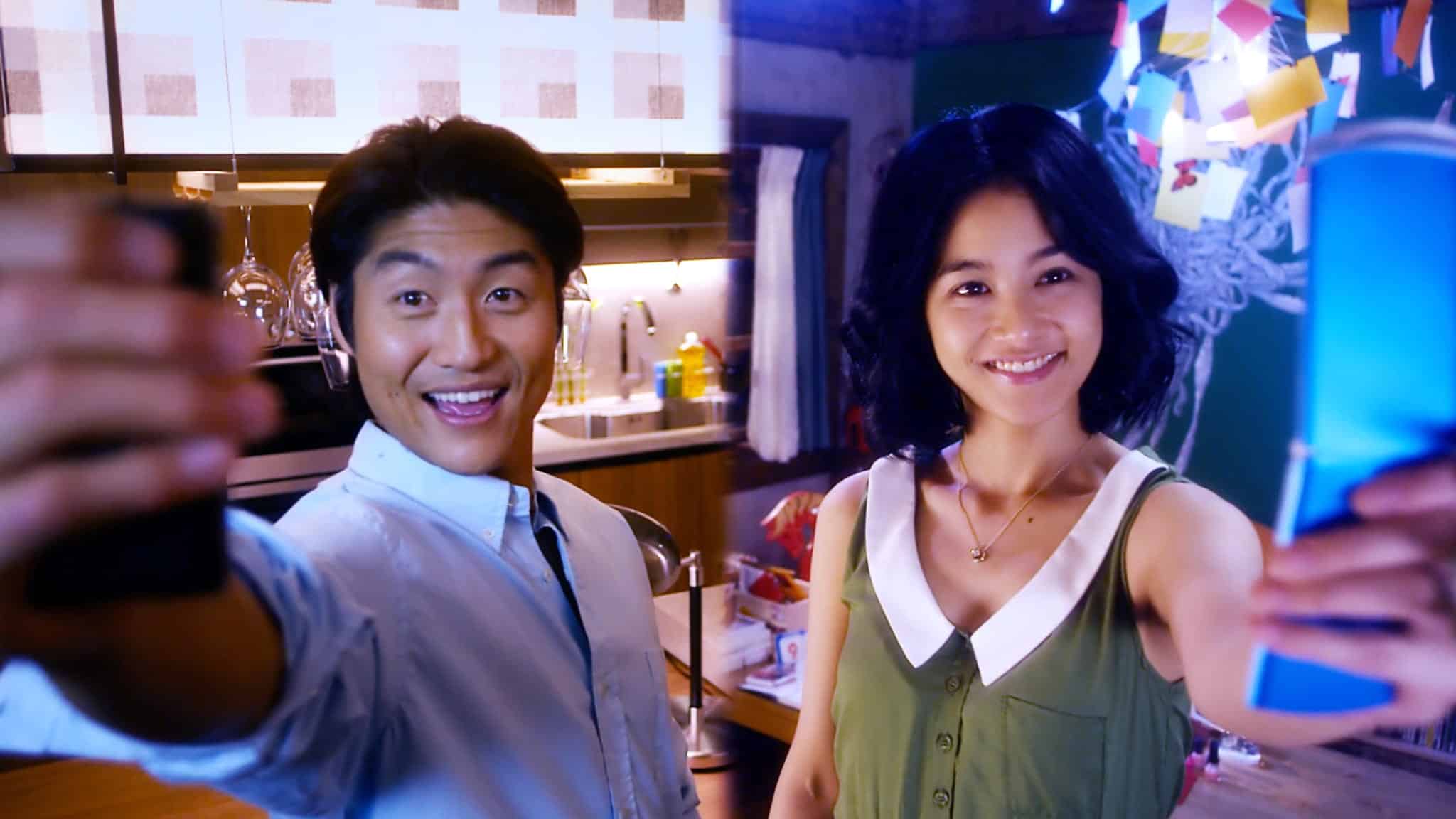
From left, Brian Tee as Jason and Kang Hye-jeong as Na-young in "Wedding Palace."
JoySauce TV
Nothing goes according to plan here, of course, or else there wouldn’t be a movie; what exact wrench it is that Yoo throws into the gears is best left discovered by the audience. Suffice it to say that Wedding Palace is a production of its time, one billed as the first Asian American romantic comedy. This is a spurious claim; Alice Wu’s Saving Face (2004) predates Wedding Palace by seven years, and Ang Lee’s The Wedding Banquet (1993) by 20. On the other hand, the film predates the contemporary blueprint for AA+PI rom-coms, being Crazy Rich Asians (2018), as well as subsidiary followups like Always Be My Maybe (2019). Fair is fair, even when fairness is unflattering: neither Jason nor Marcus, Randall Park’s character in Always Be My Maybe, are as smooth, not to mention as incalculably wealthy, as Nicholas, Henry Golding’s character in Crazy Rich Asians. Taken together, they make a triptych of 2000s- and 2010s-era romantic leads in AA+PI rom-com cinema that comprise a range of male neuroses as well as how factors like, say, class influence a man’s ability to maneuver through dating life.
In Wedding Palace’s case, Jason has juice. His mother, Mi Sook (Jean Yoon), operates the wedding palace—hey, that’s the name of the movie—where his weddings to Jinnie, and eventually Na-young, are held. He gets the royal treatment here, though that means accepting the fact that Mi Sook consequently holds both ceremonies’ reins. But wealth is rarely actually a subject of conversation, much less thematic exploration, over Jason and Na-young’s personalities and their depth. Jason is—to use a tired, bland, but sufficiently accurate term—a good guy defined much more by who he is than how much money is in his bank account, which is a nice detail to latch onto given that we’re still talking about a man’s ability to earn as a meaningful trait over his ability to be empathetic and kind. But he isn’t perfect, and, as we learn in the second act twist’s fallout, he’s shallow, to his own surprise, as well as Na-young’s dismay. The superficiality is specific, but the specificity is, for Na-young, ultimately what matters.
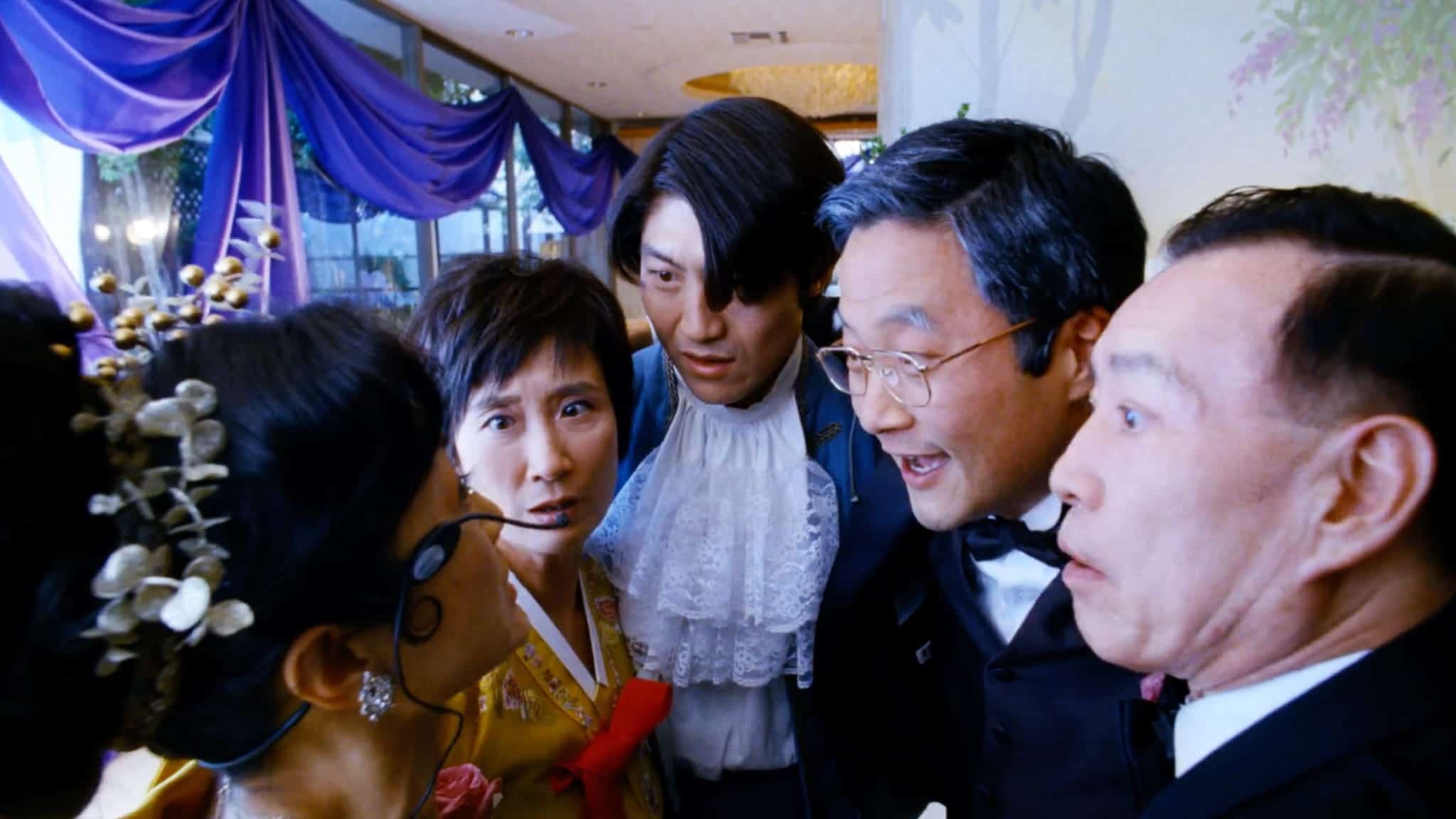
"Wedding Palace" was released over 13 years ago, and was billed as the first Asian American romantic comedy.
JoySauce TV
Look, dating’s always been hard, but it’s downright Sisyphean when one can’t trust that the people they connect with online are dependable and sincere, much less even exist. (Fake accounts litter the apps.) Trust is supposed to be a responsibility, not a landmine. Naturally, Jason and Na-young encounter their own difficulties, at first on account of being long-long-long-long distance, and later because he can’t get over a flaw of hers that frankly isn’t even a flaw; his hang-up is consequent to his failure to ask Na-young basic questions. How refreshing would it be, though, to merely have a misunderstanding today instead of being ghosted or catfished?
Published on September 28, 2026
Words by Andy Crump
Bostonian culture journalist Andy Crump covers movies, beer, music, fatherhood, and way too many other subjects for way too many outlets, perhaps even yours: Paste Magazine, Inverse, The New York Times, Hop Culture, Polygon, and Men's Health, plus more. You can follow him on Bluesky and find his collected work at his personal blog. He’s composed of roughly 65 percent craft beer.