
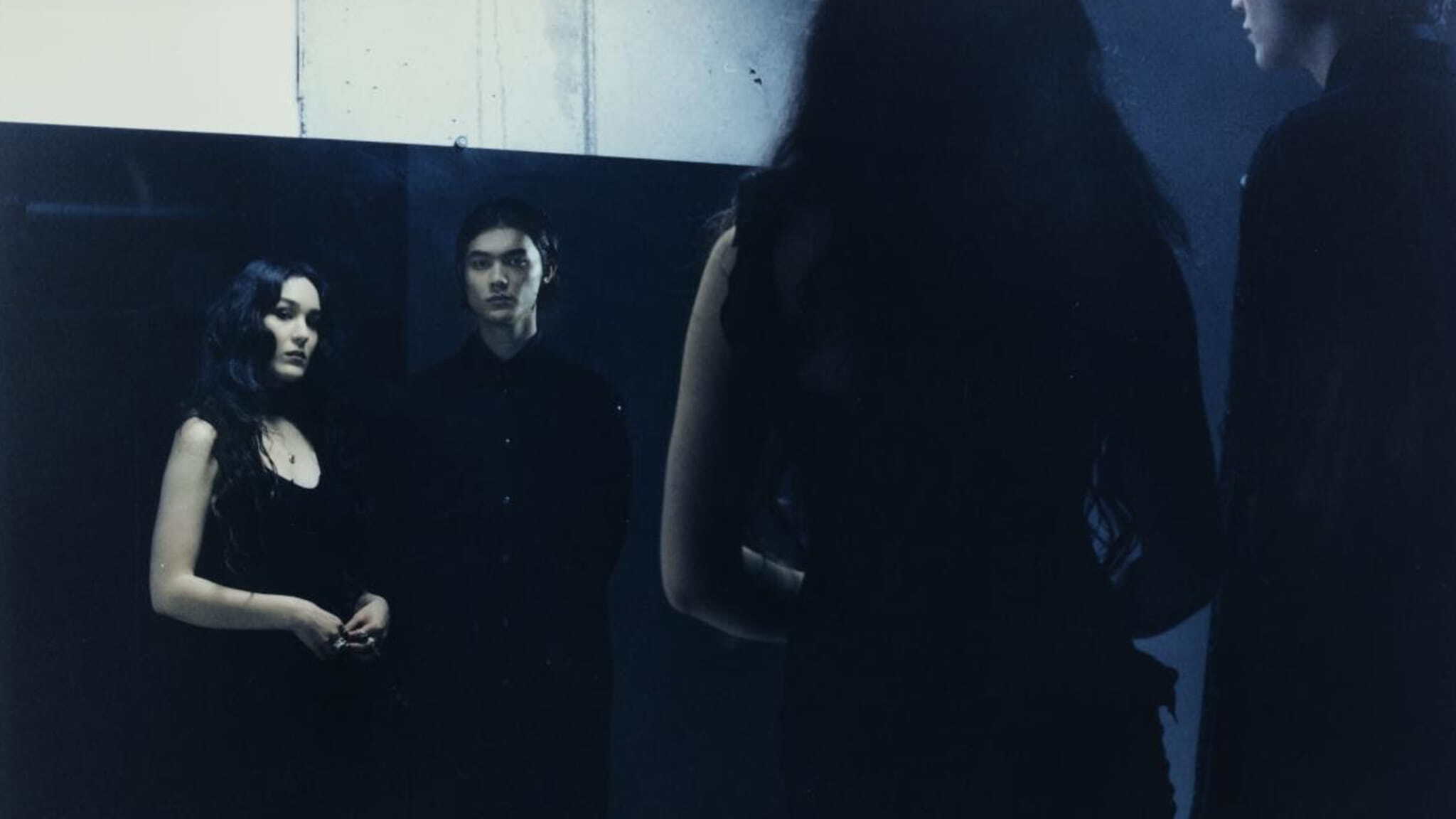
Wasia Project’s ‘Nocturne’ is an ambitious step in the duo’s progression
After a trio of EPs, siblings Olivia Hardy and Will Gao bring rises and crescendos with their debut studio album
"Nocturne," Wasia Project's 12-track debut album, released on Sept. 18.
Claryn Chong

Words by Andy Crump
Rating: 3.25 out of 5 stars
Here’s a fun fact: Wasia Project, the operatic electronica collaboration between siblings Olivia Hardy and Will Gao, has released a combined 63 minutes and change of music across multiple extended plays, clocking in at about 13 minutes more than their debut full-length record, Nocturne. Their discography’s breadth would seem to suggest that they’re acclimated to the notion of longer plays; with more than an hour’s worth of recorded songs under their belt, what’s another 50 minutes?
 The difference between an EP and an LP, however, is akin to the difference between a short film and a feature, in that the additional creative space is a promising challenge as well as a daunting one. “More,” for either new or up-and-coming artists, can present an obstacle. It sets an expectation, requires one to produce more tracks than they’re accustomed to at a whack, and subsequently introduces more opportunities to stumble or lose oneself in the work. Rather than expand a musician’s sound, that leap can dilute it, should they find themselves overwhelmed by the freedom and the room an LP affords them. Sometimes, less really is more, depending on the artist.
Not so for Hardy and Gao. Nocturne is a superb realization of the work they’ve done in smaller bites, a’la Isotope (2024), how can i pretend? (2022), and Vogue, issued earlier this year ahead of Nocturne’s release last month. Imagine a very good foundation, then building a very good house on that foundation, then building a very good addition onto that house half a decade later, when the family has long outgrown the original floorplan and has become stifled by consequence. That’s the effect of Nocturne as essentially a capstone to Wasia Project’s EP catalogue. Their core personality remains the same, both as a duo and as individuals, but they’ve learned new ways to express themselves and fill out their sound. What results from those efforts is robust, and in lockstep with the siblings’ progression since forming the band in 2019.
If Nocturne can be described as a journey writ large, then each of its 12 tracks comprises a jaunt unto themselves. This is a record of rises and crescendos, which means that it’s a record that hinges on tonal shifts and style pivots. A song may start out contemplative and moody, but conclude with the same energy as a nightclub bop, evoking the air of a low-lit dance floor speckled by neon. Take the album opener, “2515,” a pseudo-dirge on which Hardy reflects on a sour relationship: “I just don't get it, you only love me, baby / When you bring me down (Down, down, down),” she sings on the chorus as the tempo kicks up from melancholic to something resembling triumphant. The beat quickens. The lament in Hardy’s words about the implied abuse dynamic she’s stuck in gives way to an extrication from her circumstances.
“Call me when you want to know the real thing,” Hardy trills as “2515” winds down to a rhythm right out of 1970s new wave. Nocturne bears influential hallmarks that, funnily enough, disguise Hardy’s and Gao’s backgrounds as classically trained musicians—she on piano, he on violin. It’s a reasonable expectation that a discography with that specific pedigree would hew toward ivory and strings, which just makes the digital homophonic aesthetic that defines Wasia Project’s identity a not unwelcome curiosity. What leads a musician trained in an instrument that, like the piano and the violin, is well known for being difficult to master, to fold that hard-won skill into genres that feel, in many ways, like classical’s opposites? Taste is the only reasonable answer to the question, or perhaps vision. However one characterizes the work, Nocturne steeps in ambition.
What’s refreshing about the siblings’ drive is its naturalism, a misnomer at a glance for songs made in the tradition of 1980s synth and sophisti-pop. But Hardy and Gao play with a casual ease, harmonizing with their diligent approach to songwriting. Everything on Nocturne reads as deliberate, thoroughly planned, but with a sincerity to offset any trace of showmanship; they’re good at what they do and know they don’t need to flaunt their talent. The best way to measure this humility is how well Nocturne oscillates from catchy tracks to meditative ones, as in the transition from “Bleeding Gold,” a two-beat callback to the motifs of “2515” (“Stuck on a bus and find myself crying / Nowhere to go, and it's cold, and I find it / Hard to call you when nothing's going right”), to the moodier “Voices In My Head,” on which the instrumentals hush for the sake of spotlighting Hardy’s gentle trilling. And then, expectedly, the song erupts into a dramatic backbeat supported by a choral element that would be sound at home emanating from a church loft.
Nocturne isn’t a religious experience, of course, but there’s a certain elation woven through its track list that suggests a relief, and with that maybe even a disbelief, in the culmination of Wasia Project’s dedication to their craft. This is a well-polished album, and it should be. Hardy and Gao have been at this for long enough that, even as their music grows up with them, they know exactly who they are, and who they want to be as artists.
Published on October 7, 2026
Words by Andy Crump
Bostonian culture journalist Andy Crump covers movies, beer, music, fatherhood, and way too many other subjects for way too many outlets, perhaps even yours: Paste Magazine, Inverse, The New York Times, Hop Culture, Polygon, and Men's Health, plus more. You can follow him on Bluesky and find his collected work at his personal blog. He’s composed of roughly 65 percent craft beer.