
‘Tenzing’ is a heartrending climber biopic
Starring Genden Phuntsok as Tezning Norgay and Tom Hiddleston as Edmund Hillary, Jennifer Peedom’s Everest drama is a spiritual wallop
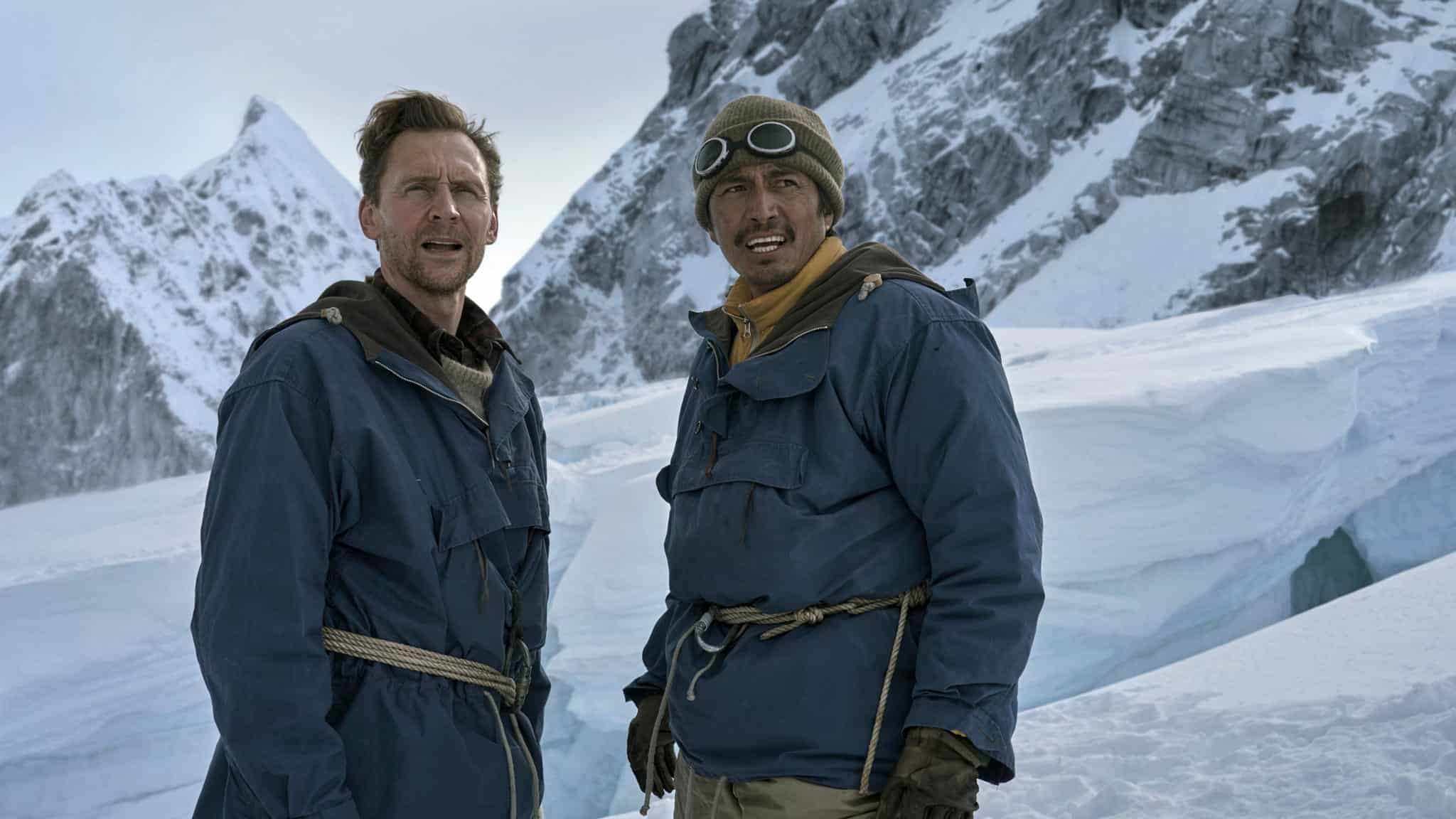
From left, Tom Hiddleston as Edmund Hillary and Genden Phuntsok as Tenzing Norgay in "Tenzing."
Apple TV

Words by Siddhant Adlakha
Like its subject Tenzing Norgay, Jennifer Peedom’s climber biopic Tenzing blooms within narrow confines. A film of great spirituality and social discomforts, its parameters will be familiar if you’ve ever seen a feel good film on adversity—for instance, the space-and-segregation drama Hidden Figures—and yet, it reaches unprecedented heights, thanks in no small part to a pair of tremendous actors playing Norgay at different ages.
Norgay’s name is often overshadowed by Edmund Hillary’s, even though they jointly became the first people to summit the world’s highest peak. Tenzing is simultaneously a corrective as well a dramatized explanation of this discrepancy, as a movie that not only pays homage to Norgay by reestablishing his place in history, but one that traces the contours of the kind of loud adversity people down the financial and racial ladder are forced to combat quietly. Aiding in this depiction is Luke Davies’ thoughtful script, which never treats Norgay as an outsider to his own story—echoing the authenticity Davies chased and found in the partially India-set Lion—and which Peedom renders in tense and thoughtful hues akin to another major Everest film this year, the daredevil documentary Everest: The Other Side.
Both films are enormous in scope but spiritually intimate. In fact, Tenzing begins with Norgay as an adolescent (as played by Samdrup Dorje Lama) as he gazes up at Chomolungma—the Tibetan and Sherpa name for the mountain, mentioned more times than “Everest” in the film—and sets his sights on its summit. However, rather than tracing Norgay’s trajectory from birth to success (as many rote biopics tend to do), the movie skips very quickly to Norgay in middle age (Genden Phuntsok), as he prepares for his seventh attempt to reach the top, as part of an expedition led by John Hunt (Willem Dafoe). Norgay’s condition, however, is that he be made part of the official climbing crew—a position unspokenly reserved for those of European descent—rather than his usual title of head Sherpa.
Hunt reluctantly agrees, allowing Norgay to choose his own Sherpa crew of 20, a team including his capable adversary Pasang (Tenzin Jigmey), who rejects Norgay for belonging to the Bhotia tribe, rather than being ethnically Sherpa. As a mirror to this, one of the only two New Zealanders in the mostly-British lineup, Hillary (Tom Hiddleston), braves jabs at his Kiwi heritage, and seems to recognize, in Norgay, a familiar outsidership, even though he himself stumbles when speaking to Nepalese guide.
The movie quickly establishes an economic story structure, moving briskly between its present (1953) and various chapters from Norgay’s childhood—when he was abandoned by his parents, despite their promise to return—as well as his days as a teen and young adult, where a third actor (Tenzin Dalha) enters the fray. Together, Dalha and Phuntsok deliver performances in concert, complimenting each other in a manner that illuminates the story and wrings, from its recognizable fabric, surprisingly rigorous drama.

Samdrup Dorje Lama as a young Tenzing Norgay in "Tenzing."
Apple TV
Dalha’s youthful, wide-eyed, wide-smiling portrayal of Norgay, as he courts his eventual wife Dawa (Thinley Lhamo) and moves to Darjeeling, India to join an expedition of foreign climbers. However, two decades in the future, Phuntsok’s portrayal of the older Norgay sees the light and mischief in the character’s eyes suppressed by the weight of the world, and the burden of loss (Dawa has, by this point, died). How this light came to be extinguished, and how Norgay eventually finds it again, form a vital narrative backbone. The historical expedition may be the movie’s premise, but its characters’ spiritual approach to Chomolungma is its heart and soul.
Torn between loyalties to British masters who look down upon him and Sherpas who similarly cast him out, the older Norgay makes for a fascinating dramatic centerpiece, as Phuntsok laces even minor interactions with a sense of thoughtful introspection. Each line, each glance, becomes a story. Meanwhile, in the past, the laugh lines around the younger Norgay’s eyes and the struggles he faces when finding work form an increasingly solid foundation for what we see in the movie’s 1950s segments.
As the group climbs, and as Norgay and Hillary stick together (upon realizing the illusion of meritocracy; there’s little chance they’ll be chosen as the two lead summiteers), Peedom and cinematographer Stefan Duscio balance natural beauty with heart pounding peril. In dialogue, the mountain is often personified as a goddess, and as the film goes on, the characters feel her wrath. However, they also revere her beauty, something the filmmakers capture as mesmerizing and mysterious. There’s a part of Norgay atop the mountain, something he needs to feel complete, and that longing is embodied both by the camera’s gaze—when capturing both natural beauty and Phuntsok’s lingering, skyward glances—as well as by Rebekka Karijord’s dreamlike score.

From left, Tenzin Dalha, Willem Dafoe, Genden Phuntsok, Harry Greenwood, Tom Hiddleston and Pasang Arya Sherpa.
Apple TV
Ultimately, Tenzing is a soulful film of belonging, from the grounded ideas of what makes a tribe, or a people, to the ethereal notion of purpose. Its catharsis comes not from the known—we already know Norgay and Hillary will become friends and scale the peak together—but from the imagined detours the movie takes, into Norgay’s memories and dreams, as it builds to its spiritual and emotional peaks. The result is deeply moving.
Published on October 23, 2026
Words by Siddhant Adlakha
Siddhant Adlakha is a critic and filmmaker from Mumbai, though he now lives in New York City. They're more similar than you'd think. Find him at @SiddhantAdlakha on Twitter