
‘Sumo: Spirit Weighs Nothing’ is gorgeous, but whitewashes the sport
From Japanese American director Erik Shira, Venice plays host to a documentary with religious reverence for its athletes.
Erik Shira's Sumo: Spirit Weights Nothing
Courtesy of Venice Film Festival

Words by Siddhant Adlakha
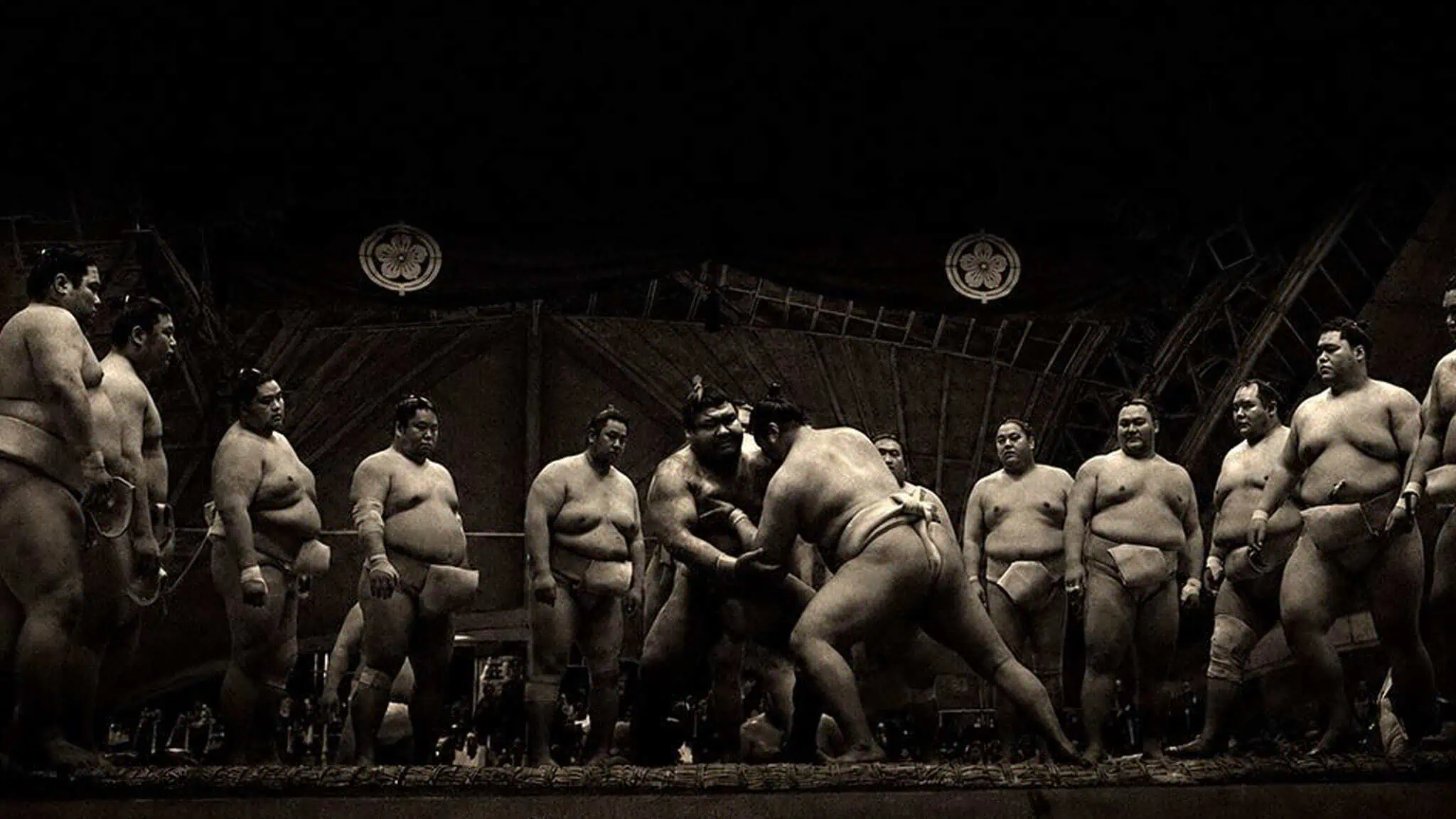
Premiering at the Venice Film Festival, the ESPN-produced documentary Sumo: Spirit Weights Nothing is an eye-catching 101 on the ancient sport, whose sense of ritual the film retains. It’s sensuous in a way sumo rarely is, especially when presented in the American zeitgeist—where it’s made carnivalesque, like professional wrestling—but Japanese American director Erik Shira approaches it with an artistic reverence, for better and for worse.
This has its advantages, especially in clarifying the stories and aspirations of its handful of central characters: a champion (or yokozuna), a rising star, and two young rookies. However, for all its aesthetic prowess, the documentary also fawns at the foot of the sport and its organizing principles, which have long been the subject of controversy. Viewers who don’t know better might mistake it for propaganda produced by the Japan Sumo Association to launder its reputation. To be clear: it isn’t—there are no known ties between any of its producers and the sport at large—but were ESPN to suddenly start broadcasting sumo again, it might just raise some eyebrows. It’s the perfect Trojan horse for novice viewers, since it provides a fascinating window into the tradition without revealing some of the more unsavory stories behind the scenes.
An effective portrait, if an incomplete one, it takes on an immediately nostalgic texture through its use of film grain and washed out sepia tones. Its faded postcard appearance grounds even its contemporary sumo training footage in the past, and within a wider history. Sumo has its origins in millennia-old dance and ritual, but the film doesn’t really get into those weeds. It’s more concerned with sumo as a 100-year-old codified sport—whose religious traditions still exist, but whose modern purpose (outside of its own immediate function, as entertainment) is to galvanize national pride.

Sumo: Spirit Weights Nothing was produced by ESPN.
Courtesy of Venice Film Festival
Taken on its own terms, the movie works, between its subjects mourning the drop-off in professional sumo competitors—from about 1,000 in the ‘90s to half as many today—to the largely glossed-over factoid of there being more foreign-born champions than Japanese ones of late. Since 1993, most of them have hailed from either the United States or Mongolia, though this waning interest is not something the movie seeks to explore, despite its meditative, occasionally mournful nature.
Granted, a film isn’t wholly defined by what it isn’t, especially when what it is takes such attractive form. That its narrow focus falls on its handful of subjects isn’t necessarily a bad thing, and by spreading the attention between new sumo school recruits, and world champions they wait on hand and foot, the movie captures the breadth of the average sumo career, along with some hints about the fandom and publicity therein, as well as the health issues and reduced lifespans its participants face. For 24-year-old upstart Hiradoumi, the journey is just beginning, and is at its most arduous. For 30-something yokozuna Terunofuji—who grants the production intimate access inside his home—the question of retiring to return to family life always looms. The window of time the competitors have is short, but their training regimens are ruthless, as is the hierarchy of servitude they enter into during their education.
However, those with even a passing familiarity with the sport may be left wondering why the more uncomfortable dimensions of these dynamics go ignored. Sumo has a religious grandeur, yes, but it’s full of stories of match-fixing, hazing rituals, yakuza entanglements, and other controversies (even Terunofuji has an assault allegation to his name). In the process of ignoring uneasy subject matter, Sumo: Spirit Weighs Nothing flattens its characters into two-dimensional symbols of abstract virtues like honor and resilience, without much by way of complex humanity.
And yet, the film is undoubtedly alluring. It builds its subjects’ bodies up through dialogue and reflective silences—they’re honest and self-aware about the toll it takes—before using their vulnerable torsos as canvases on which to project footage from their young lives. This not only centers their sacrifices, but brings their lifelong dreams into focus, through a unique convergence of body and soul. It’s quite lovely at times, despite glossing over much that would have (and perhaps, should have) made it a much more rigorous inquiry.
Published on September 4, 2026
Words by Siddhant Adlakha
Siddhant Adlakha is a critic and filmmaker from Mumbai, though he now lives in New York City. They're more similar than you'd think. Find him at @SiddhantAdlakha on Twitter