
Shu Lea Cheang’s ‘Fresh Kill’ is still relevant more than 30 years later
A conversation the filmmaker, whose 1994 film recently got the restoration treatment and was released on Criterion Collection
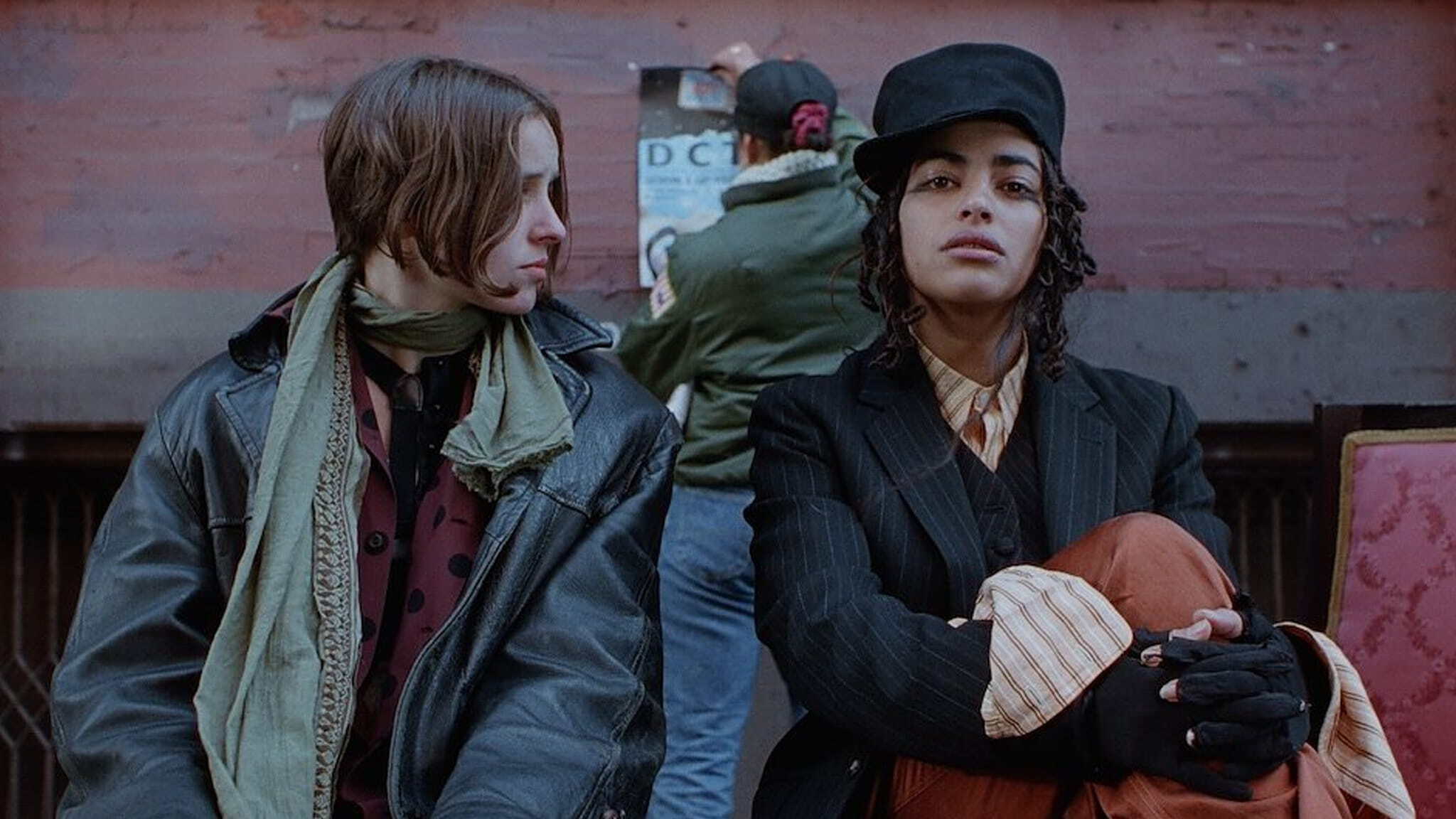
From left, Erin McMurtry as Claire Mayakovsky and Sarita Choudhury as Shreen Lightfoot.
Still from "Fresh Kill"

Words by Zachary Lee
There’s a disturbing prescience to director Shu Lea Cheang’s 1994 film Fresh Kill that solidifies the director as a prophet with no equal. Revolutionary for its time even as it nestles its musings in contemporary anxieties, the film focuses on a lesbian couple, Shreen Lightfoot and Claire Mayakovsky (Sarita Choudhury and Erin McMurtry), who raise their daughter around the
Fresh Kills Landfill on Staten Island. The pollution of the landfill affects the fish nearby, and once their daughter eats some of the fish, she glows a sickly green, then later vanishes. In trying to find answers, Shreen and Claire uncover a conspiracy spearheaded by the multinational GX Corporation.
The Criterion Collection released Fresh Kill in June, a fitting coda to the film’s new lease on life, as Cheang had spent 2024 embarking on a theatrical roadshow all around the United States with a 35mm print of the film. I spoke with her about the process of restoring the film, what it’s like to catch up with fans of the film years later, and remaining hopeful that cinema can make a social difference.
This interview has been edited for clarity and length. You can purchase Fresh Kill here.
Zachary Lee: Can you speak more to the restoration process with this new release? Were there elements you were trying to modify?
Shua Lea Cheang: So back in the '90s, we actually were going to try to make another print or make a second negative, but we never got a chance to; it was good that we kept the negative. With today's technology, of course, you were able to go right from the film negative to digital. This whole process of restoration with the funding was also done with the New York University Film Archive. Back in 2023, I was in the middle of finishing my fourth feature film called Yuki, and I was in post, and the director of photography, Jane Castle, was supervising the color correction. She was working in Sydney.
Somehow these archive people develop a kind of frame-by-frame analysis, and so there is a kind of digital log online that you actually can look at the film. Jane is so careful; she would come back with about 300 notes. Bill Brand of BB Optics, who did the main work of restoration, was thankful for those notes. I think what impressed me with Jane's correction is the level of detail. For example, if she noticed a scene we shot in the apartment and then we would revisit that location in a scene five minutes later, she would know if the color tone was not synchronized and work to make it harmonious. It was a long but rewarding cross-Atlantic process to restore the film with these friends.
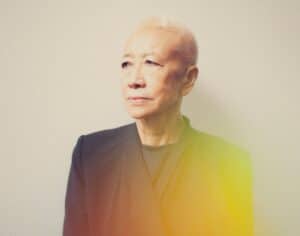
Shu Lea Cheang
SMITH © SMITH, 2024.
ZL: One of my friends said she was deeply pining for every single hat that was in this movie. Can you talk about working with costume designer Candice Donnelly to make the looks for the film?
SLC: While on tour, I got a question from an audience member who asked me, how did I get all this vintage clothing. The film is still a very low-budget film, and so right from the beginning, because the film focuses on the effects of industrial trash, I think we decided all the clothes should be kind of coming from a secondhand shop—this recycled clothing idea. Candice was great as a costume designer; she was able to take in the recycled clothes from secondhand shops and then recombine and reconstitute them into a new look. So that's why you would say, "Oh, it's very stylish." For example, she probably would have a shirt worn backward and cut down the tie. So it's really her own creation to represent the recycled clothes, but everything is secondhand.
ZL: I think of this quote from Jiddu Krishnamurti, who said, “It’s no sign of health to be well adjusted to a sick society.” I think what you’ve articulated with this film is this sign that we shouldn’t be well adjusted. Your film has made me think of discontent as a virtue, but I know how easy it is to slip into complacency. How do you not adjust to society but still have peace for yourself?
SLC: Thank you for this question. I've been thinking a lot about this personally because in 2024, I received this Guggenheim Award to focus on art and technology, which helped me get recognized. However, I am still not part of this kind of mainstream artist scene. I recently also announced that I don’t have a gallery, studio, or storage space. So I was like, “Oh god, what kind of artist am I?” But at the same time, the other thing I say is that, “I am on the edge at the center of the world.”
So in a certain way, I do feel I live quite marginally even while currently, I have an exhibition in New York at the Leslie Norman Museum. For that exhibit, I went to Tucson, Arizona to work with mostly non-binary trans performers there and particularly in response to the current situation in America and their trans policies. I associate communities even while at the same time the work is for the museum. So it's almost like I always feel like I'm a hacker in the museum. I somehow hack myself into the museum.
ZL: “The tone is playful, but the mood is paranoid,” a friend of mine described about the film. You capture so well what it is like to doomscroll here or channel surf. It must have been a nightmare to edit, so I’m wondering if you can speak to working with editor Lauren Zuckerman to determine sequencing? You captured what it was like to doomscroll before doomscrolling was a thing.
SLC: I decided to label the film as “eco cybernoia.” When you have multiple narrative threads, you have to jump between them, and it’s not always seamless, so the channel surfing motif became a north star.
In this case, I also have to say the technology allows us to do so. I actually worked as a film editor for 10 years in New York, so I was trained with a kind of classic 35 millimeter moviola editing. I don't know if you know about this old classic editing machine, the moviola, but it’s by foot. You edit with your foot to stop the frame on the wheel, and then you move down to skip back. It’s a very tedious process of editing. When Fresh Kill was first shot around 1992, in 1993, we were doing the editing; 1993 is the year that digital technology arrived in the editing scene.
So actually, that's the first time we had this Avid editing machine. If you check on it, it's still being used now. Today, if you talk about digital editing, you probably work with Premiere or Final Cut Pro, but the more classic is the Avid. At that time, it was a very expensive machine.
The film was shot in 35mm, but I was so determined to turn the film editing digital, which meant I had to transfer all the 35mm to digital so I could edit with Avid. But I would say the kind of editing with Lauren is also the first time I learned how to use this machine. We were all first learning how to use this machine. I would say the way that you see the editing being so smoothly moving the channel, it had to do with using the digital technology at the time.
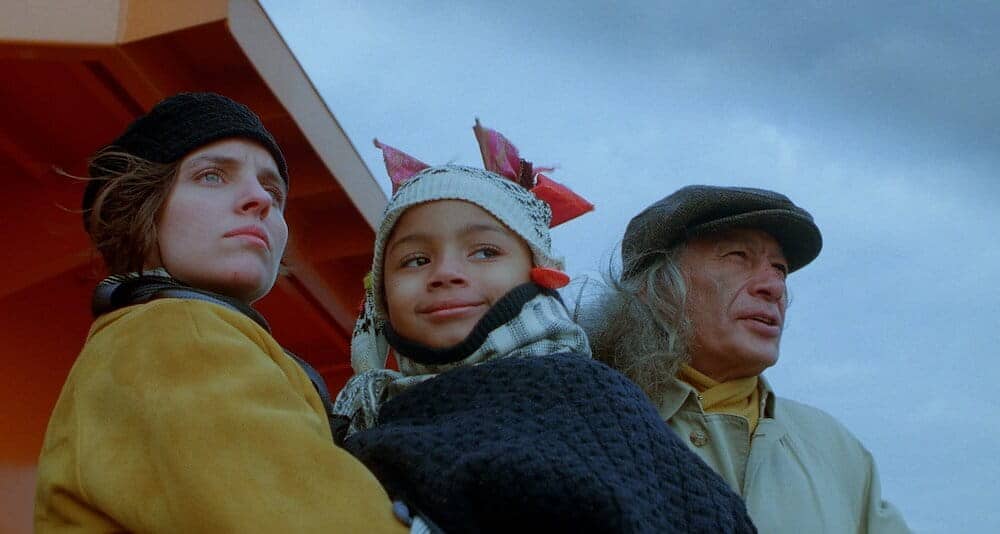
From left, Erin McMurtry as Claire, Nelini Stamp as Honey, and Rino Thunder as Clayton Lightfoot Sr.
Still from "Fresh Kill"
ZL: I didn’t think about how the technology itself might influence the aesthetic.
SLC: Today we all work digitally, but it was so new at the time. I thought that at the time if I didn't move myself into the digital era, then it would be really quite difficult.
ZL: Your film has made me think about the revelation of a truth enough to change or unite people. I think about that because I feel like now, in the context of the film, even if these hackers are exposing what's going on, people are so siloed in their echo chambers that that revelation may not make a difference. You lived in an era with public access cable television where you could literally combat what the mainstream media was saying, but now it feels like the democratization of information has meant everyone can live in their own truths in a way. Does disclosure inspire change or is there more work that has to be done?
SLC: Well, according to the U.S. president, all media is fake news anyway. Exactly. It's cooked media anyway. I think today is really not so much about revealing the truth, right? I mean, how are you going to reveal the truth? You have the Epstein files right there, and how clear can you spell things out? Is it changing anything? No.
All the facts are in front of us, but it's called fake. All the fakes become the truth. So I think basically we are in very confusing times. I think the question for us now is more about how you kind of swim through it, how you navigate through it to actually get to, or I would say it's even more like just get out of the water and get a fresh breath?
I feel submerged and can’t tell how to negotiate anymore. At the same time, I think that's why I went to Tucson, Arizona, to do the production for this new installation. When I go there, I say, "I can't believe people live like this. They go to the mountains, they go hiking, etc.” So for me, I think you just have to get out of this mess, and how you get out of this mess is to find a group that can help you. If you stick together, then you can help each other get out of this mess. I feel like my own traveling, my own work, is seeking different communities, and luckily I think I do have these different communities to help me that I can associate with, that can actually help me to make some sense out of myself and this world.
Published on October 19, 2026
Words by Zachary Lee
Zachary Lee is a freelance film and culture writer based in Chicago. You can read his work at places like RogerEbert, The Chicago Reader, Dread Central, Sojourners, and The National Catholic Reporter. He frequently writes about the intersection between popular culture and spirituality. Find him hopelessly attempting to catch up on his watchlist over on Letterboxd.