
‘Possible Love’ is a genuine masterpiece
Selected as South Korea's 2027 Oscar submission, Lee Chang-dong’s first film in eight years premieres at the Venice Film Festival
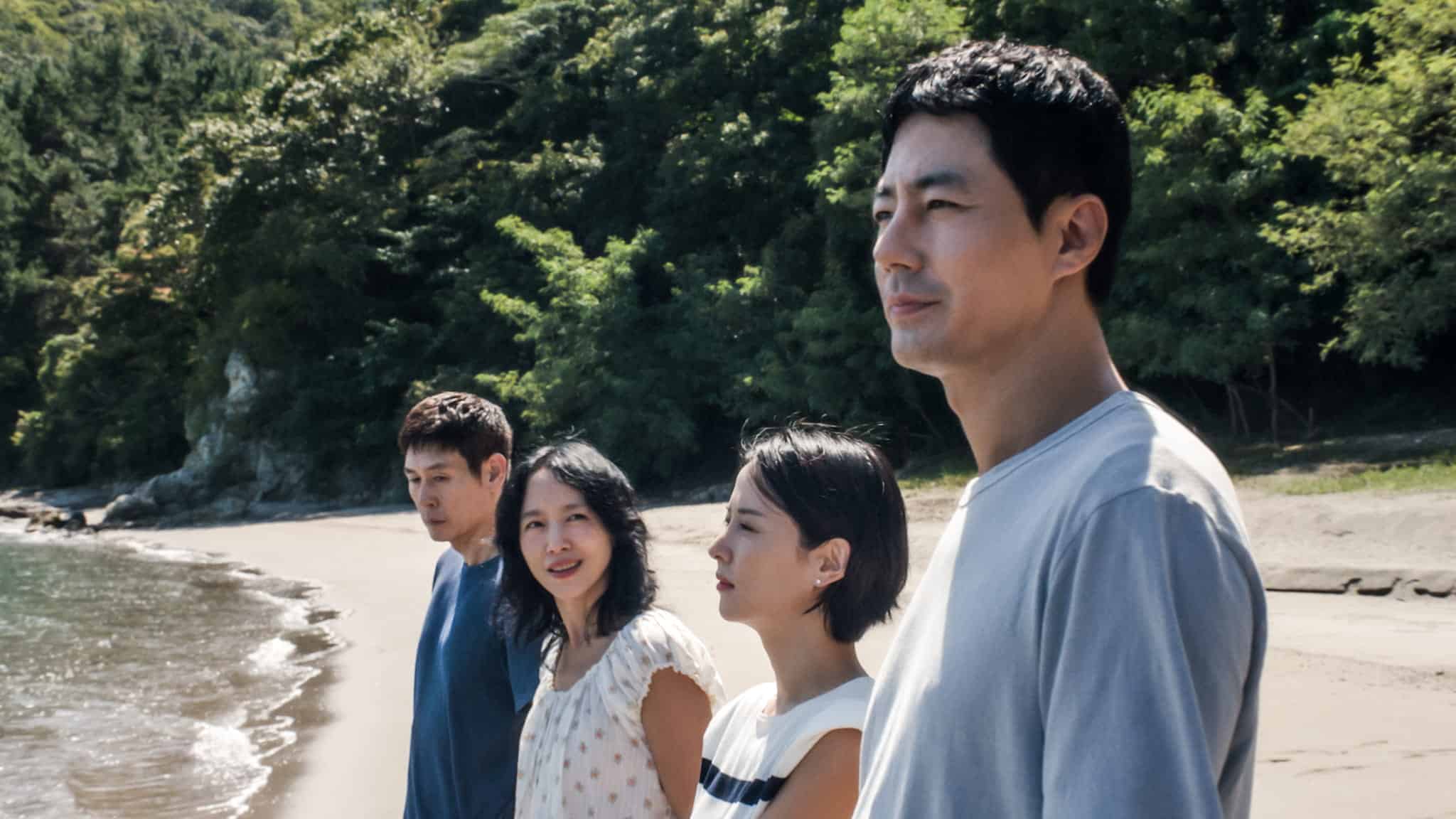
From left, Sul Kyung-gu as Ho-seok, Jeon Do-yeon as Mi-ok, Cho Yeo-jeong as Ye-ji, and Zo In-sung as Sang-woo in "Possible Love."
Courtesy of Venice Film Festival

Words by Siddhant Adlakha
Lee Chang-dong’s Possible Love starts unassumingly, before undergoing a gradual, radical metamorphosis. Its tale of two couples from different sides of the tracks welcomes you with a genial tone (and with occasional marital tension), promising a crisscrossing film of escape and temptation. However, across its 164 minutes, the simmering domestic saga takes on the unexpected hues of a riveting psychodrama, with a multifaceted approach to class and labor, not only exploring their social and political dimensions, but their cinematic dimensions too.
The film was made in tribute to Polish legend Krzysztof Kieślowski, and while not a remake of his Dekalog: Ten (as some had theorized), it begins with onscreen text denoting the same guiding principle: “Thou shalt not covet.” This commandment takes on a variety of meanings as the movie goes on, resulting in a transformational work that feels truly complete, in a way so few modern landmarks do. Rare are the times when you can be sure you’ve seen a bona fide classic upon first watch, but if anyone was going to do it after Lee’s mysterious, mellifluous Burning in 2018, it was bound to be the South Korean maestro himself.
Opening with a funeral for a colleague, tensions are already high when Possible Love begins, as mask factory worker Mi-ok (Jeon Do-Yeon) begs her brooding husband Ho-seok (Sul Kyung-Gu) not to drink. The conversation feels familiar to them. Something putrid is in the ether, though Lee takes his time unraveling exactly what that is, and why. As the couple argues, affluent documentary director Ye-ji (Cho Yeo-jeong) just so happens to be recording nearby, for her project on laborers laid off by a local company, in the hopes of a sale to an American venture capitalist. Ho-seok, who was among those fired (euphemistically called “the dead”), turns his ire on the indie filmmaker, who apologizes to him, as Mi-ok steps out to get some air. Here, she coincidentally crosses paths with Ye-ji’s tall, charming, American-educated husband Sang-woo (Zo In-sung).
With these pieces in place, Lee moves about his dramatic chessboard with intellect and rhythm, as he brings the two couples gradually closer through circumstance. The frayed Mi-ok and the stone-faced Ho-seok are trying to make ends meet (for themselves, and for their adolescent son), and although the eager Ye-ji scrounges together funds for her indie project, she lives comfortably thanks to Sang-woo’s inheritance. Her seemingly cool, calm and collected hubby even helps out on set from time to time.
Mi-ok is eager and willing to be a subject in Ye-ji’s movie, but for reasons initially unknown, Ho-seok doesn’t agree to be filmed. He even disapproves of Mi-ok’s budding friendship with the dapper documentarian, and responds with aggression, as though he has a grudge against the world. However, as the two couples decide to dine together—a plan concocted by Ye-ji, who doesn’t seem sure if she’s making friends or trying to earn the trust of potential subjects—all four characters begin opening up across the nearly three-hour runtime, which Lee more than earns through his judicious tonal balance.

From left, Zo In-sung as Sang-woo, and Jeon Do-yeon as Mi-ok.
Courtesy of Venice Film Festival
Rigid in form, but never stifled, Possible Love boasts classical dramatic staging and tangible texture, which comes slowly undone through unsettling handheld shots that disappear no sooner than they emerge. Again: something rotten resides beneath the surface—but the dynamic between Mi-ok and Ye-ji is initially a delight. During a vital, lively dinner scene, the couples discuss each other’s ages and learn each other’s love stories, while also broaching the subject of Korean-language honorifics, and how the two women want to break with linguistic norms so they can exist on an equal footing. Although a fleeting occurrence, it’s the first of several instances where the question of the couples’ real proximity is broached. As their wildly divergent backgrounds hover over them, several feel-good conversations get you on board with the not-so-radical idea that these people have more in common than their clothes and houses might indicate. However, this is just the topsoil of Lee’s social inquiry.
The more we learn about the angsty Ho-seok, the more the world itself starts to fade into view, as subplots about union organizing, labor solidarity and class consciousness begin peeking through the screen’s peripheries. These are all vital to Ho-seok’s current state of being—one so despondent that he’s pushed to attend therapy for laid-off workers, just so he can stop feeling like a ghost. However, these ideas are also cinematic fodder, both for Lee and for the fictitious Ye-ji, who quite hilariously pops into frame, camera in hand, at the inopportune times. She’s an intrusive presence trying to understand herself and her subjects better, with an altruistic streak beset on occasion by tone deafness in social settings. However, she’s just as eager to convince herself that she and Mi-ok can really be friends.

From left, Jeon Do-yeon as Mi-ok, and Cho Yeo-jeong as Ye-ji.
Courtesy of Venice Film Festival
They certainly can. In fact, both couples end up traveling together too—though this is where Possible Love ratchets up its emotional intensity. Each layer of its novelistic unfurling brings with it new tensions, including the question of Mi-ok and Sang-woo’s curious chemistry. However, as Lee builds to a sexually charged confrontation, he also presents their inevitable rendezvous as a kind of unholy union. The question of class never leaves the characters’ purview. It’s too deeply rooted—socially, culturally and psychologically—to ever relent.
With Ye-ji as an object of self-reflexivity—a well-off filmmaker capturing impoverished subjects, with all the ethical concerns that brings—Lee seems to turn his camera on South Korean cinema at large, and its genre-fication of class. Viewers in the west have, in recent years, gravitated to films like Bong Joon-ho’s clockwork thriller Parasite (in which Cho also plays a naïve rich woman) and Park Chan-wook’s violent satire No Other Choice, as well as high-concept shows like Netflix’s Squid Game. In addition to being almost entirely absent of the west’s role in exacerbating global class divides, these works offer a pop song version of class consciousness for easier digestion. They’re undoubtedly brilliant for what they are, but the question of class dimensions as vectors akin to race or gender, with as much potential for dramatic authenticity, seldom arises when discussing who should or should not tell stories of financial struggle. The utopian answer is that anyone with the sincere desire to tell any kind of story should do so. But the pragmatic answer concerns who has the opportunity in the first place—who has the power to shape how we see each other, and ourselves?

Jeon Do-yeon as Mi-ok.
Courtesy of Venice Film Festival
By centering this question at every turn, Lee imbues each relationship with a tension inherent to the very creation of images, especially in a contemporary context. Few recent films have been so simultaneously rigorous in their interpersonal drama while feeling so fluid and volatile, as though the possible and the impossible were at war in some invisible realm, forced into collision by the permitted ugliness of class. What trickles down, in the lives of Lee’s characters, isn’t capital, but defining characteristics, born of lifelong freedoms and lack thereof. It’s in the very notion that some characters have emotional, physical and psychological liberation available to them, while others have to scrape for it, that Lee composes a shattering symphony about how we exist in the world today, and what it does to us on the inside.
Published on September 11, 2026
Words by Siddhant Adlakha
Siddhant Adlakha is a critic and filmmaker from Mumbai, though he now lives in New York City. They're more similar than you'd think. Find him at @SiddhantAdlakha on Twitter