
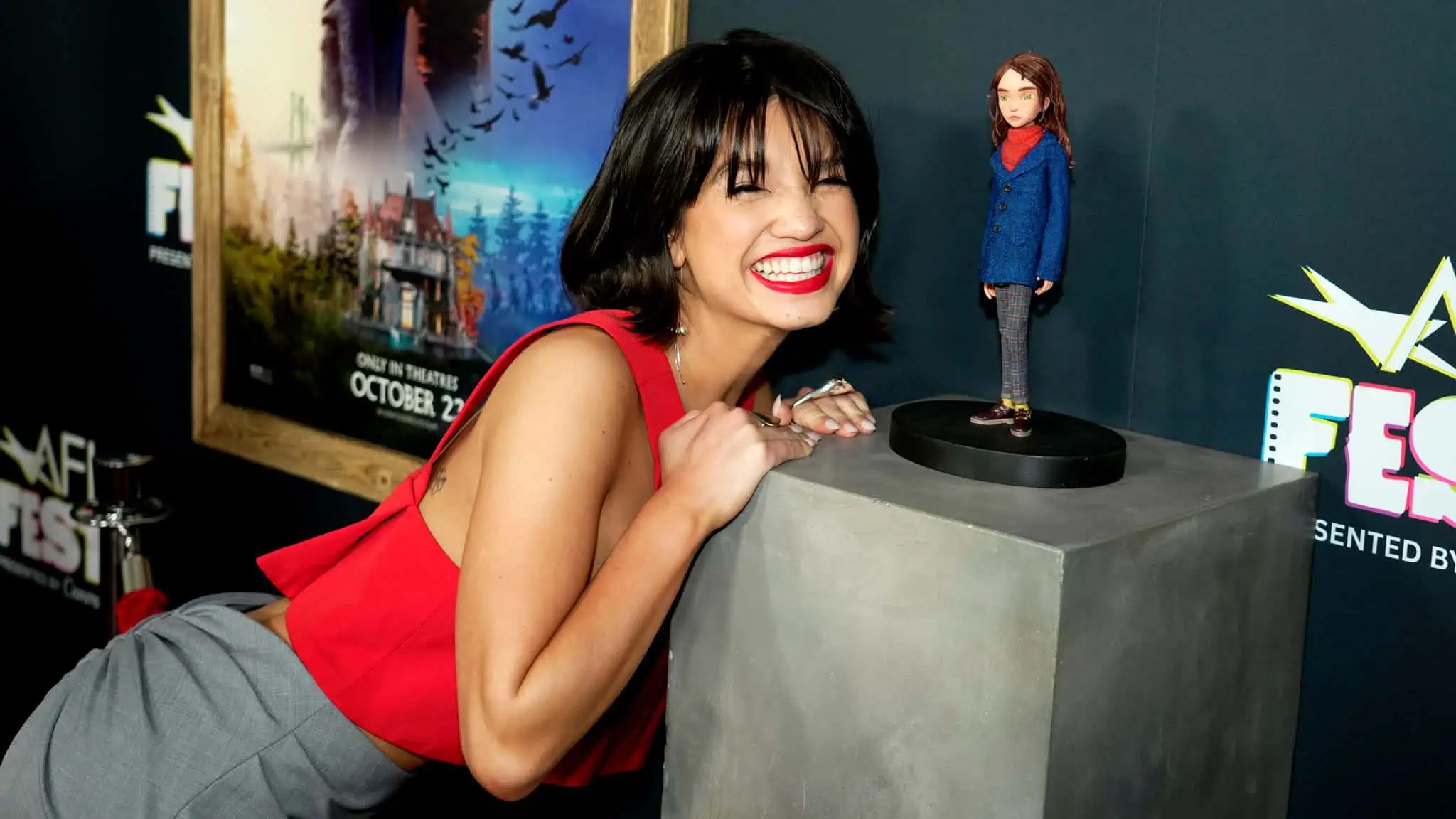
Peyton Elizabeth Lee embraces the magic of ‘Wildwood’
The actress on starring in LAIKA Studios' latest stop-motion animated film, how art can reflect the human condition, and more
Peyton Elizabeth Lee at the 2026 AFI Fest opening night gala premiere of "Wildwood."
Jeff Kravitz/Film Magic
Words by Aleenah Ansari
Good things take time, and movies are no exception. Directed by Travis Knight, the stop-motion animated feature Wildwood (in theaters now) is a story about love, loss, sacrifice, and magic in everything, including places where you least expect it. Set in LAIKA Studios’ hometown of Portland, Oregon, it’s the most challenging and ambitious project the studio has produced to date. The film was 16 years in the making, with 132 practical sets and 233 handcrafted puppets, and it’s large in scale and in the depth of the emotions it captures.
Wildwood follows Prue, voiced by Peyton Elizabeth Lee, who seems self-assured in who she is, though she doesn’t believe in magic. When her baby brother Mac is abducted by a murder of crows, she accepts the call to adventure, and, with the help of her soon-to-be friend Curtis, enters the Impassable Wilderness just beyond Portland. They navigate a world of animals, bandits, and powerful figures, coming to find that the fate of Prue’s brother and the entire world in Wildwood are intertwined.
I sat down with Lee to discuss what it means to be a part of this movie, why LAIKA films are for everyone, and why it’s important to trust the process.
This interview has been edited for clarity and length.
Aleenah Ansari: How did you come to be in Wildwood? Do you remember when you auditioned for it?
Peyton Elizabeth Lee: The voiceover process is interesting because it feels impossible that anyone would listen, let alone want you in something. I just go under my blanket and record voiceover into my phone for auditions and send it off, and then forget about it.
I was in Hawaii shooting Doogie Kameāloha, M.D. when I got the call that they wanted me to do it, and it was just so exciting for me. I loved the story of Wildwood, the character of Prue, and the legacy of LAIKA. The studio is so innovative and nurtures a level of creativity that doesn’t exist anywhere else, and I couldn’t believe that they wanted me to be a part of it.
AA: Did you grow up watching LAIKA movies?
PEL: I remember seeing Coraline in particular. LAIKA doesn’t shy away from (exploring) aspects of what it means to grow up and to be alive, and the vast spectrum of emotions that comes with all of that. It’s impactful for young people to see because it’s rarer in programming made for younger people. When you’re a little kid, you’re not thinking, “this really displays the spectrum of human emotion in a way that feels authentic to me.” But you may feel seen and understood, and that your experiences are reflected in a way that you might not see watching other things.
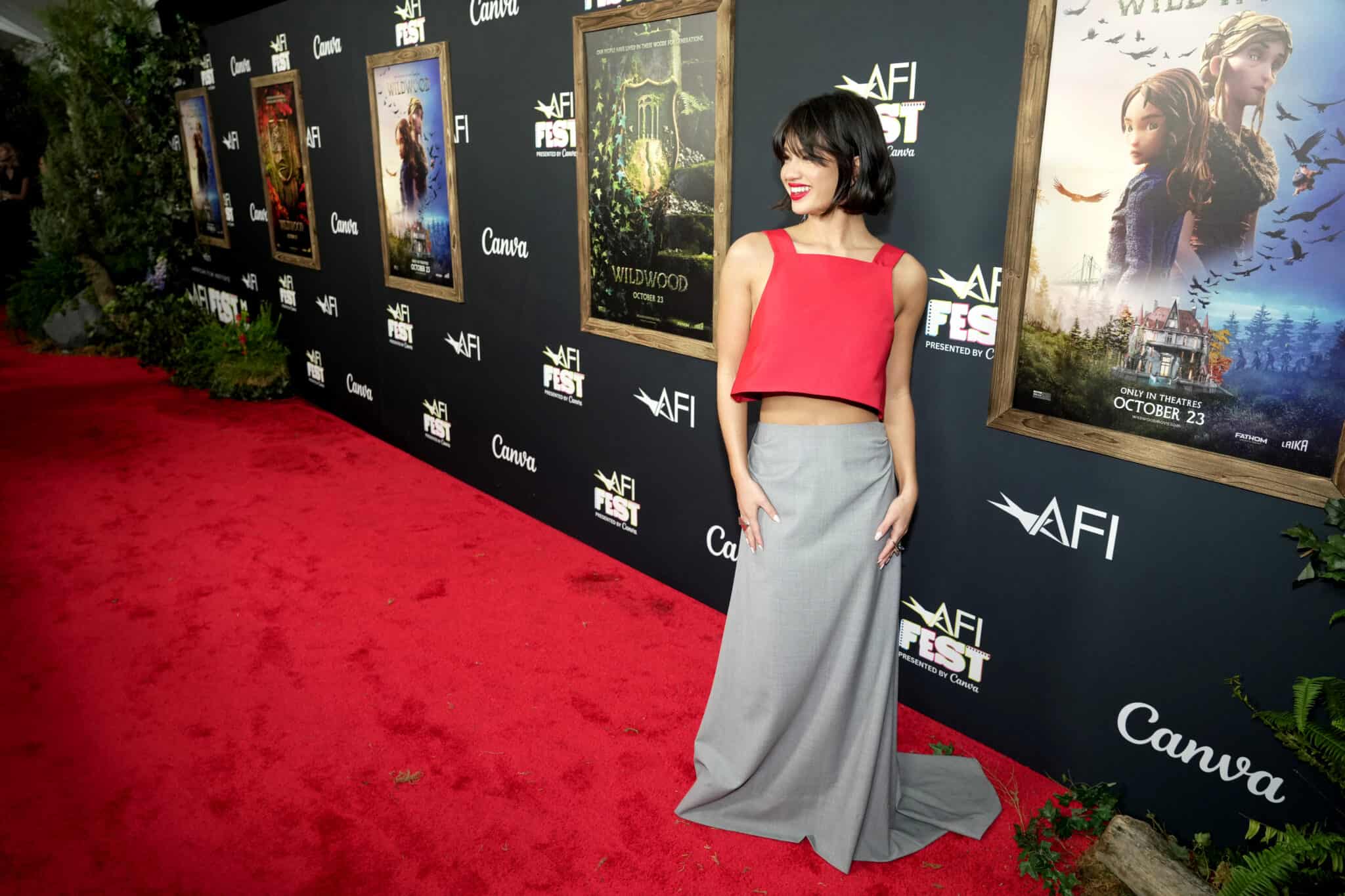
The 2026 AFI Fest opening night gala premiere of "Wildwood" was hosted on Oct. 21 in Los Angeles.
Jeff Kravitz/FilmMagic
AA: When I watched this movie, I was taken with how this film takes on big feelings from the opening scene. It was evident that this movie wasn’t afraid to get into all kinds of emotions, even the tough ones, and that it could be a story for kids and adults alike. Why do you think LAIKA films resonate so widely?
PEL: I think LAIKA makes movies not just for kids or adults, but for people at all phases or ages of their lives, and you can recognize different pieces of yourself in the film and characters. I think it’s important that young people get to see things that reflect their experiences in life. Though young people are young, they’re incredibly perceptive, sensitive, and emotional and experience emotions in a more intense way than we do as adults.
AA: Wildwood covers many, many things—from redefining courage, to the power of asking for help when you need it. What is the central question of this film?
PEL: (The director) Travis has always said that the film’s thesis is, “How far would you go for the ones you love?” The characters are all on their own journeys, and they’re motivated by love. When love is the North Star, you’re off to a good start. It doesn’t mean that you won’t make mistakes or be misguided, but letting your life be led by the things you love is important. It’s what I want to do, and I hope it’s something we all do.
AA: What does leading with love look like in your work?
PEL: I’m lucky to be able to do what I love. I love being able to portray strong female characters and the responsibility of creating art that resonates with people and feels important and meaningful, so that’s what I pursue every single day. With every script, project, or meeting, I lead with love about what matters to me, and nurture relationships with friends, family, and loved ones.
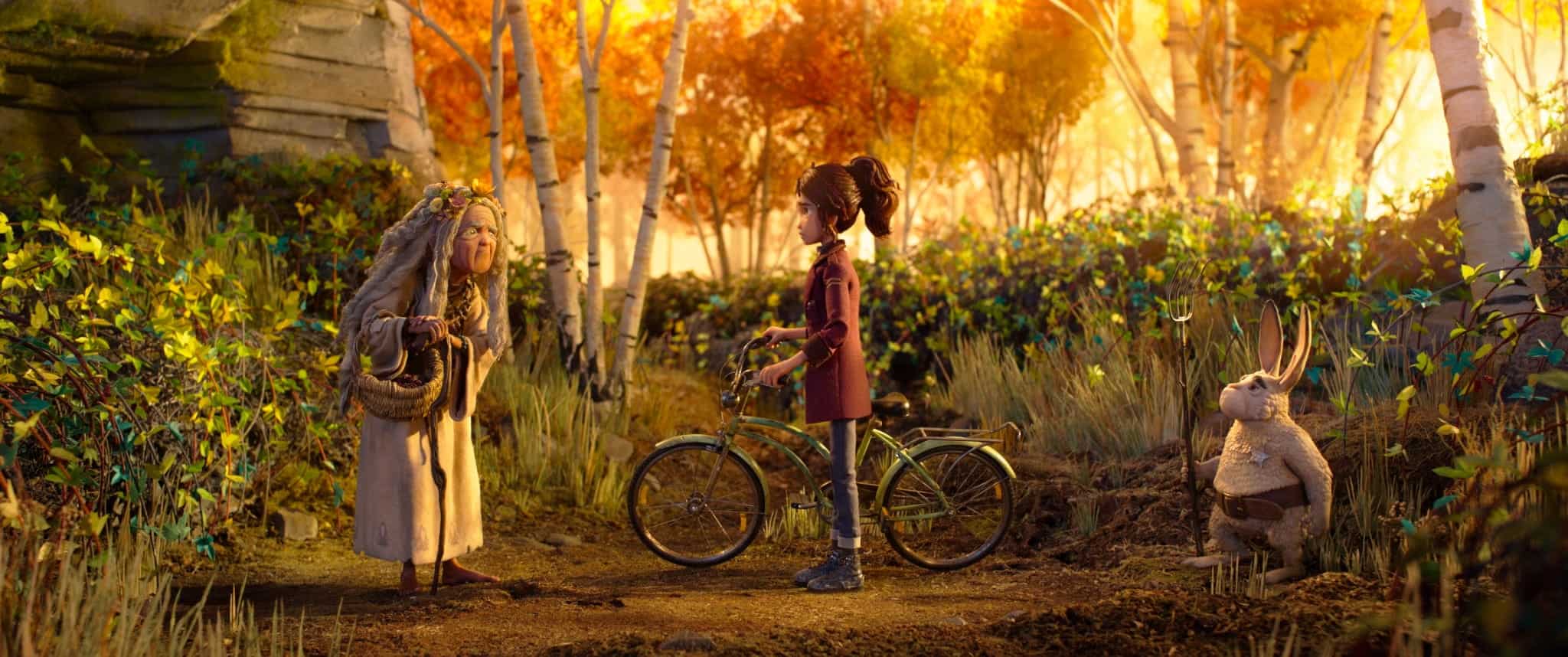
"Wildwood" is a stop-motion animated feature about love, loss, sacrifice, and magic in everything.
LAIKA Studios
AA: Tell me about Prue, and how you wanted to portray her. Were there aspects of her character that resonated with you?
PEL: I saw a lot of myself reflected in Prue. Anybody who knew me when I was 11, 12, 13 years old would say that I was that girl who was stubborn, strong-willed, and set in my worldviews. That’s a classic young person’s perspective, thinking that you know what’s right, wrong, good, or bad.
Prue sees the world in a black-and-white and binary way and is confronted with complications, nuances, and ways of living that are different from what she’s taught to understand. Her journey toward a place of acceptance and embracing the unknown and what she doesn’t understand is something beautiful and feels truthful to my own experience and will hopefully feel authentic to people watching. Wildwood exists in this heightened reality of talking animals and magical forests, but the themes and core human elements are very universal.
AA: Is there anything you learned about yourself in the process of portraying Prue in this movie?
PEL: I think this film gave me a new appreciation for my own voice in the sense that the (same) people who wanted Carey Mulligan's voice and Angela Bassett's voice also wanted mine, which is a big honor. It allowed me to give myself a little more grace and appreciate my voice, especially (hearing) it in combination with the artistry of this film.
AA: Prue doesn’t believe in magic at first. How did that theme show up in your performance and in your life?
PEL: The theme of allowing magic to permeate your life is something that everyone can use as a reminder. The world is a crazy place that can sometimes feel devoid of that hope and magic, but it exists everywhere if you’re looking for it. That’s a nice theme in the film and in life.
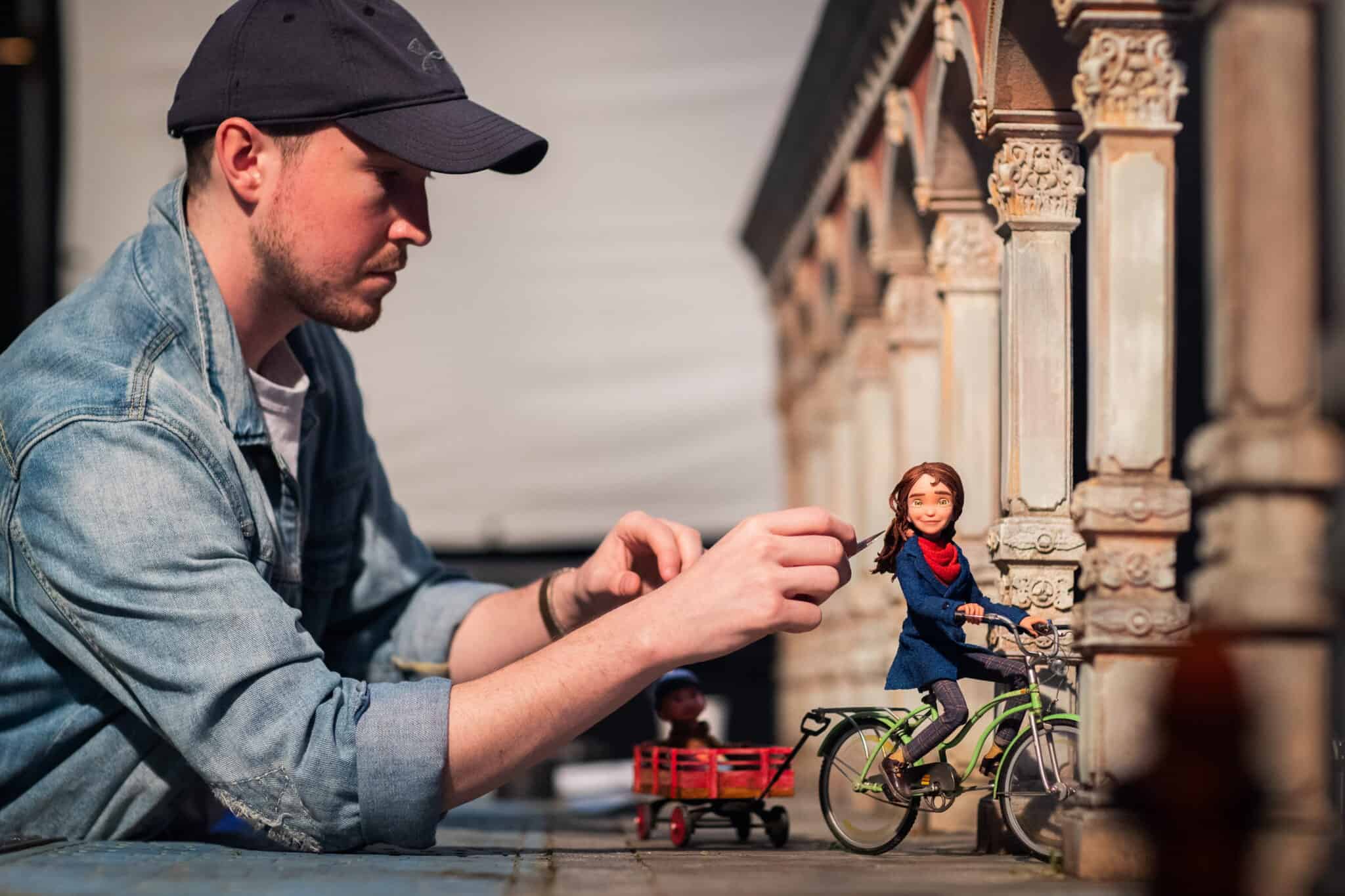
"Wildwood" was 16 years in the making, with 132 practical sets and 233 handcrafted puppets.
LAIKA Studios
AA: As an Asian American actress, what does it mean to you to be in this film?
PEL: Representation is so important, and such a powerful tool to empower people to know that they can achieve anything. Being an Asian American woman is a great privilege and responsibility.
Something I love about Wildwood is that it isn’t about (Prue) being Asian or being from any one place in particular. It tells a universal story. It’s important to tell cultural stories, normalize diversity, and incorporate it seamlessly into the stories we’re telling. So much of this film is centered on the idea of coming together not despite, but because of their differences. In the climax of the film, everyone comes together in defense of each other and in pursuit of love.
AA: Was there anything about this film that surprised you?
PEL: I was surprised and inspired by the process of making LAIKA films. Travis and the filmmakers have been working on this film for 16 years, and I’ve been a part of it for five years. It’s a testament to the importance of slowing down to get something right.
Oftentimes, the film industry can be rushed, with a specific timeline and budget. It’s an unavoidable aspect of filmmaking, but it’s special to be a part of something where there is more room to breathe. Because of that, the artistry is cultivated in a way that I’ve never seen before. It inspires the way I want to approach my work moving forward.
AA: In a world with more and more AI-generated content, how is LAIKA embracing what is human and real?
PEL: There are places where we need to evolve with technology and make space for what’s new and modern, and then there are places where we need to protect humanity. Art is one of those places. Art reflects the human condition, and something that is not human cannot create something that reflects the human condition. Being a part of a film that is so deeply committed to human creation and artistry, and allowing every frame to be delicately created by human hands, it’s a love letter to all that we’re capable of, and a great way of proving that what we do is irreplaceable.
It’s important that we protect the spaces for people to nurture their artistry and create these things because art is the way we connect.
AA: What would you say to that younger version of yourself who wanted to be an actress?
PEL: It’s the same thing I would say to my current self, which is to trust the process. There’s a lot of pressure to achieve things faster and get to where you want to go as fast as possible. So much time has been spent in that race to achieve what I want to achieve. You see people doing the thing you think you want to do, and you can get attached to timelines about what your life should look like. I want to be able to say, “The things that I want to happen will happen if I continue to devote myself to them,” and release a little bit of control over how and when things happen. That’s what I’d say to my younger self, and my current self now.
AA: What do you hope viewers notice or take away from Wildwood?
PEL: I never want to be prescriptive in how people interpret art, but I hope people leave with a sense of hope. This film covers a lot of emotions and intensity, and there are some dark moments, but something that’s beautiful is that through the hurt and loss, there is still hope at the end. In our world, that’s something we all need in order to keep fighting.
Published on October 26, 2026
Words by Aleenah Ansari
Aleenah Ansari is a Seattle-based writer covering representation in media, holistic wellness, travel in the Pacific Northwest and beyond, and the non-linear career paths of BIPOC creatives, entrepreneurs, and authors. Her work has been featured in Insider, The Seattle Times, JoySauce, and more. When she's not writing, you can find her searching for murals, running after the bus, or planning her next trip to New York. Learn more at www.aleenahansari.com and follow along at @AleenahWrites on Instagram.