
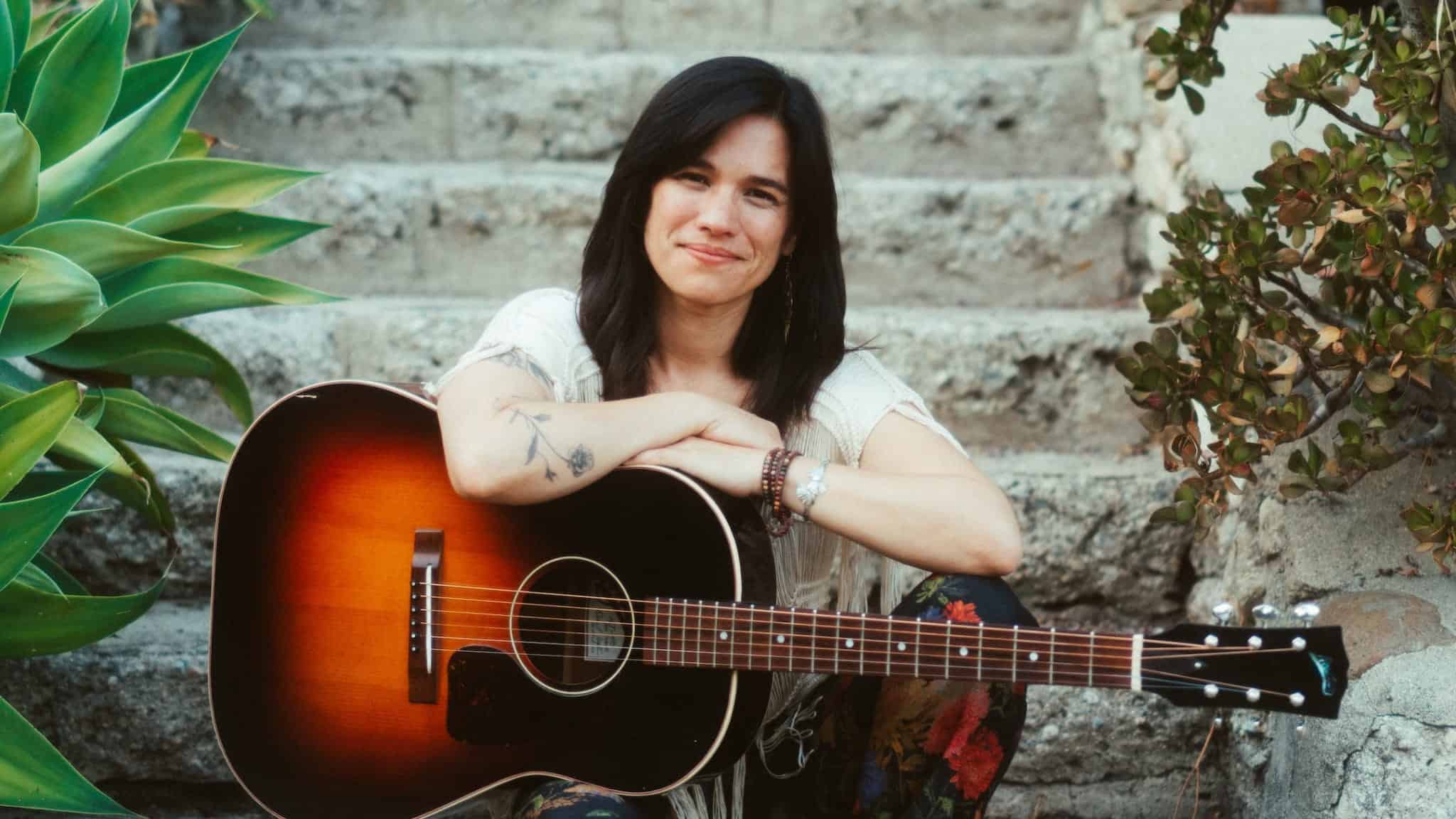
Paula Fong’s ‘A Bird On The Wing’ is a joy to listen to
The Los Angeles musician proves to be an up-and-coming voice in Americana music with her debut album, which dropped Oct. 2
Paula Fong released "A Bird on the Wing," her first full-length album, on Oct. 2.
Joanna Grace Babb

Words by Andy Crump
Rating: 4 OUT OF 5 STARS
Playing the “who is this recording artist’s influences?” game is a common tradition in every genre of music, though a certain number among them belong to deeper historical contexts than others. Rap music, for instance, belies its 53 years as a discipline via cultural roots that reach across centuries and continents. Alternatively, it’s said that folk music is as old as mankind and occurs in every background, with the asterisk that no one needs to earn an ethnomusicology degree to appreciate songs written by any individual heritage.
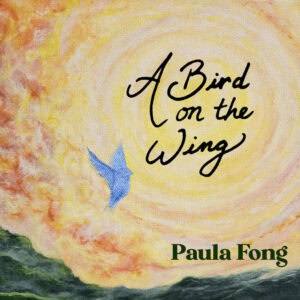 Take Los Angeles’ Paula Fong, whose categorization as an Americana musician provides the barest detail about what sets her work apart from her peers’. Does she lean towards country more than bluegrass or roots rock? What about gospel? Questions like these are customary amusements, and finding out the answers on A Bird On The Wing, her first full-length album, is likewise a joy; Fong shows off a recurring playfulness over the tracklist’s course, 11 entries in all, coupled with honesty and self-introspection, painting a portrait of a happy-go-lucky sort who chooses to find the silver lining in both the hard times of her past, and those still to come. Comings and goings make up a significant theme in A Bird On The Wing—the second song here is called “Goodbyes,” for reference—but Fong writes about such moments in the spirit of acceptance.
“One day I’m gonna lay my momma in the ground,” she chirps on the opening verse of “Goodbyes.” “One day I’m gonna lay my momma in the ground / I’m gonna cry and moan and grieve / she’ll always be with me / one day I’m gonna lay my momma in the ground.” It’s a bummer line accompanied by a sharp instrumental contrast: the lively percussive snap of a muted guitar fret, the babble of a banjo, the root-fifth hum of an upright bass. Blank out Fong’s lyrics and ignore the song’s name, and suddenly “Goodbyes” starts sounding an awful lot like the soundtrack to barn shindig, which, for the record, is neither a knock on “Goodbyes” nor barn shindigs. They’re good fun, and so is the song, to a surprisingly subversive effect: a song about letting go, whether of people we love or precious times in our lives, seems like the kind of place we visit to process sorrow and dismay, rather than where we go for heel touches.
The character of the track recalls the character of such Americana legends as Emmylou Harris and Linda Ronstadt, and in turn their contemporary descendants, like Michaela Anne and Lillie Mae. Throw in Leah Blevins on top and you’ll get a bit of the late, great Dolly Parton, too. (See? Tradition!) But Fong adds to a sum total that’s more expansive than any number of comparisons to her fellow roots musicians. She’s a student of such unexpected styles as Chinese opera to the rich body of folk music populating Brittany, in France’s northwestern region. Maybe the continental divide explains why A Bird On The Wing bears similarities to Quebec’s Les Poules à Colin, an entirely different designation of folk music, and yet there’s no real explanation required at all, because ultimately, the sound on the album is simply Fong’s.
Thank goodness for that, too. Americana’s issues with identity and diversity peaked in the late 2010s through dialogues about its foundational elements being built upon the contributions of Black American musicians; in 2026, such names as Amythyst Kiah, The War and Treaty, Brittney Spencer (not to be mixed up with Brittany Howard), Brittany Howard (not to be mixed up with Brittney Spencer), Charley Crockett, Valerie June, and Rhiannon Giddens occupy places of greater prominence in the genre’s big tent structure. There’s room for everyone, including Fong, who feels right at home among that crowd as well as in the varied tones resonating throughout A Bird On The Wing.
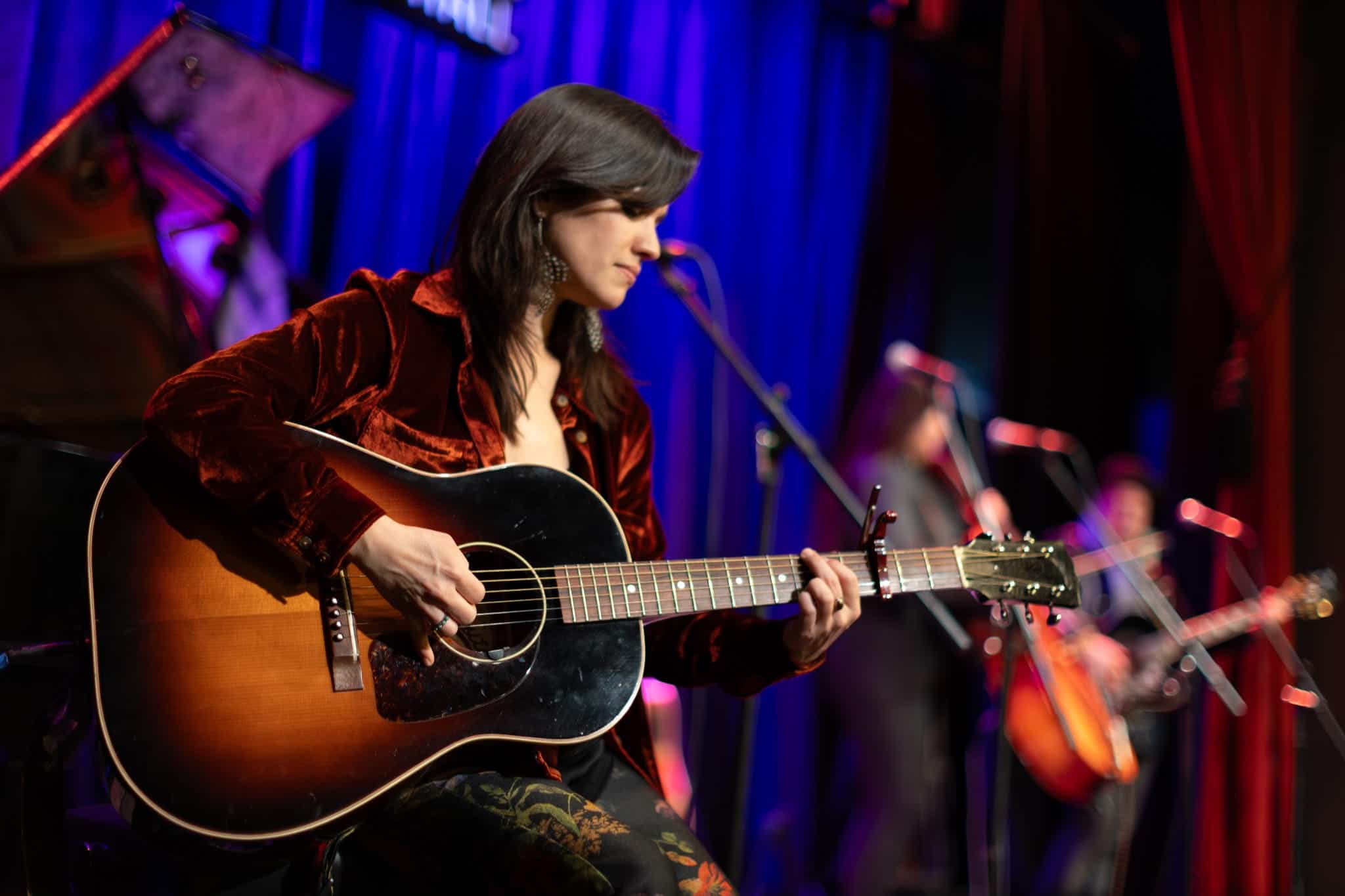
Paula Fong performing live.
Arturo Garcia-Ayala
“Goodbye” is, on Americana’s terms, a bop, joined by tracks like “Pretty Red Bird” and “Up and Out,” the latter drawing on several of those aforementioned Black American musical traits—a frisky, ringing piano scale to kick off the song, a gospel organ backing up the chorus and verses—alongside plucking guitars straight out of honky-tonk, notes from the likes of Hank Williams and George Jones. Deeper into the record, “Sans Dire Je T’aime” gives us a dirge sung chiefly in French: “Si tu pouvais me dire / tout ce que tu ressens / avec quel mots me bénirais-tu,” Fong implores—if you could tell me everything you feel, what words would you bless me with? Mourning is a frequent companion on A Bird On The Wing, making its presence known here as well as on “Marianne,” on which Fong marries the album’s upbeat side with its contemplatively sad one.
“One day I’m gonna lay my momma in the ground,” she chirps on the opening verse of “Goodbyes.” “One day I’m gonna lay my momma in the ground / I’m gonna cry and moan and grieve / she’ll always be with me / one day I’m gonna lay my momma in the ground.” It’s a bummer line accompanied by a sharp instrumental contrast: the lively percussive snap of a muted guitar fret, the babble of a banjo, the root-fifth hum of an upright bass. Blank out Fong’s lyrics and ignore the song’s name, and suddenly “Goodbyes” starts sounding an awful lot like the soundtrack to barn shindig, which, for the record, is neither a knock on “Goodbyes” nor barn shindigs. They’re good fun, and so is the song, to a surprisingly subversive effect: a song about letting go, whether of people we love or precious times in our lives, seems like the kind of place we visit to process sorrow and dismay, rather than where we go for heel touches.
The character of the track recalls the character of such Americana legends as Emmylou Harris and Linda Ronstadt, and in turn their contemporary descendants, like Michaela Anne and Lillie Mae. Throw in Leah Blevins on top and you’ll get a bit of the late, great Dolly Parton, too. (See? Tradition!) But Fong adds to a sum total that’s more expansive than any number of comparisons to her fellow roots musicians. She’s a student of such unexpected styles as Chinese opera to the rich body of folk music populating Brittany, in France’s northwestern region. Maybe the continental divide explains why A Bird On The Wing bears similarities to Quebec’s Les Poules à Colin, an entirely different designation of folk music, and yet there’s no real explanation required at all, because ultimately, the sound on the album is simply Fong’s.
Thank goodness for that, too. Americana’s issues with identity and diversity peaked in the late 2010s through dialogues about its foundational elements being built upon the contributions of Black American musicians; in 2026, such names as Amythyst Kiah, The War and Treaty, Brittney Spencer (not to be mixed up with Brittany Howard), Brittany Howard (not to be mixed up with Brittney Spencer), Charley Crockett, Valerie June, and Rhiannon Giddens occupy places of greater prominence in the genre’s big tent structure. There’s room for everyone, including Fong, who feels right at home among that crowd as well as in the varied tones resonating throughout A Bird On The Wing.
“Goodbye” is, on Americana’s terms, a bop, joined by tracks like “Pretty Red Bird” and “Up and Out,” the latter drawing on several of those aforementioned Black American musical traits—a frisky, ringing piano scale to kick off the song, a gospel organ backing up the chorus and verses—alongside plucking guitars straight out of honky-tonk, notes from the likes of Hank Williams and George Jones. Deeper into the record, “Sans Dire Je T’aime” gives us a dirge sung chiefly in French: “Si tu pouvais me dire / tout ce que tu ressens / avec quel mots me bénirais-tu,” Fong implores—if you could tell me everything you feel, what words would you bless me with? Mourning is a frequent companion on A Bird On The Wing, making its presence known here as well as on “Marianne,” on which Fong marries the album’s upbeat side with its contemplatively sad one.
In her lexicon, the two emotions appear to be related, which makes sense. How does one know happiness without knowing heartbreak? Fong’s gift is in finding the good in a bad situation, and that quality is the heart of A Bird On The Wing. “Marianne” breaks down what reads like an awful lot like a somber, devastating medical experience—an abortion, perhaps—and though Fong can’t stand “the loss,” and is left “heart in hand,” she reasons on the chorus that “At least I got Marianne,” the woman we understand is Fong’s ride or die. We could all do with such a friend. We could also do with a bit of Fong’s perspective. For that, we just need to sit with A Bird On The Wing.
Published on October 20, 2026
Words by Andy Crump
Bostonian culture journalist Andy Crump covers movies, beer, music, fatherhood, and way too many other subjects for way too many outlets, perhaps even yours: Paste Magazine, Inverse, The New York Times, Hop Culture, Polygon, and Men's Health, plus more. You can follow him on Bluesky and find his collected work at his personal blog. He’s composed of roughly 65 percent craft beer.