
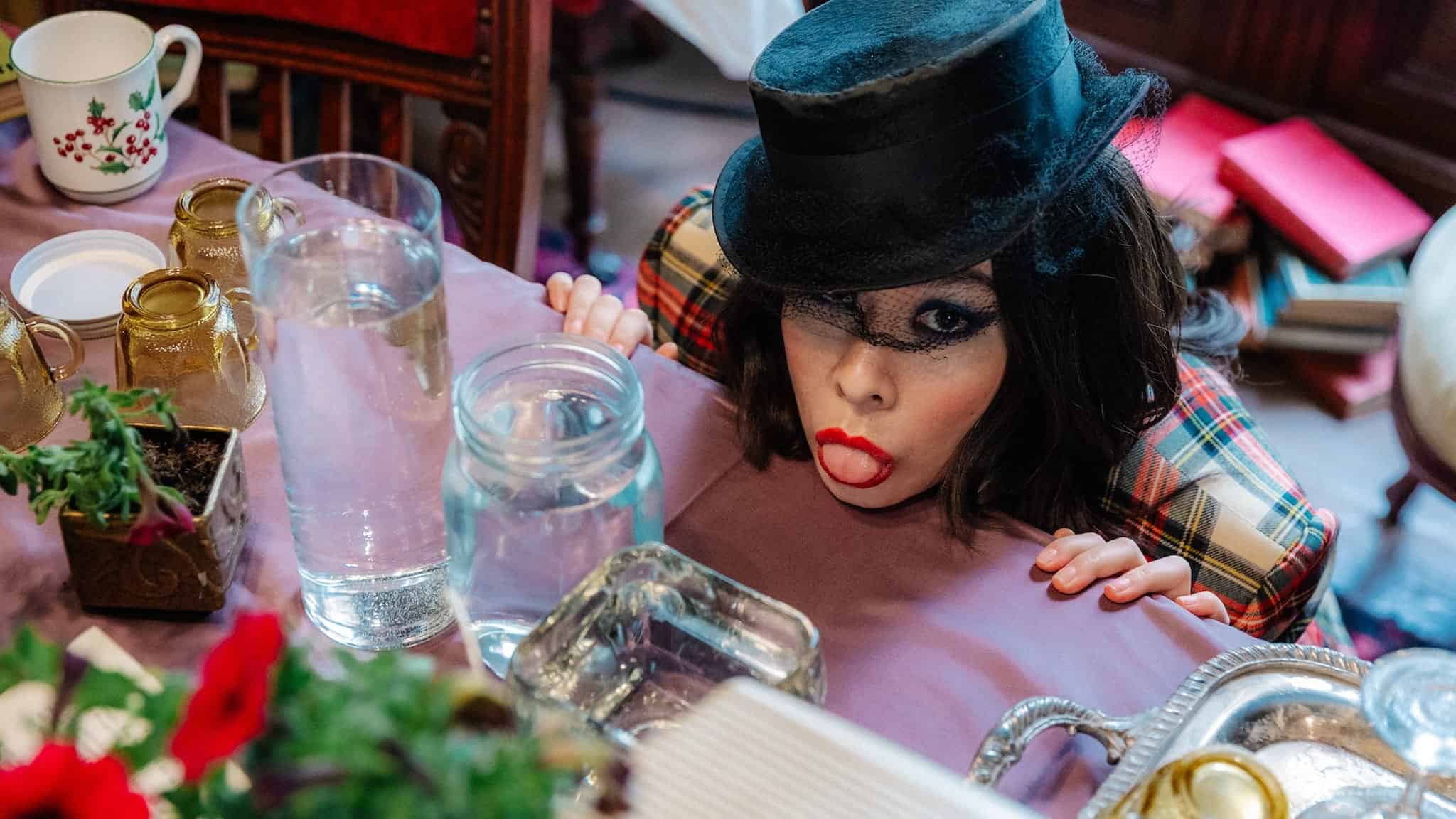
Nothing’s about to happen to Mitski (because she’s offline)
As the singer-songwriter turns 36, we look back at her career and how she defied the odds by finding success while staying off social media
Singer-songwriter Mitski turned 36 on Sept. 27.
Lexie Alley

Words by Andy Crump
Cultivating a presence online is de rigueur for public figures: streamers, journalists, politicians, authors, actors, even scientists. The lower their digital footprint, the smaller their following; the smaller their following, the lesser their success. This brand-building flow chart is so seeded in contemporary understanding of how to make it as a public figure in the social media age that to see one not only succeed while staying terminally offline, but thrive, is to witness a glitch in the Matrix, or, in the case of indie rock slash art pop singer-songwriter Mitski, who turned 36 on Sunday, the emergence of the One.
The roots of Mitski’s popularity wind down to the 2010s, a time when custom dictated that celebrities and stars should operate some combination of Facebook, Instagram, and Twitter (now X) accounts, but their sporadic engagement wasn’t a faux pas. Back then, one could squeak by with online activity ranging from “minimal” to “nil” without hamstringing their visibility. It’s not so much that public figures didn’t exist on social media, as much as culture hadn’t yet shifted in a direction that necessitated their participation in virtual town squares. The difference between social media’s positional influence in the 2010s versus the 2020s suggests one reason among others why Mitski diligently avoids online forums in the 2020s: what began as a tool for self-promotion came to encompass far too much of artists’ identities. You are what you post.
Mitski is notoriously private, so what she posts on, for instance, her Instagram, now isn’t run by her at all. She has a social media manager for that. She also has immense and undisputed talent as a craftswoman. This, combined with her devoted fanbase, grants her a rare freedom few public figures enjoy—the freedom to say “no thanks” to the online world. In the interest of disclosure, this also applies to how she engages with the press. Most musicians do interviews when they release new material. Mitski is selective about this process, and accepts such requests sparingly, which in the end enhances her allure as a public figure. More power to her. Frankly, she may not even need to entertain the press for the sake of furthering her work; the further she’s distanced herself from apps like X, the closer she’s gotten to mainstream success.
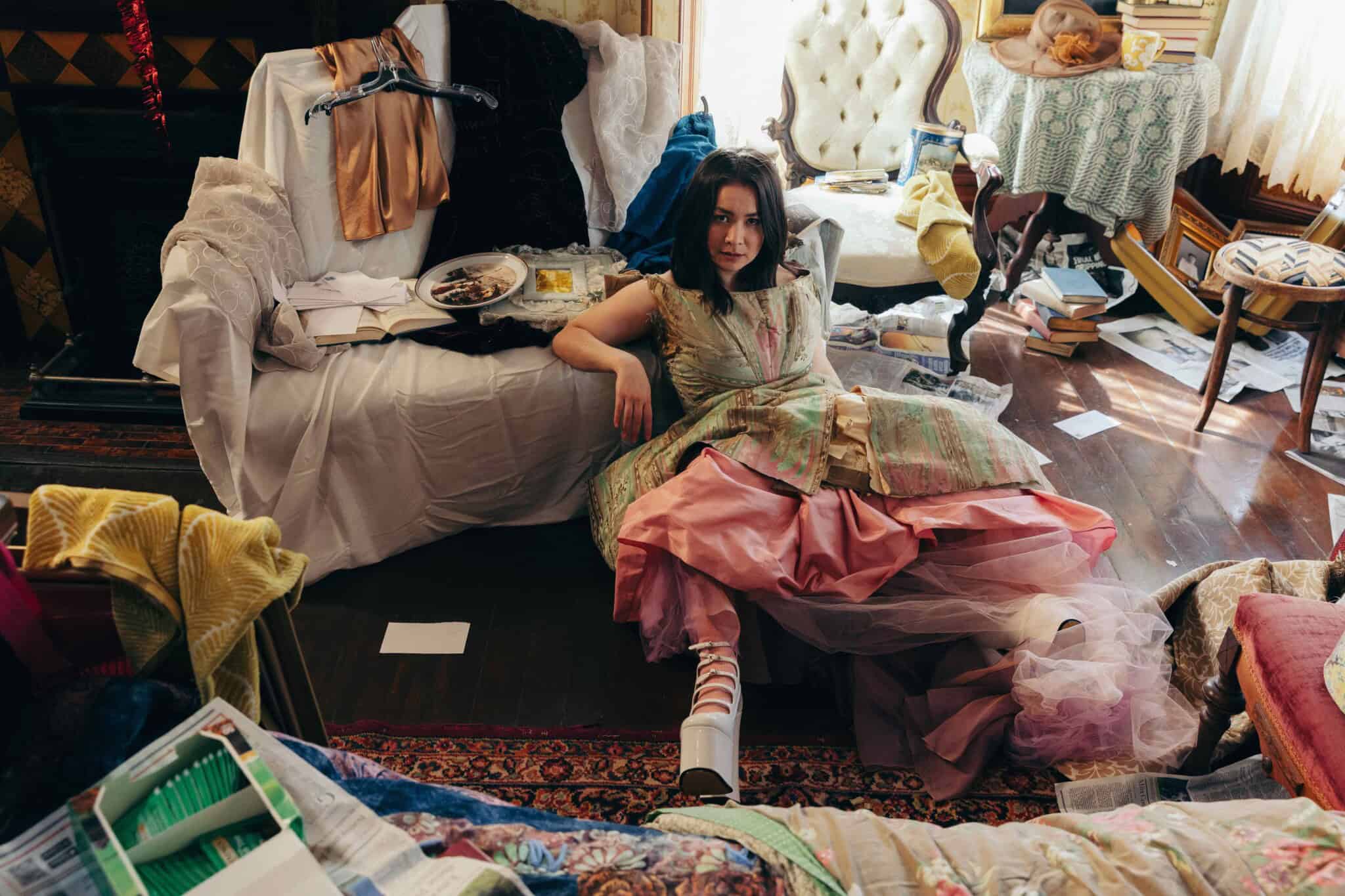
Mitski's eighth studio album, "Nothing's About to Happen to Me," was released earlier this year.
Lexie Alley
Mitski quit music in 2019, coinciding with her decision to quit social media. Notably, she returned to the former a few years later and has stridently shunned the latter. She told Rolling Stone in a 2021 interview, “I have to do this even though it hurts me, because I love it,” while describing the details in the music video for “Working for the Knife,” the lead single from Laurel Hell, her at the time unreleased sixth album. The piece tells of an artist stultified by the mechanics of popularity in her industry, and at the same time left inert at the idea of leaving it entirely. Making music is in her blood. It’s who she is. That’s why a feature like the Rolling Stone cover story is such a rare gift: she’s a successful musician as well as a human being who values her peace. The idea that anyone has to compromise their sanity for their career’s sake is, frankly, bonkers.
So as much as the sight of Mitski on Jimmy Kimmel Live!, performing the track “If I Leave” from her latest album, Nothing’s About to Happen to Me (which dropped earlier this year), seems incongruous for someone who prefers to stay out of the public eye, the key word is “performing.” This is, again, who she is: a musician who performs her craft rather than a curated social media persona. Posting on X, Instagram, or TikTok means giving your fans (and, not for nothing, your detractors) steady access to you—not your art, but you. Fans have always obsessed, fawned, and freaked out over their beloved icons. They haven’t always had such an easy time interacting with them, and even if shutting out the noise is as easy as putting down one’s phone or closing one’s laptop, that’s not the same as the noise going away. No wonder Mitski thought about abandoning ship eight years ago. It’s bad enough that she came to see herself as a sort of cog in the music industry’s machine. Having fans that don’t keep their hands to themselves is arguably worse.
This is literal. Speaking to The Guardian in 2022, Mitski recounted rabid fan reactions at one show where security was nonexistent and the crowd wanted a selfie, her autograph, her attention, and evidently her shirt. The rigors of indie rock stardom aren’t everyone’s taste. But the complex dynamic Mitski has with her status and her need for space makes rich soil for great music. “In a Lake,” the opening track from Nothing’s About to Happen to Me, captures that tension in an acoustic reflection in which her producer and engineer Patrick Hyland strums his guitar accompanied by a banjo and accordion, and eventually joined by a swath of string, brass, and woodwind instruments. “So I'd never live in a small town,” Mitski sings on the second verse, “I'm slow to learn all the rules / I've tried very hard to be good / But when they think you're bad, people act worse.”
She’d rather live in a big city, where “you can start over,” as she croons on the chorus. If that sounds illogical for Mitski, given her relationship to her audience, recognition, and the music business, there is wisdom in the thought process. She did, after all, start over in the big city after her departure and swift return to music, and has only improved as a musician ever since. Clearly, “In a Lake” has the right idea about how easily a person can find their footing in the United States’ loudest physical places. But it’s notable that the song, one banger preceding 10 others, makes no obvious allusion to virtual places, unless we want to read the familiarity of small-town living with the familiarity of social media (which we do). Mitski will never live in a small town. She’ll never be the one behind her Instagram posts, either. If that makes your heart ache, you’ll always have Mitskitweets—a fan page comprising screen grab after screen grab of Mitski’s old musings when it was still Twitter, many of which are delightfully droll. And that’s okay. In fact, it’s downright inspiring.
Published on September 28, 2026
Words by Andy Crump
Bostonian culture journalist Andy Crump covers movies, beer, music, fatherhood, and way too many other subjects for way too many outlets, perhaps even yours: Paste Magazine, Inverse, The New York Times, Hop Culture, Polygon, and Men's Health, plus more. You can follow him on Bluesky and find his collected work at his personal blog. He’s composed of roughly 65 percent craft beer.