
Na Hong-Jin’s ‘Hope’ is action packed, but barely scratches the surface
The South Korean horror flick follows a police chief who finds his town attacked and killed by mysterious creatures
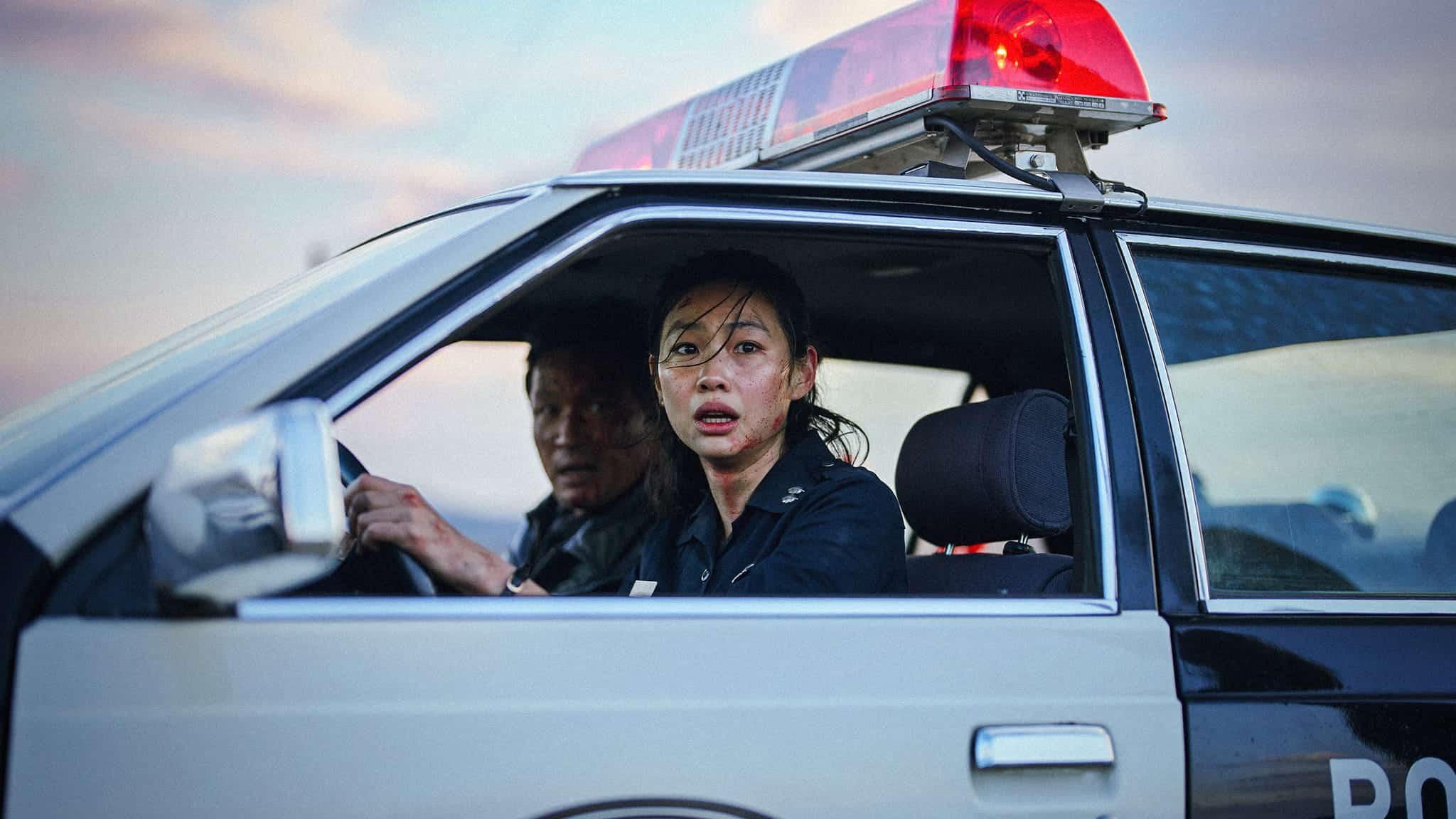
Hoyeon as Sung-ae in "Hope."
NEON

Words by Devan Suber
Naming your monster movie Hope in this day and age sets up a lot of expectations, even more so coming from director Na Hong-Jin. His last film—2016’s The Wailing—was a slow-burn horror film that threw possession and zombie movies into a blender with themes of ignorance and xenophobia, and his latest just as chaotically follows a police officer in a rural South Korean town dealing with absolute insanity. Returning to the action-packed mode of his first two features (The Chaser and The Yellow Sea from 2008 and 2010, respectively), Hope sees Na graduating to the Cannes Competition slate after stints in both Out of Competition and in Un Certain Regard. While Na’s latest film signals an evolution in technical ability and ambition, it’s held back by a script that barely scrapes the surface of both character and plot, as well as some shaky visual effects. With a film that’s reportedly the most expensive in South Korean history, one wonders about behind-the-scenes drama.
Hope, which hits theaters Wednesday, starts off promising, though. Hope Harbor police chief Bum-seok (Hwang Jung-min, The Wailing) is taken by his cousin Sung-ki (Zo In-sun, soon to appear in Lee Chang-dong’s Possible Love) to examine the corpse of a bull with a rather large gash in it. The chief arrogantly believes it’s a tiger but is quickly dissuaded from that rather quickly when he’s called back to the town and discovers a disaster zone, with most of the human population dead. Na manages to straddle the line between withholding the goods (the obvious creature screeching) and ramping up the tension as Bum-seok runs towards and away from this thing capable of tossing cars around, soon joined by his firepower-loving rookie Sung-ae (Squid Game’s Hoyeon). For a while, you start to wonder if Na is even going to reveal the monster in question, and a shot of hands pulling a man into horrid darkness hits like a shot to the heart—and then you actually see the thing.
Let it be known that Hope’s many chase sequences are often pulse pounding and inventively shot. One of the more unique touches is Na’s habit of sending the camera flying towards a car and then rocketing off into the distance as someone stops and whips around. The nature of the creature (or creatures) is kept secret, but the problems start when they’re in motion. Our first interaction has them looking strikingly digital, bringing to mind graphics from the PS3 era, except without the textures and placed against lots of very good-looking practical effects.

"Hope" follows a police chief whose town is killed by mysterious creatures.
NEON
Another creature resembles the Licker from Resident Evil 2 (original or remake), and it looks fairly good for the most part but—other than the feeling of familiarity—has some dissonance in a major forest set piece, where it feels like it should be making way more impact with trees that it actually does.
It doesn’t help that the film takes place in daylight, sparking memories of Bong Joon-ho’s much beloved The Host. Hope does, for the most part, manage to flop between tones about as well as many South Korean films often do—perhaps best seen when Bum-seok and a local bicker over who’s going to charge into a dark room first, or when a brief visit to a suspect shifts into serial killer horror for a few minutes. The bigger problem is that there’s a lot of movie (about two and a half hours), and it doesn’t always balance storylines neatly. Reportedly, four minutes were cut since the premiere at Cannes, but it’s hard to tell if that’s the reason for the general disjointedness. Scenes between Bum-seok, Sung-ki and his hunters, and Sung-ae are cut in ways that occasionally feel like they’ve been interrupted just as things are getting good. The humor likewise tends to be more scattershot—ranging from a running gag of progressively more illegal weapons, to a surprisingly graphic bathroom story told by an old man who hid from one of the creatures. Most common is characters repeating the profanity 씨발 (ssibal)—which is translated to f*ck or f*cking, but can also mean sh*t—enough that it’s now the only Korean word I know the meaning of.
All of this can be overlooked if the action is good enough and for the majority of the runtime, it is. On top of the aforementioned chase scenes, Hope features enough gonzo gore and honestly crazy visuals to be solidly entertaining. The practical effects—including one of the creatures in an autopsy sequence—are appropriately goopy, and you start to roll with people getting smacked into a tree back first, yet still able to get up and walk. Better yet is the not-so-subtle subtext that our hunters may not be the prey in this situation, whether it be the clear focus on signs exhorting citizens to, “Protect the Nation from Infiltration,” or the fact that Hope Harbor happens to be near the Korean Demilitarized Zone separating North Korea and South Korea—with landmines dotting the ground—and it almost didn’t need an extreme slow-motion closeup of a tear to signal a shift. None of this is exactly original; not just to film but many video games over the years as well, but it does provide a little bit of nourishment to what could easily be a brainless us-versus-them story (lord knows the last thing we need is an invader metaphor). When Hope is cooking, it’s really cooking.

Hwang Jung-min as police chief Bum-seok being chased down by a creature in "Hope."
NEON
Unfortunately, the film ends at what feels like should be the halfway or three-quarters mark, right when it seems like things are really going to pick up. It especially doesn’t help that this follows a lengthy exposition drop that somehow also leaves the viewer in a bigger state of confusion than before. There’s constructed languages, a large ship crashing into a mountain, strange names being tossed around, all things that really would’ve been welcome at any earlier point in the film or just not included here at all. Hope ends up feeling like the beginning of a franchise—and the thing about franchises is that usually, the first entry itself is a complete story. By the end of Hope, you’re left with the realization of how thin both the themes and the characters are, all the more frustrating by how tantalizingly close it comes to being something. A sequel is allegedly in the works, but when the peaks are so high, you can’t help feeling a little bit cheated.
Published on September 8, 2026
Words by Devan Suber
Devan Suber is a Philadelphia-based freelance film and TV critic whose work has appeared in such outlets as IGN, The AV Club, Polygon, The Film Stage, and many more. You can find him on Twitter @therealdsube or Bluesky @therealdsube.bsky.