
J-horror director Yûta Shimotsu on the gruesomeness of conformity
The director of the “Strange: Junji Ito’s Tales for Sleepless Nights” anthology is haunted by conformity in his work
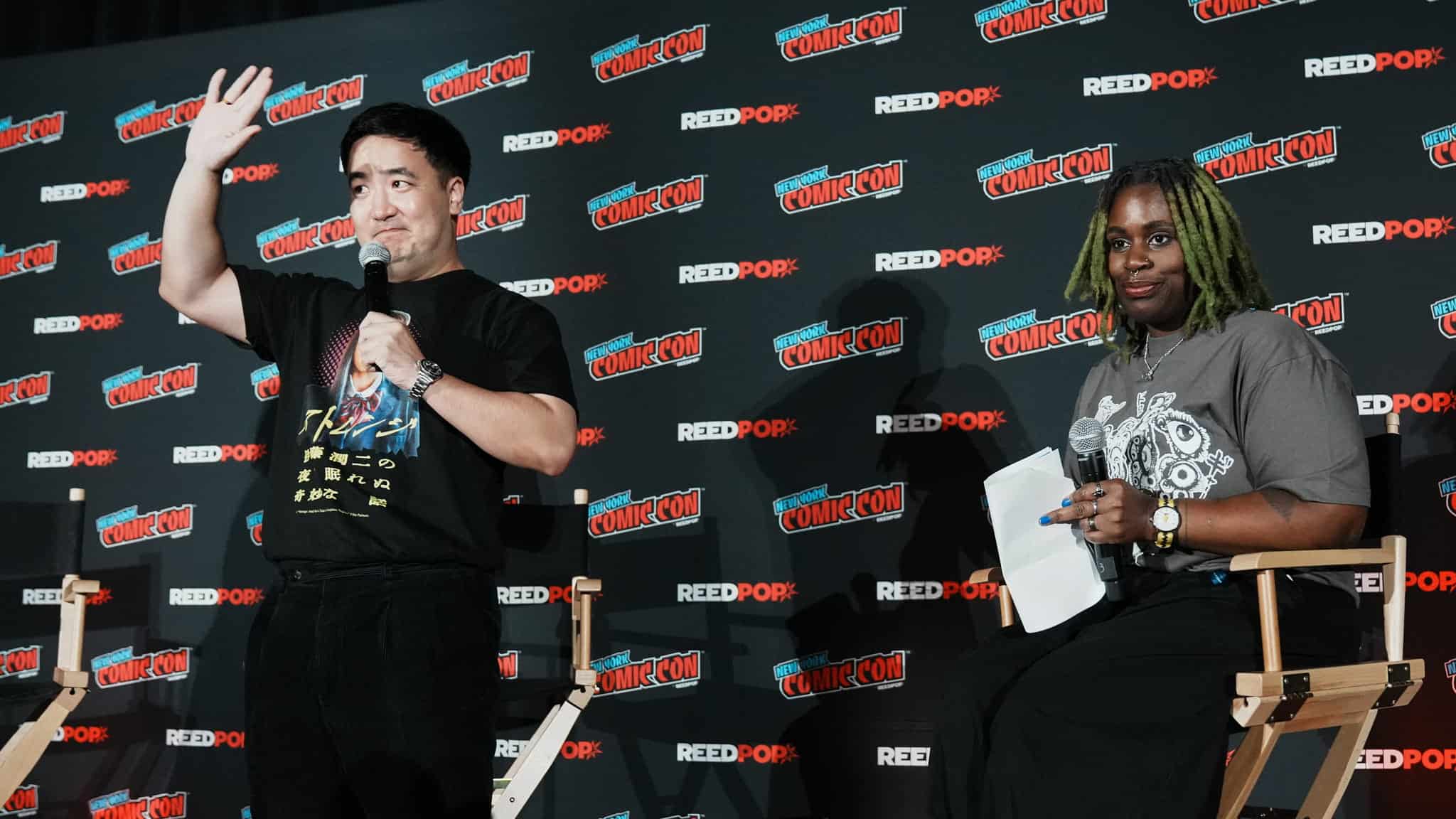
From left, Yûta Shimotsu and moderator Gigi Murakami at New York Comic Con 2026.
Courtesy of TV Tokyo

Words by Caroline Cao
It’s no shock that Yûta Shimotsu, one of the buzziest directors in J-horror, first spiraled into Junji Ito’s manga world with Uzumaki. The Fukuoka Prefecture-born filmmaker, who got his start in commercials and short films, spun his own horror tale in his short film, Dreaming to Accept Reality, which would evolve into his 2022 feature debut Best Wishes To All.
Shimotsu’s craftsmanship on his horror-comedy feature film New Group (available to stream on Shudder starting Friday), a different tale about societal fixations on shapes, made him the ideal recruit for adapting the horror mangaka’s works in Strange: Junji Ito’s Tales for Sleepless Nights, the live-action anthology now streaming on HBO, with new episodes every week through Dec. 11. The earlier anthology selections featured a boyish forest spirit preying on girls seeking fortunes about their romantic future (“Lovesickness (Part 1)”) and a sadistic girl who forms a complex dynamic with the neighbor boy she once victimized (“The Bully”).
In the episode “Face Thief,” which had its U.S. premiere at the 2026 New York Comic Con (NYCC), new girl Yui Machida (Nanami Yamazaki) glances pensively around her classroom. Only one girl, Kamei (Anna Hoshino), volunteers to guide her around the school. The classroom mutters. Machida knows she’s caught in something awkward, and this seems confirmed by Kamei’s clingy obnoxiousness. To make matters more bizarre, Kamei can also magically morph her face into the spitting image of other students, thus making her the titular “face thief,” reviled by students and her teacher.
Like many of the anthology's entries, Shimotsu’s adaptation has shapeshifted from its original story—which can be read for free on Viz Media. Ito portrays Kamei as an entity whose survival depends on stabilizing her face from becoming repulsive (“I might as well be influenced by beautiful people,” she explains), with the ending condemning the mob abuse that engulfs her. But Shimotsu seems to trod the same path as the manga before pulling 180s with the characters’ trajectories, starting with Machida and Kamei forming a bond as fellow misfits, as opposed to their repellence in the manga.
The reimagining of Ito’s horror pageturners was the heart of our in-person conversation at NYCC. Through an interpreter, we talked about him reshaping “Face Thief” into a more hopeful story, exploring the blurred lines between perpetrators and victims, and shaping the conformity that haunts his filmography.
This interview has been edited for clarity. Some spoilers will be discussed but not revealed.
Caroline Cao: How did you get drawn into Ito’s horror?
Yûta Shimotsu: As you know, Ito has his own unique, intricate linework and aesthetics. But more than that, I think every work of his has some underlying theme. It makes you think, “What’s the philosophy? What's the message behind it?”
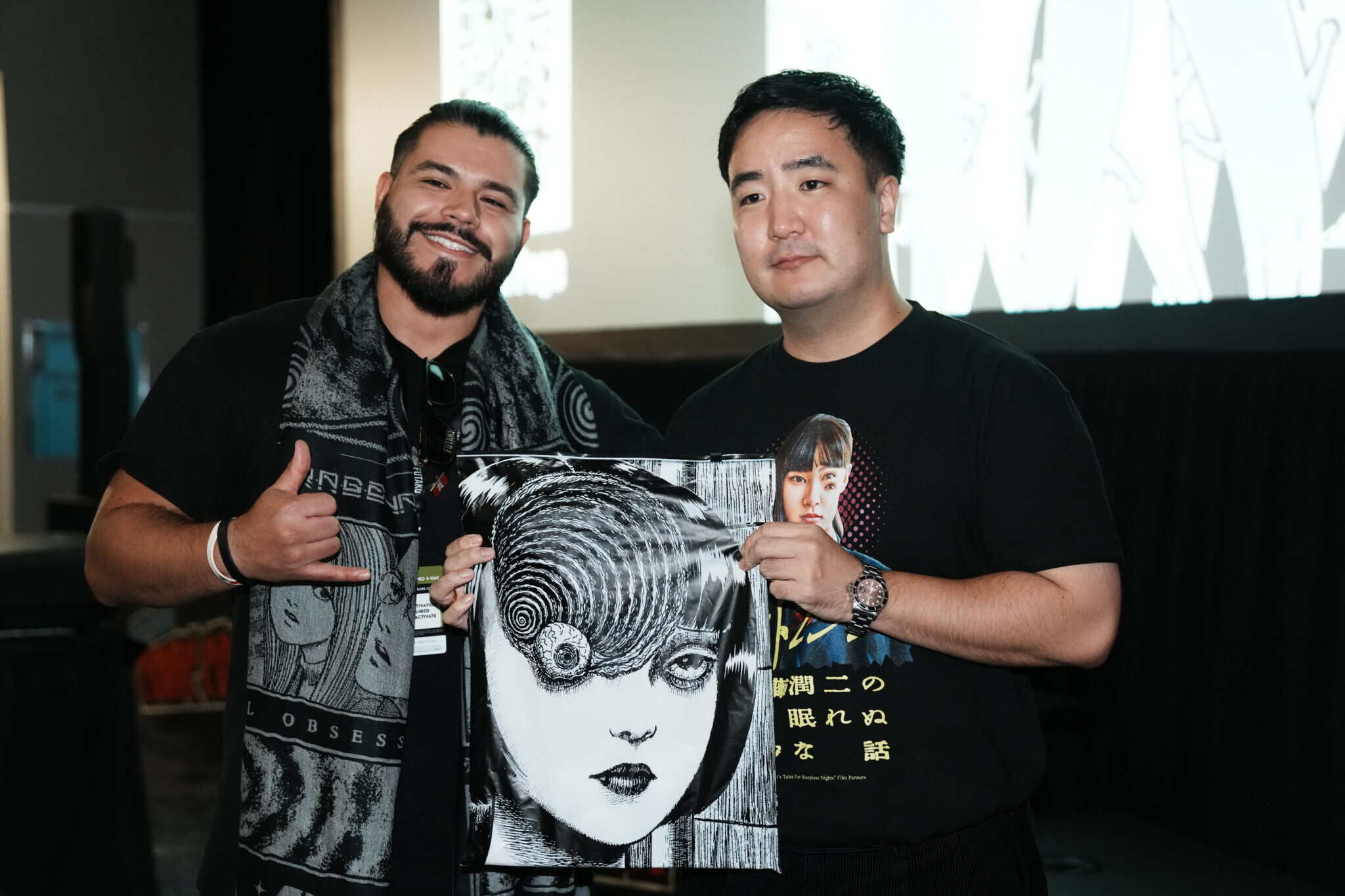
Yûta Shimotsu (right) posing with a fan.
Courtesy of TV Tokyo
CC: I watched the film first before I read the manga. Kamei was sympathetic in the original manga, but this time the ending gives her a knight in shining armor in Machida.
YS: With the students, the ambiance is different from the manga. The girls (onscreen) are more regular. (My approach is) not like very traditional and conservative students (against) the rebellious student Kamei in the manga. We talked to Mr. Ito, and he accepted the change. Kamei was a rebellious student (in his manga), though I changed her to somebody who’s hurt.
CC: The ending focuses on female love and friendship.
YS: It’s more about finding somebody for each other who can understand. But I wouldn’t really describe that as “love,” it's more like women's friendship.
CC: Yes, and some may interpret it differently.
YS: Yes, absolutely.
Filmmaker Yûta Shimotsu's "Face Thief" episode premiered at the 2026 New York Comic Con.
Courtesy of TV Tokyo
CC: Your adaptation of “The Bully” (the second episode) is a different story about bullying, born out of intergenerational trauma and unchecked sadism. There's resentment, one-sided adoration, malice, and then there’s twisted love or infatuation, and resentment again. What are the challenges in exploring the complex dynamics between Kuriko, Nao, and her son?
YS: During their childhood, Kuriko is the perpetrator and Nao is the victim. But when they become adults, their positions are reversed. I think one of the most fascinating aspects of this story is the ambiguity surrounding the adult Nao. What is he really thinking? And at what point does his actions become part of a revenge plan he may have been carrying out all along? The story deliberately leaves these questions unanswered. I believe that this ambiguity gives the audience room to use their imagination, making the story even more unsettling. The fact that both characters are simultaneously victims and perpetrators is one of the most important elements of the story.
We worked very closely with Yoko Maki, who plays the adult Kuriko, to recreate the scene from the original manga as faithfully as possible. We made countless subtle adjustments to her hair and makeup, her pose, and even the lighting to make sure the final image was as close to Ito’s original artwork as possible. I think we managed to create a truly shocking scene.
CC: In Best Wishes to All and New Group, you deal with conformity. What inspired those themes?
YS: So my starting point was that I studied sociology. Every group, every society consists of every different kind of being: a company, a school, or anything.
From research, the Western world feels more happiness in being different. But in our society, we’re expected to have more harmony and conformity. We’re expected to act as a group, so we stop thinking of our own individuality. So then that makes their own pyramid (thus the visual motifs of bodies forming pyramids in New Group).
CC: Did you ever feel the pressures of conformity?
YS: Yeah, when I was going to school in junior high and high school, I did feel the peer pressure.
CC: As an American, when I watched Best Wishes To All, I thought of Ursula K Guin's The One Who Walks Away From Omelas, where a society depends on the suffering of one person. But what was your specific inspiration for Best Wishes To All?
YS: I once came across an urban legend about the “Law of Conservation of Emotions on Earth.” According to this theory, if you add together all the happiness and unhappiness experienced by people around the world, the total will always equal zero. If that were true, it would mean that you could deliberately make someone else unhappy in order to create happiness for yourself. I took this idea and developed a fictional world in which every household has one person who is sacrificed for the happiness of the others. But I didn’t want this to be just a fictional concept that exists only within the movie. I began making the film by asking myself a question: “Isn’t this actually something that is already happening in the world we live in?” That question became the foundation of both the short film and the feature version of Best Wishes to All.
Published on November 4, 2026
Words by Caroline Cao