
In ‘Never After Dark,’ Moeka Hoshi brings her character—and the dead—to life
Writer Zachary Lee chats with the actress about why she's most drawn to the characters who are the hardest to understand
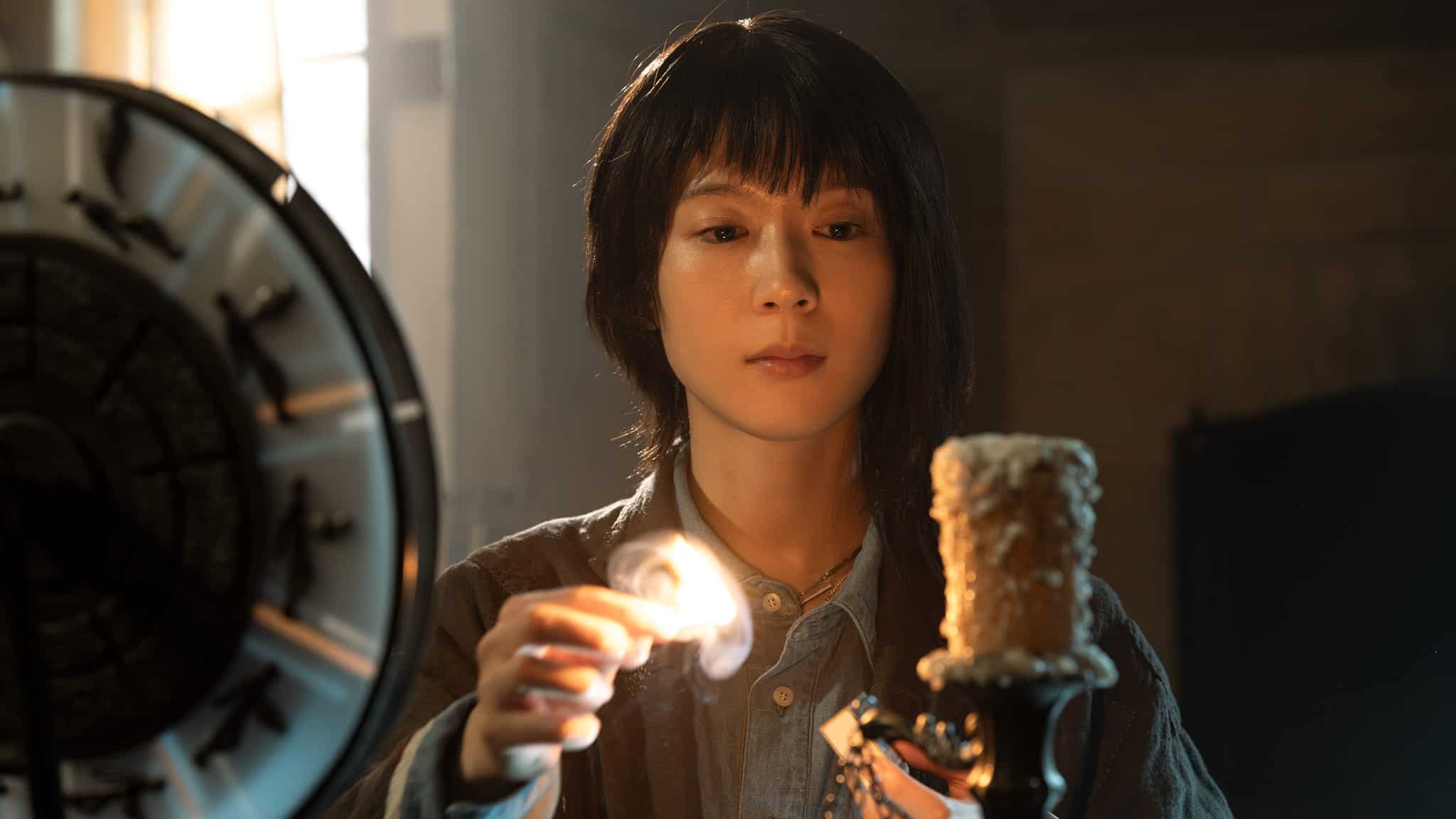
Moeka Hoshi as Airi in "Never After Dark."
Courtesy of Magnolia Pictures

Words by Zachary Lee
Paying homage to classic J-horror films while also carving its own sanguine and disturbing path, director Dave Boy’s Never After Dark never forgets to tie its supernatural terror to corresponding real-world ones. The best films that traffic in the otherworldly are the ones that acknowledge that as scary as the spiritual may be, it is always scarier when spinning out from the violence of the embodied world. Never After Dark is anchored by chilling performances from Moeka Hoshi and Mutsuo Yoshioka, whose commitment to their characters’ tortured wrestlings and sanguine passions give the film's horror real teeth.
Hoshi stars as Airi, a medium who arrives at a remote country home that is haunted by Yoshioka’s disfigured man character each night. At first, Airi believes this work to be business as usual; she has a strategy for communing with the dead, determining what they want, seeing if she can provide it, while sending them on their way. This new ghost, though, is of a different breed, and Airi finds that her greatest threat may not be the spiritual realm but the real one, once a stranger comes along who displays an uncanny interest in the house the ghost haunts.
For Hoshi, the opportunity to play a character like Airi drew upon her skills not only as a dancer, but as someone who has long ruminated on the metaphysical aspects of acting.
As the film begins its limited release, JoySauce spoke with Hoshi about how her relationship to fire has changed as a result of working on the film, crafting Airi’s worn-out yet vintage aesthetic, and what keeps drawing her to stories about people who are in communicative disarray.
This interview has been edited for clarity and length and contains spoilers for Never After Dark.
Zachary Lee: Dave has spoken about how your character “is neither specifically Japanese nor specific to Western psychics or mediums…the way (Airi) thinks about spirits and the belief system that she presents about what she's doing…is very atypical for Japanese society and Japanese ghost stories as well.” Tell me more about how you built out your character. What did you draw from and what did you find yourself pushing back against when it came to how Japanese people culturally relate to ghosts?
Moeka Hoshi: The rituals that Dave made Airi do—which were wholly original creations from him, by the way—were my greatest entry point. You may have seen versions of what Airi does, but the unique combination of wax, hair, flame, felt like something that neither Western nor Japanese audiences have necessarily seen. I had a lot of questions about the world as a whole, but Dave was always willing to answer very specifically. I would ask questions like, “Can ghosts touch me from beyond the veil? How does time work when Airi is in the dream world? Is the speed with which she’s running the same as the speed in the real world?” He had an answer for that, and his responses made me feel like the world I was inhabiting actually existed. The main takeaway was that working in the spirit world, things felt more subdued for Airi, as if everything she was doing movement wise was being done in a pool.
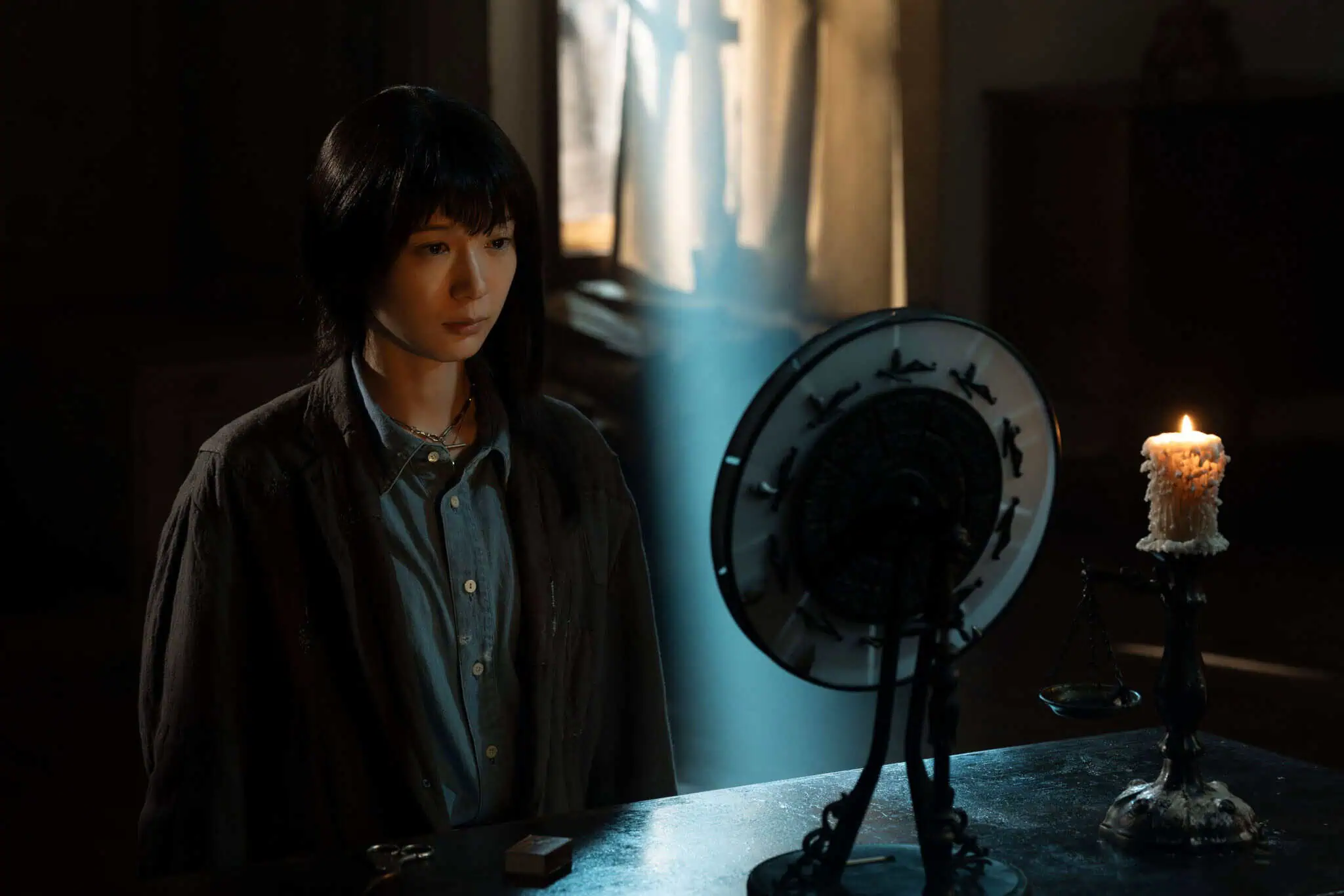
Moeka Hoshi in "Never After Dark."
Courtesy of Magnolia Pictures
When I look at the tools Airi is using, from the big candle to the spinning mirror, one thing that I kept reflecting on was how well used they were. They were handcrafted and old. This meant that Airi had a personal touch to her work, but also that she has been doing this for a long time. I liked this sense that Airi could have upgraded what she was working with, but she chose to keep the same materials. It speaks to her stubbornness and perseverance, which can be a detriment and a virtue as you see later in the film.
ZL: I have to say that the candle was probably my favorite one, because it really looks like you can see each layer of melted wax. Obviously, you have to work with fire a lot in this film because that is the way Airi enters and leaves the spirit world. As an actor, though, working that close to flame or working with matches that quickly go out requires a certain level of focus that can make it hard to focus on acting. How has your relationship to fire changed as a result of working on a project like this?
MH: That’s an interesting question. We had to be really resourceful when it came to fire. For example, we had to put oil on the wicks on the candles so that they would burn longer and better. For some reason, though, when we were doing the take, it did not work the way we wanted, so I had to learn how to work on a much faster timeline because the flames would not be lit for as long. I was honestly just struck by how many departments had to come together to make fire look the right way; it is something I’ll remember as I go to other film sets. In terms of how that impacted my understanding of my character, in many ways I think the focus I had to embody when the candles were not working the way production wanted them to could extend to how Airi had to have razor-sharp focus when it came to her work.
ZL: Dave hasn’t talked too much about his Mormon background, but I know that he had conversations with you about it as he was fleshing out the spiritual realities of this world and Airi’s work. What was the fruit of those conversations, and how did you apply what you may have learned from him when playing Airi?
MH: When I first met with Dave, I wanted to dive into his background because a big question I had was: “Why do you want to make those films?” He shared some personal stories, including one very specific incident that I’m not at liberty to share, but I think the way he shared his personal experiences with religion and spirituality helped me understand where he was coming from when crafting Airi. For example, he said that one time he was praying and that he was so “into it” that time sort of stopped and that he overlooked some real-world problems at the moment. That feeling of being wholly lost in a sense of devotion, that’s something I see in Airi.
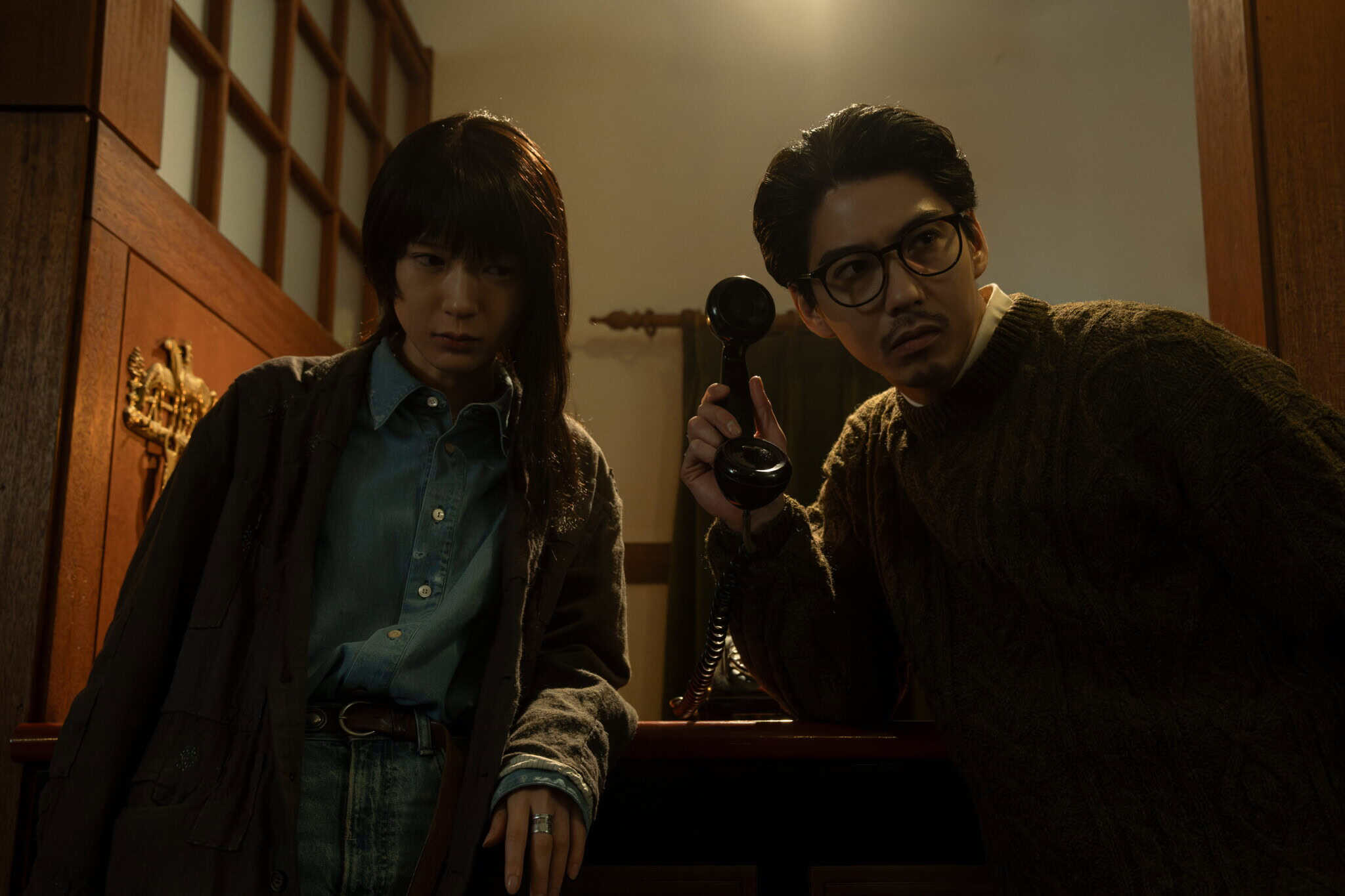
Moeka Hoshi and Kento Kaku in "Never After Dark."
Courtesy of Magnolia Pictures
ZL: I remain fascinated with how costuming helps actors understand characters and with this film in particular, I was more curious because I kept thinking, “How would a medium dress?” Can you speak about working with costume designer Arata Kobayashi to craft this character’s work?
MH: What was wonderful about this production was that all the designs were fitted to me, and I had costumes made for my body. What was funny, though, was that the costumes were almost too good and too pretty. The creative team and I agreed that we wanted Airi to have a more “worn out” look. One specific example is that scene where I was wearing pajamas. The sweatpants of the pajamas, as they were, were just too crisp and new. I was originally going to take them home, wear them, and break them over time so they would look more raggedy, but of course I forgot to bring them. Arata’s assistant had to then wear them and go through that process so we could expedite the look. That is just one example of how detail oriented everyone on this set was.
ZL: The things you do for cinema. It recalls the time when you hired someone to help you learn how to put on a kimono properly for Shōgun. Your dance sequence is one of the film’s best moments, and I’m curious how you approach a scene like that given your background as a dancer. Is there specific choreography you employ to depict “drunk dancing,” or do you truly just let yourself freestyle?
MH: Dave and I agreed Airi should not be good at dancing; at that moment she’s drunk, so it’s okay to be messy. I had thankfully gotten the song she’s dancing to, “Silhouette,” to listen to on repeat, so I had the rhythm, melody, and cadence in my head as I was dancing. In terms of how it manifested, though, it was really anything goes. Dave trusted me to make that scene be what I wanted it to be, which I’m grateful for. Because I have a dance background, as you mentioned, I know where to break form and when to lean into it, so it was fun to think about the rules I was living into and shattering—dance-wise—while I was moving.
ZL: I love Airi’s line “My job is to help souls become unstuck and go to the next world.” That line made me think about acting, how in many ways, as you play characters, you’re taking words on a page stuck on a page and “bringing them” into the embodied world of performance. I’m wondering how this idea lands for you, if you see similarities between the work of a medium and the work of an actor?
MH: It’s an interesting point because on one level, I can certainly see some similarities there. With a medium, they are actually seeing ghosts. They’re not using their imagination, whereas in many ways, all an actor is doing is using their imagination to take something that’s fictional and make it real. But when I think about Airi and how she concentrates and gets into the zone and how she becomes this completely different version of herself when entering this spirit realm, that’s a feeling I deeply resonate with as an actor. For example, there's the scene where Airi is channeling the spirit of Mutsuo Yoshioka’s character. The way she’s channeling that spirit has made me think about how my body is a medium, one that channels the spirits of different characters or versions of me.
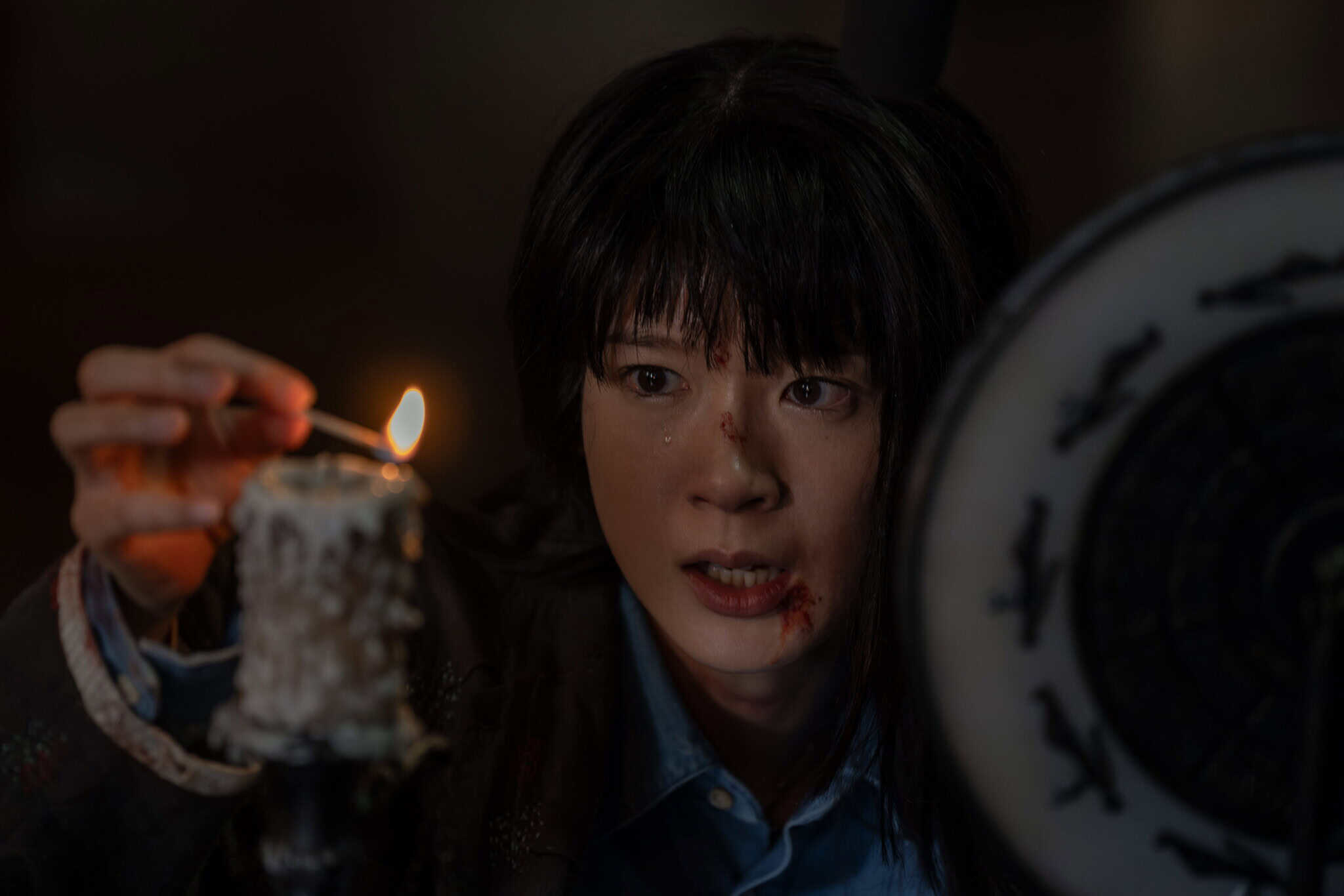
Moeka Hoshi in "Never After Dark."
Courtesy of Magnolia Pictures
ZL: When I think about the string of recent projects you’ve had the pleasure to be a part of, from Shōgun, Never After Dark, and Memorizu, these are all projects that focus on various types of communication: What happens when people cease to be able to comprehend each other, or in their fear and ignorance, choose not to understand each other. What keeps drawing you back to this theme in your projects?
MH: Honestly, I think about the whole issue of communication constantly. I value my relationships deeply and think that there’s something invaluable about having deep connections with your friends. I think a lot about how human communication, most of the time, is not visible to the human eye. When people interact, there’s so much under the surface, so much brewing that exists beyond what is spoken. I like those projects that focus on characters who are, in some way, trying to understand what’s inside of them that they may not even have language to articulate. I much prefer to play or watch characters who are not straightforward to understand.
ZL: You have said about working on Shōgun and playing Usami Fuji, because of the show ,“I see more deeply where (Japanese) culture really comes from, what things have stuck, and what things have not. For example, higher ranking, lower ranking—that societal hierarchy.” I’m wondering what, if anything, about working on a project like Never After Dark has helped you understand Japanese society and culture better, whether it’s around ghosts, death, spirituality etc.
MH: So I asked Dave a lot of very specific questions about those details and worked from there. In that sense, I actually wasn’t trying to make the character feel particularly Japanese. If anything, I was trying to move away from that. But the story is still set in Japan, and I think that made her sense of not belonging anywhere feel even stronger. She had already grown up with a lot of isolation. Because of her family situation, she didn’t go to school very much when she was young, and her family had worked as mediums for generations, so she didn’t really have friends. Even in the story, Gunji doesn’t believe her and is suspicious of her. So I felt that loneliness had always been part of her life. And in Japanese society, where there can still be a strong expectation for women to be feminine, to be “normal,” and to belong somewhere, I think that made her feel even more isolated. At the same time, the unseen world is something people have imagined and explored in films all over the world for a very long time. So to me, it feels like a very universal and fascinating subject.
Published on September 24, 2026
Words by Zachary Lee
Zachary Lee is a freelance film and culture writer based in Chicago. You can read his work at places like RogerEbert, The Chicago Reader, Dread Central, Sojourners, and The National Catholic Reporter. He frequently writes about the intersection between popular culture and spirituality. Find him hopelessly attempting to catch up on his watchlist over on Letterboxd.