
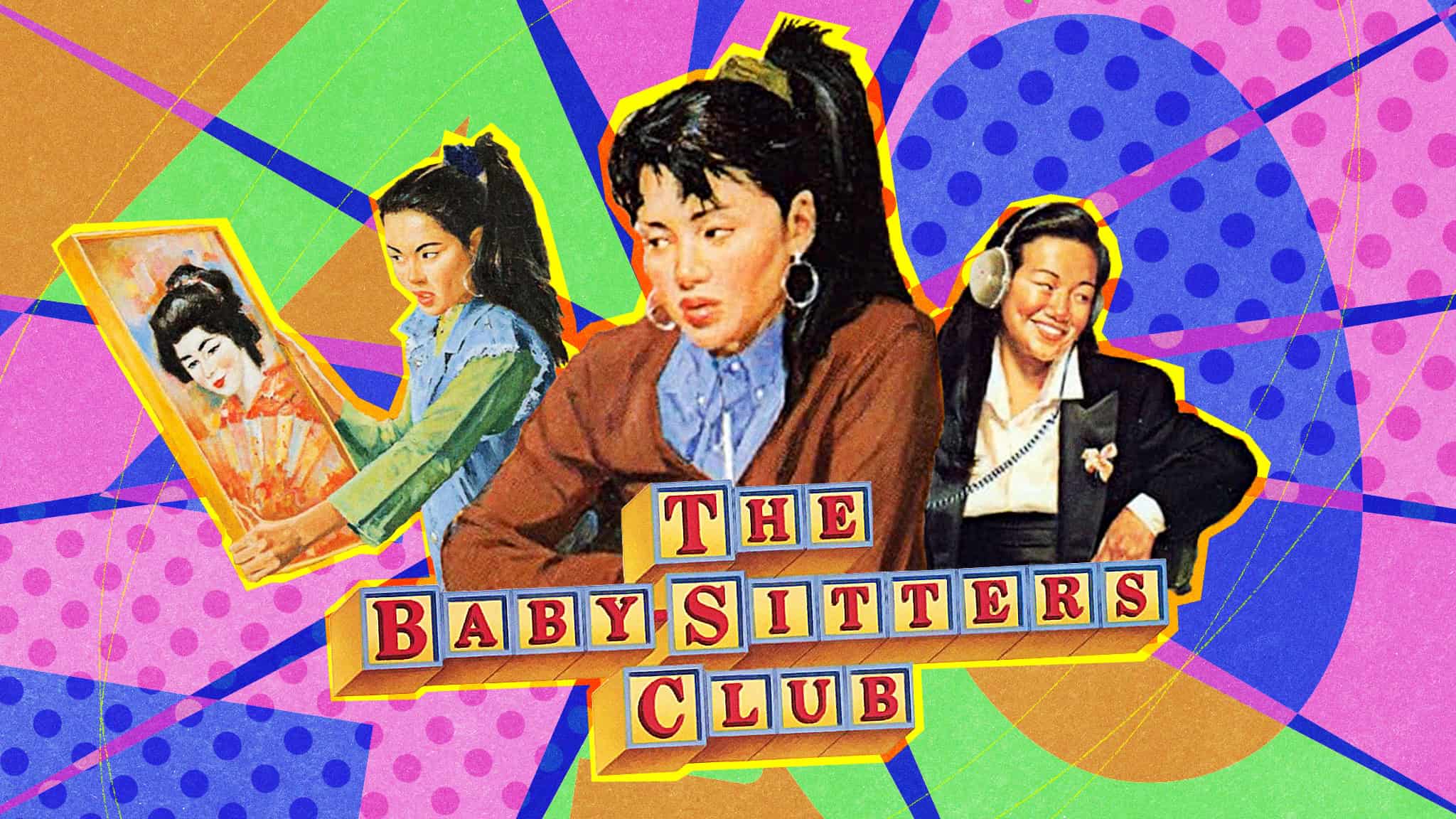
How Claudia Kishi inspired Asian American women to follow our dreams
For 40 years, Ann M. Martin’s beloved ‘Baby-Sitters Club’ character has given us representation and the courage to be ourselves
For some, Claudia Kishi of "The Baby-Sitters Club" was an entirely new type of Asian American representation.
Graphic by Ryan Quan

Words by Samantha Pak
Growing up in the 1990s, like many of my fellow Asian Americans, one of the most prominent types of representation of our community that I saw in media was the model minority stereotype. As a kid, I bought into it. Not only did I believe that all Asians were smart and good at school, I believed I had to do well in school—just because I was Asian American. And if my grades slipped, that was grounds enough to have my Asian card revoked.
Enter The Baby-Sitters Club.
The beloved Ann M. Martin series turned 40 in August, and the stories are as relevant as ever, with the release of graphic novel adaptations of some of the series’ most popular books in recent years, as well as spinoff titles written by Martin and other authors. And who could forget the short-lived, but amazing, Netflix series? (I say this with my full chest, as a childless 40-year-old woman, and my 38-year-old, also childless, best friend agrees: It’s a shame the show got canceled after only two seasons; it deserved more.) And on Tuesday, the series’ first Super Special story, Baby-Sitters on Board!, gets the graphic novel treatment for the first time.
The BSC was my introduction to Claudia Kishi: Japanese American, creative, artistic, junk food connoisseur, and tween fashionista extraordinaire.
Each of Martin’s characters had certain qualities that made them who they were. Kristy was the big ideas girl, who was kind of bossy—naturally making her the club’s president (it was also her idea, after all). Mary Anne was on the shy side, and her organization skills made her the ideal secretary. Boy crazy Stacey lent her awesome math skills to her role as treasurer. And Claudia—the club’s vice president, because they used her bedroom for meetings—in addition to the qualities I already mentioned, was also terrible at school.
Follow your dreams
Claudia’s academic struggles were the antithesis of everything I had come to believe about being Asian American. Granted, I was still in elementary school at this point, so my education—both academic and real world—hadn’t been very extensive. But seeing a young girl with a similar background as me portrayed as something other than a genius with straight A’s (that would actually be Claudia’s sister Janine), was eye opening.
Unlike Claudia, school came fairly easily to me and I did actually prove the stereotype true with my good grades. But there were other ways that I related to her. While I saw myself as more of a mix between the aforementioned Mary Anne for her shyness, and junior officer Jessi, whose commitment to ballet mirrored my own love for gymnastics, like Claudia, my grandmother lived with us growing up—though I was not as close with my grandmother as Claudia was with her Mimi.
Aside from a multi-generation home, Claudia was the first person to teach me it was okay to do something and be someone people don’t expect. Claudia’s creative expression came from art—drawing, painting, putting together amazing outfits. I found my creativity in words and knew from a very young age that I wanted to write for a living. By the time I was in about second grade, it was my dream to be an author (“novelist” had not yet made its way into my vocabulary back then). Journalism came to me once I got to middle school. This strayed from the Asian Big Three of doctor, lawyer, and engineer, in terms of career expectations. But if Claudia could embrace her artistic side, I could go full word nerd. And look at me now, editor-in-chief of an AA+PI media outlet. I’m not writing books (yet), but I’m still telling stories.
Connie Chung showed me that my dream career in journalism was possible. Claudia Kishi showed me that dreaming was possible in the first place.
Generation Claudia
I’m not alone, and I’m far from the only Asian American woman to write about the role Claudia has played in their life. There is an entire generation of Asian American women who have gone on to pursue creative careers, thanks to the young Japanese American icon. They even made a short documentary about her influence—complete with a theme song by The Linda Lindas. None of the other BSC members got a documentary, or multiple articles about their impact. Because on top of being the only Asian American member of the club, she is also arguably the coolest member.
From music groups to superhero teams, young BIPOC kids everywhere have long felt they “needed” to be the token member of color whenever it came to role playing or Halloween costumes. And let’s be real. Those BIPOC members and characters usually weren’t anyone’s first choice. But not Claudia. She was the BSC member everyone wanted to be. Even the white girls. And if I’m being honest, I wished I was more of a Claudia as a little girl. But alas, I was never that cool—I’m still not that cool.
You would never think that a character created by a queer white woman from New Jersey could inspire so many Asian American women. But the genius of it was the fact that the characters Martin wrote about were your everyday girls. They dealt with the same things we did growing up. Both the common such as friendship, family, and school; as well as the not so common such as parental death, and illness (the series was my introduction to diabetes via Stacey’s stories).
Martin’s characters were young girls, but she treated each of them as their own individual person, with their own personalities, quirks, and flaws. They felt real to us. Claudia felt real to us, and maybe that was why so many of us love her. She wasn’t perfect. She made mistakes, like we all do. But Martin allowed her to learn and grow from them, and still be her fabulous self while doing it. And I think that’s something we all hope for in our lives.
Published on September 15, 2026
Words by Samantha Pak
Samantha Pak (she/her) is an award-winning Cambodian American journalist from the Seattle area and editor in chief for JoySauce. She spends more time than she’ll admit shopping for books than actually reading them, and has made it her mission to show others how amazing Southeast Asian people are. Follow her on Twitter at @iam_sammi and on Instagram at @sammi.pak.

Art by Ryan Quan
Ryan Quan is JoySauce's social media manager, associate editor, and all-around visual eye. This queer, half-Chinese, half-Filipino writer and graphic designer loves everything related to music, creative nonfiction, and art. Based in Brooklyn, he spends most of his time dancing to hyperpop and accidentally falling asleep on the subway. Follow him on Instagram at @ryanquans, and check out his work on his website.