
Hong Sang-soo’s newest movies turn the camera on himself
The New York Film Festival plays host to two new works by the South Korean virtuoso
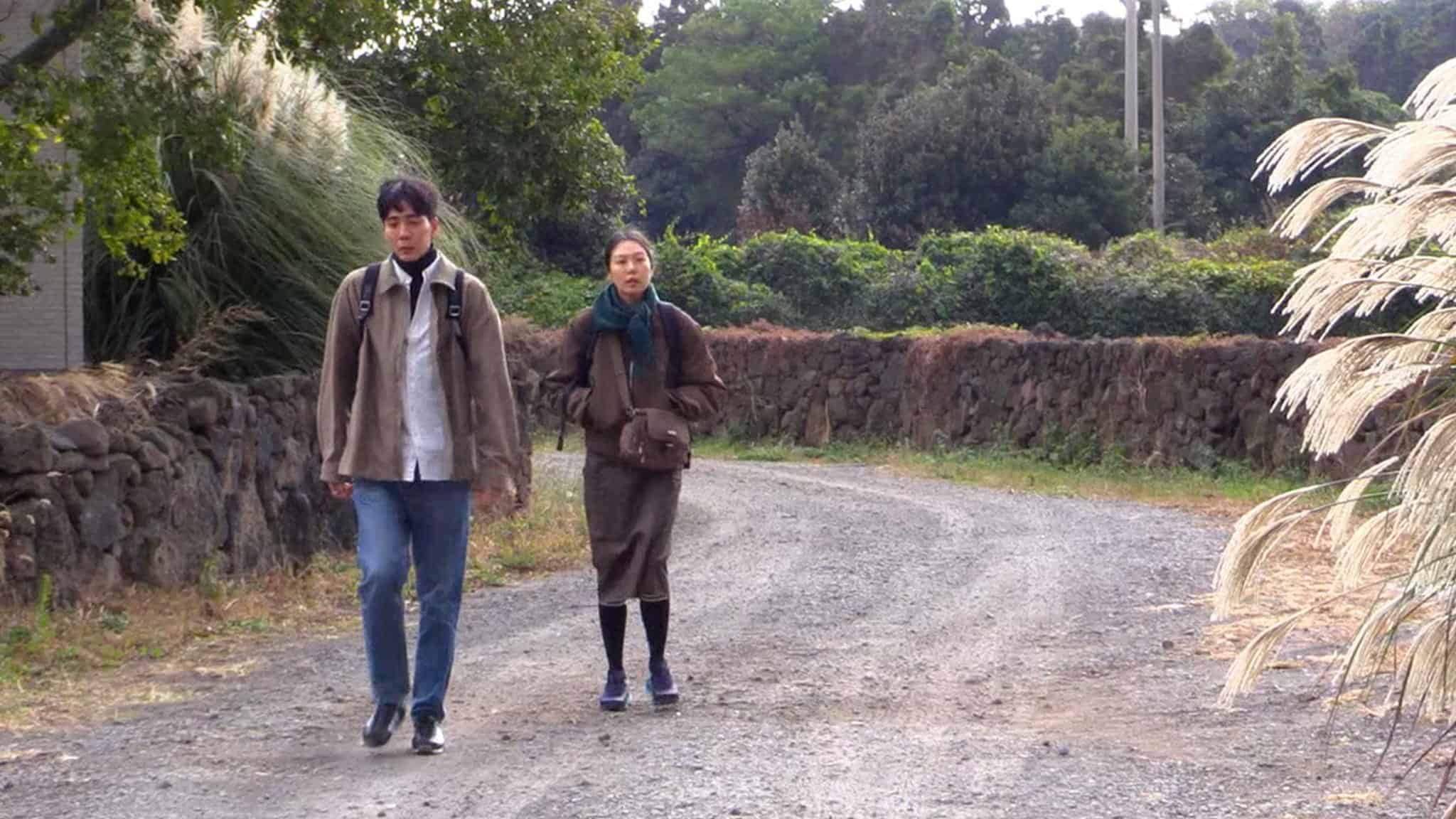
Hong Sang-Soo's "Nowhere to Lay My Eyes" captures the world through the eyes of an experimental director.
Courtesy of Cinema Guild

Words by Siddhant Adlakha
Editor’s note: Nowhere to Lay My Eyes and The Day She Returns are part of the San Diego Asian Film Festival and will screen at 8:40 p.m. PT on Nov. 9 and 6 p.m. PT on Nov. 12, and 6:35 p.m. PT on Nov. 6 and 6 p.m. PT on Nov. 8, respectively.
South Korean director Hong Sang-soo shoots quickly and economically, giving the New York Film Festival a couple of easy slots to fill each October. The neorealist maestro has long made conversational movies verging on self-reflexive. However, these last few years have seen him get especially introspective as a creator, culminating in his two most recent works: Nowhere to Lay My Eyes and The Day She Returns, both of which follow artists while gently unraveling their philosophies.
The former, which was shot in color and debuted at the Locarno Film Festival in August, captures the world through the eyes of an experimental director, and makes for one of Hong’s typically relaxing, melodic pieces. It’s by no means unremarkable, but the latter—his Berlin premiere from February, a black-and-white film of dramatic abstraction following a returning actress—is among his most accomplished productions, making the two titles a fascinating and instructive double feature.
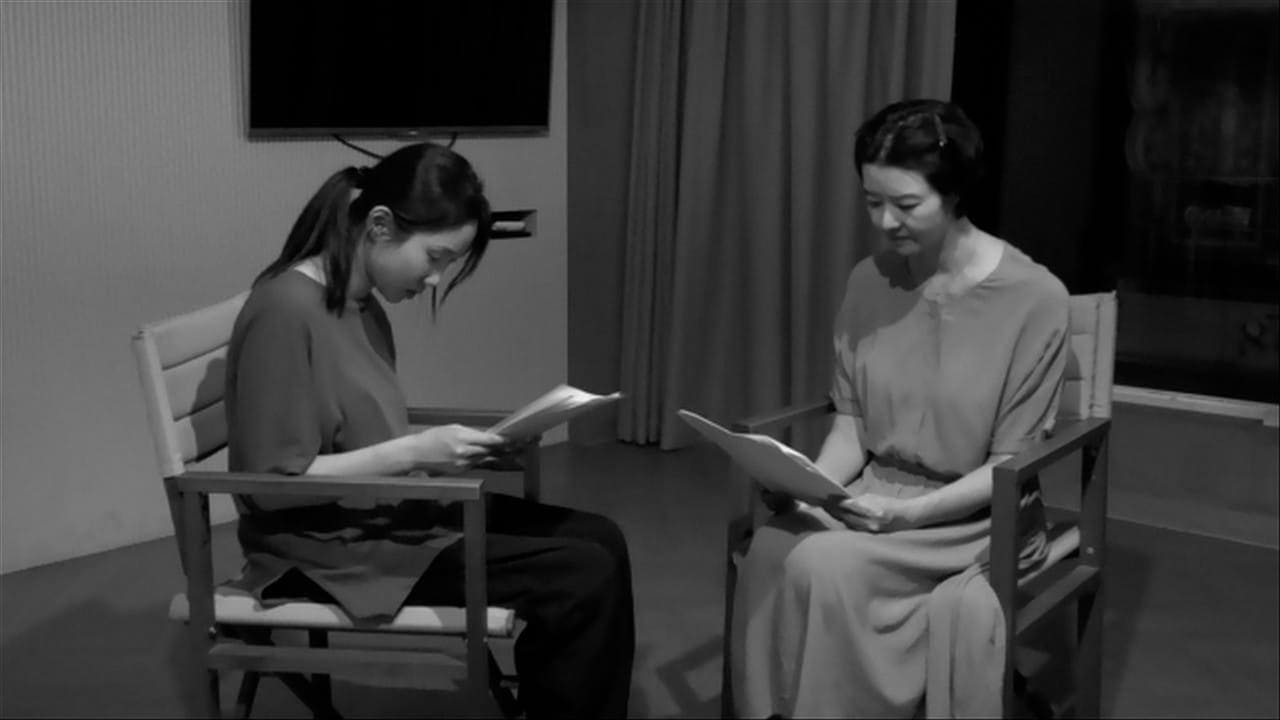
"The Day She Returns" is a black-and-white film of dramatic abstraction following a returning actress.
Courtesy of NYFF
There’s no bad entry point into Hong’s three-decade filmography, but to understand where he is today requires acknowledging the many filmmaking chapters he finally closed in last year’s By the Stream. That film stars his partner and long-time collaborator Kim Min-hee, in a tale of public scandal, not unlike the one that rocked the South Korean film industry when their affair became public in 2016—the ripple effects of which he first explored in their moody collaboration from that same year, On the Beach at Night Alone. Over the course of a decade, Hong would return to this fertile well of personal subject matter, but By the Stream felt like an exorcism of this theme, a film that admits to the many lives touched by Hong and Kim’s impropriety. That its release coincided with the birth of their first child made it all the more perfect a jettisoning, as though this defining journey, of martyrdom in the spotlight, had finally come to a close.
Around the same time, Hong’s other movies began reckoning with both youth and old age, starting with the anthological In Our Day in 2023, in which aspiring, novice artists visit and try to learn from a middle-aged actress and elderly poet. This thread would continue in the more recent What Does That Nature Say to You, where an ambitious young bard meets his girlfriend’s family for the first time. However, Hong’s latest pair of films are much more overtly about process, rather than the mere shape of artists at various points in their lives.
Although Nowhere to Lay My Eyes follows a similar (albeit slightly inverted) premise, of a young filmmaker meeting her mother’s new husband—a documentarian himself—on Jeju Island, it gestures towards self-examination, beginning with the movie’s use of operatic music and wistful voiceover, two auditory tools rarely seen across Hong’s movies. The young director character, Sang-hee (played yet again by Kim), narrates the story in first person and talks of capturing her observations with her lo-fi video camera, as though the pixelated images we were seeing were hers as much as they were Hong’s. (The score is reprised in self-reflexive ways when people gather to watch one of Sang-hee’s experimental shorts).
As Sang-hee and her younger brother visit the middle-aged pair, as well as their new stepsister, conversations about both filmmakers’ perspectives lead to light reflections on their varying methods and artistic searches. Sang-hee’s productions are freewheeling, almost improvised, and are based on whatever strikes her fancy. Meanwhile, her stepfather’s documentaries on Japanese funeral rituals begin from a much more purposeful place, a dichotomy that seems to split the difference between Hong’s own M.O. His movies exist somewhere between meticulously planned and spur-of-the-moment, making Nowhere to Lay My Eyes a perfectly adequate dramatization of some of his creative anxieties over the right path to take.
However, the movie’s monochrome sister production, The Day She Returns, is at once more minimalist, and more confrontational of his style. It’s a quiet film about seeing yourself through other people’s eyes, and in typical Hong fashion, it features only a handful of camera setups, which house lengthy, unbroken shots of conversations over alcohol. This time around, these chats all circle the idea of how Hong transforms life into art in the first place—and more importantly, why.
The once-popular middle-aged actress Bae Jeongsu (Song Seon-mi) has returned for an indie production after a dozen years away, during which time she’s had a daughter. The film plays out during a press day as she sits down with three different journalists, all of them young women with varying views on life, art and relationships. The ambient sounds of their meeting place—a bustling German café—score interviews that range from flattering to inquisitive, as the guarded Bae tries to suss out which of the young reporters will join her for a beer, a subtle seduction sure to make you lean forward.
However, Hong puts an exclamation point on this search for truth with the help of an extended fourth act, wherein Bae attends an acting class and collapses her three interviews into a dramatic dialogue she writes and performs with her scene partner later that same day. It’s here that Hong most wrestles with his conflicted perspective on factual and artistic truth (not to mention, with his own lightning-quick turnarounds), framing Bae’s sublimation of reality as a means to process events, and the passage of time, within a quickly-closing window.
He also, intriguingly, presents Bae as a kind of manipulator, who drives each young woman’s interview in exactly the direction she wants, while maintaining an air of distance and apparent innocence. The film may be simple at the outset, but upon closer scrutiny, it plays like a stunning admission of the uncomfortable place Hong occupies as an artist interpreting and representing daily reality, and making it an extension of himself, even if his motives stem from some deep psychological desire. To understand the world, he needs to refashion it in his own naturalistic image.
Together, both of Hong’s latest movies see him turn the camera on himself, in order to explore why he wields it in the first place. They zero in on the uncomfortable specificities surrounding what it means to create personal art in the first place, and how the most effective works of an auteur can also be inherently stifling in their outlook. Hong doesn’t decry this as a fatal flaw, but rather, he reckons with it as an inevitable limitation of capturing the world through his particular, personal lens, all while welcoming us inside his version of this trade-off.
Published on October 26, 2026
Words by Siddhant Adlakha
Siddhant Adlakha is a critic and filmmaker from Mumbai, though he now lives in New York City. They're more similar than you'd think. Find him at @SiddhantAdlakha on Twitter