
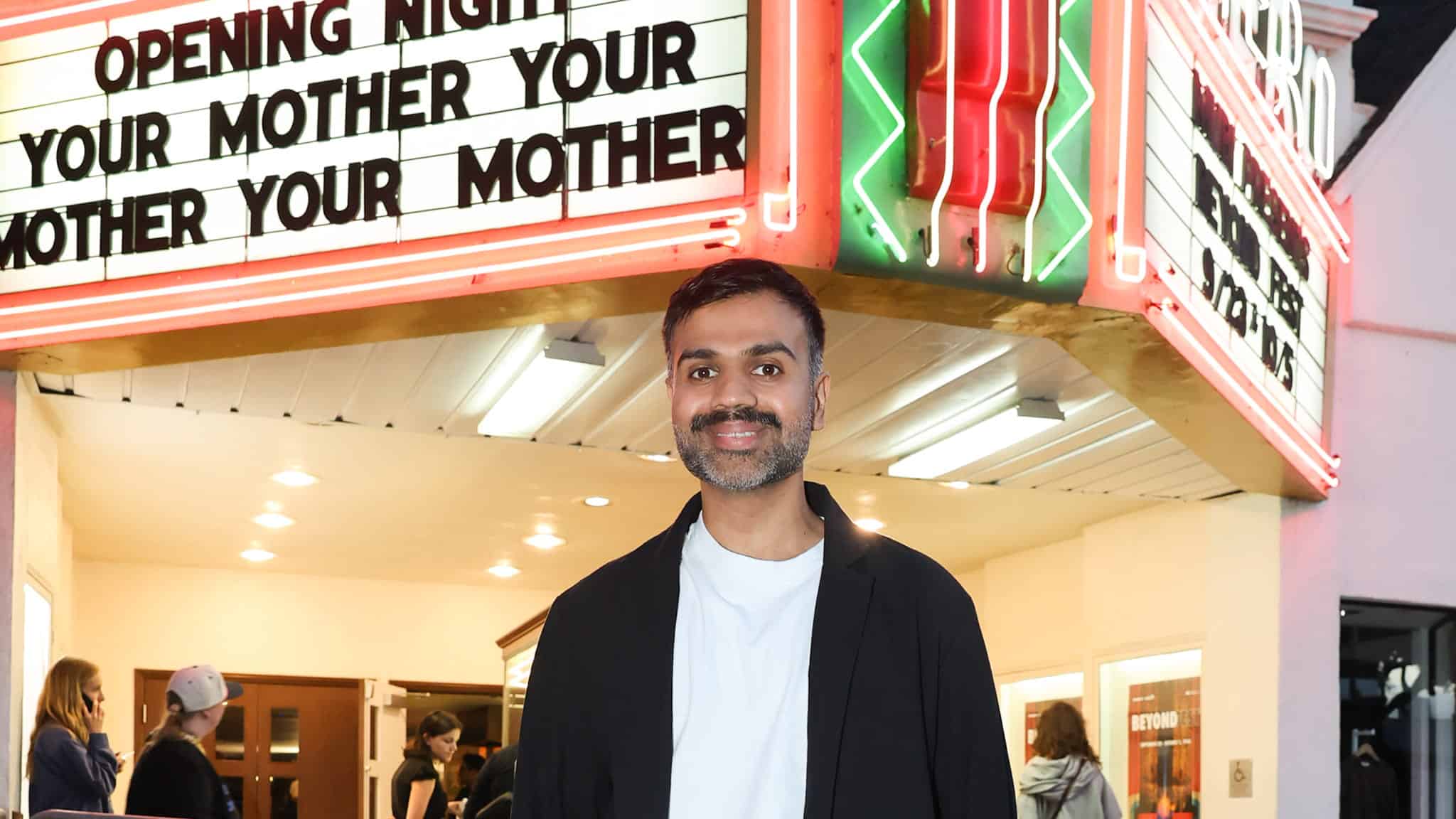
Director Bassam Tariq brings Black Muslim culture to the sad dad genre
The Pakistani American filmmaker on the inspiration, research, and meaning behind "Your Mother Your Mother Your Mother"
Director Bassam Tariq
Eric Charbonne
Words by Devan Suber
In another world, this interview would probably be about Blade. Director Bassam Tariq originally boarded the Mahershala Ali-starring project back in 2021. Only for both of them to end up leaving as the standalone MCU film crashed and burned.
Thankfully, the two found a rebound: the story of Latif, a widowed Black Muslim hitman (Ali) caught in a crime war, trying to find breast milk for his baby. Your Mother Your Mother Your Mother is one of the year’s best films—stylish and poignant, offering a vision of a community barely acknowledged by most Americans and replete with side characters like John Cho’s porn-crusading Pastor Hwan.
Ahead of the film’s wide theatrical release on Friday, I spoke to the Pakistani American filmmaker about his inspirations, making a “Muslim film,” and sad dads.
This interview has been edited for clarity and length.
Devan Suber: You’ve said before that the idea has been kicking around for awhile, but you started writing the film during COVID. What gave you the motivation to finally start it?
Bassam Tariq: It started when COVID hit and the world stopped. I wasn’t really a filmmaker anymore, I was just homeschooling my kids. It reminded me of the time in 2014 when I was searching for breast milk when my wife was in the hospital, so I said, “Let me just put pen to paper and start figuring out what that feels like.”
DS: When did Mahershala Ali come on board? Was it during Blade?
BT: No, I never brought this up during Blade because we were so on the train tracks. It was after he finished with Jurassic Park. I always thought he was magnetic and had a way of carrying himself. I knew he had an athletic background. He moves in a really specific way that it's still a character.
DS: How did you research Black Muslim culture and what contributions did Ali make?
BT: Growing up as an American Muslim, we're connected to the Black Muslim experience. It was important that he led how the character would be, what he would wear, how he would wear it. So he and costume designer Deirdre Govan worked together to build his wardrobe. I had to step back because I was dressing him like me, and that’s not gonna work.
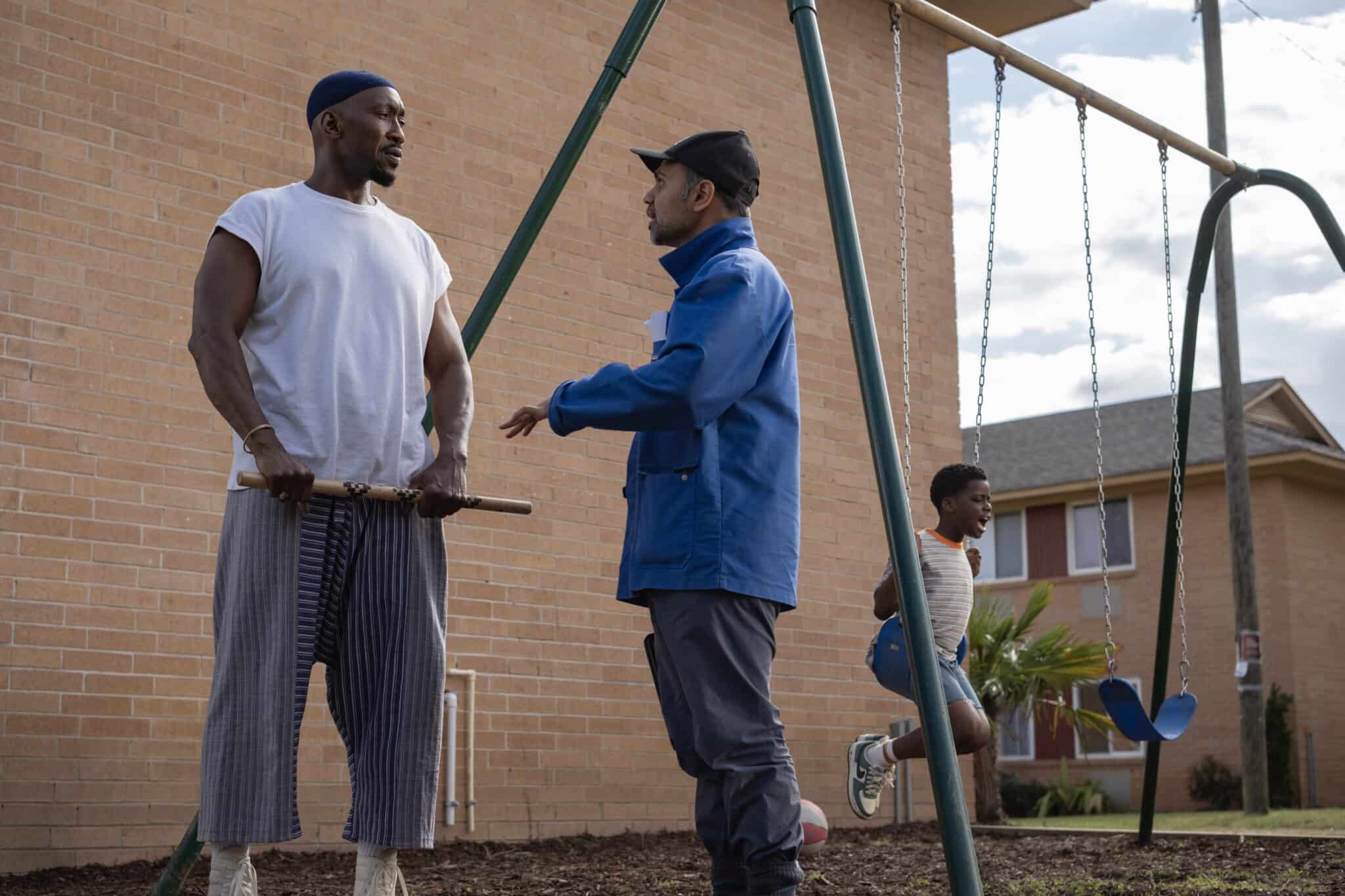
From left,Mahershala Ali, Bassam Tariq, and Jahleel Kamara on set of "Your Mother Your Mother Your Mother."
Jaclyn Martinez, Amazon MGM
DS: Pastor Hwan resembles what we stereotypically think of a jihadist. Did you try to bring in these comparisons between Christianity and Islam?
BT: I wanted them to be mirrors to each other. Latif needs to see himself in somebody that can challenge him. When he has Hattie in the car, for example, Latif asks, “Why should I be going after him when you should be my target? Aren’t you trafficking women?” At that moment, Latif is very much on Pastor Hwan’s side. They could be friends in another parallel universe.
DS: His church uses a lot of aesthetics of this new sort of multicultural fascism. Was that front of mind?
BT: Yeah. It’s something we need to talk about because people get so stuck on race, we don’t realize the desire of some immigrant communities to be accepted. They end up falling into these bigotries and pulling up the ladder. What’s exciting about him is that he really does believe in what he preaches, unlike others. I wanted him to be a veteran that fought and realized, “Why go and kill these r*gheads? If anything, the problem's here.” I think a lot of these people felt really jaded, and religion gave them a foundation.
DS: How did you try to interweave these ideas of Muslim faith without either having it come off as preachy or demonizing more strict adherence?
BT: That was tough. I was a bit hesitant because I don’t want to come off as some preachy-*ss Muslim. My editor, Cam McLaughlin was the one that pushed for those elements. It’s about mercy, so you need to set the concept up quickly so people start seeing it even if they don’t see the connection. Paris Is Burning editor Jonathan Oppenheim, my mentor, told us that you teach the audience how to watch the movie within the first six to eight minutes. We start with the invocation to show reverence, but also violence and absurdity like cleaning a dagger with a baby wipe.
DS: Why did you set it in Houston?
BT: I went to school there, and 9/11 happened when I was a teenager; despite not practicing, I became Muslim in some ways. Religion became a discussion all the time in classrooms, and I thought we'd all be at each other's throats, but the common guiding principle was really grace. It’s a fascinating place because no one culture dominates—it's a majority-minority city, and the diversity is equally split. You can get somebody like Johnny Deng, a Vietnamese jeweler that makes grills for rappers. He inspired Pastor Hwan.
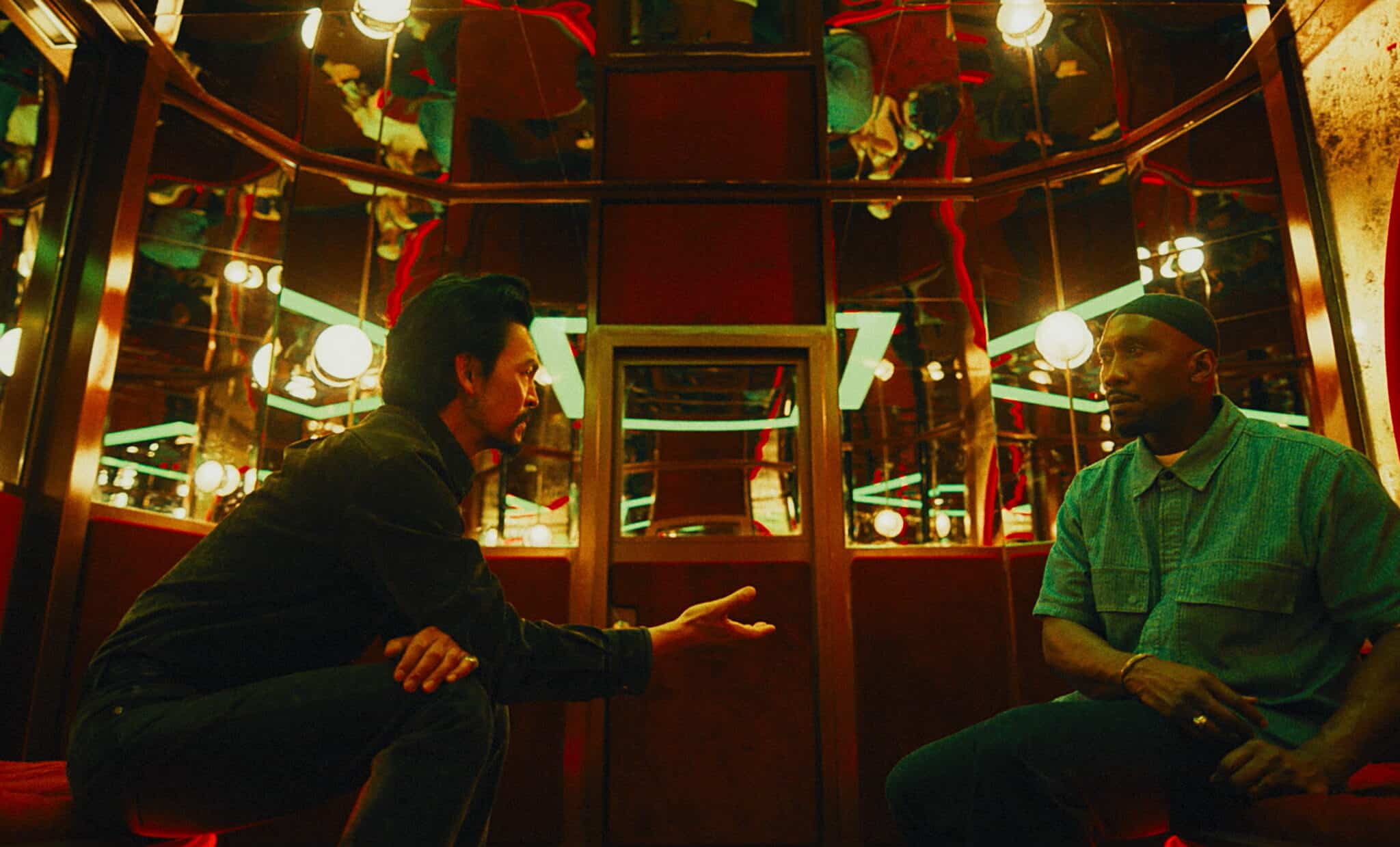
From left, John Cho as Pastor Hwan and Mahershala Ali as Latif.
Jaclyn Martinez, Amazon MGM
DS: What were some of your influences?
BT: Harakiri was a big one. Adam Hart, our stunt coordinator, was a big help in staging a fight like the last one. Charles Burnett's Killer of Sheep shows Black life so alive and presently, and it’s also about a man trying to keep dignity for his family. I love the colors of Wong Kar-wai films too.
DS: There’s also some elements of “sad dad” games like God of War or The Last of Us, to use a pejorative.
BT: I love the sad dad genre. I would say that what's exciting about it is being human and connecting to relationships. I remember playing Silent Hill when I was 12 or 13 and thinking “this is crazy, I didn’t even know a game could do that.” Castlevania: Symphony of the Night and Order of Ecclesia are some of my favorites. I love the idea of a character that upgrades in small ways, but most important was making sure that the family and the emotion was always front and center.
DS: Speaking of sad dads, what was the reasoning behind killing Latif’s wife?
BT: I wanted him to be an absent father that now has to be one and doesn't know how. He tries to be the mother because he saw her do that, but can't really do that either. She was always absent in the inception, it was just a question of how she left. And a sudden death is the most shocking thing sometimes.
DS: Do you feel any responsibility in the portrayal of Islam, in case it becomes The Muslim Film?
BT: Look, it's going to happen, like how Mamdani gets coined the Muslim whatever. But I also come from this community. I’m accountable. There's a lot of skin in the game. I'm always thinking of my elders and asking, “Do they see themselves? Is this empowering?” I didn't want to create something that was pandering or agitprop, but rather honest and real.
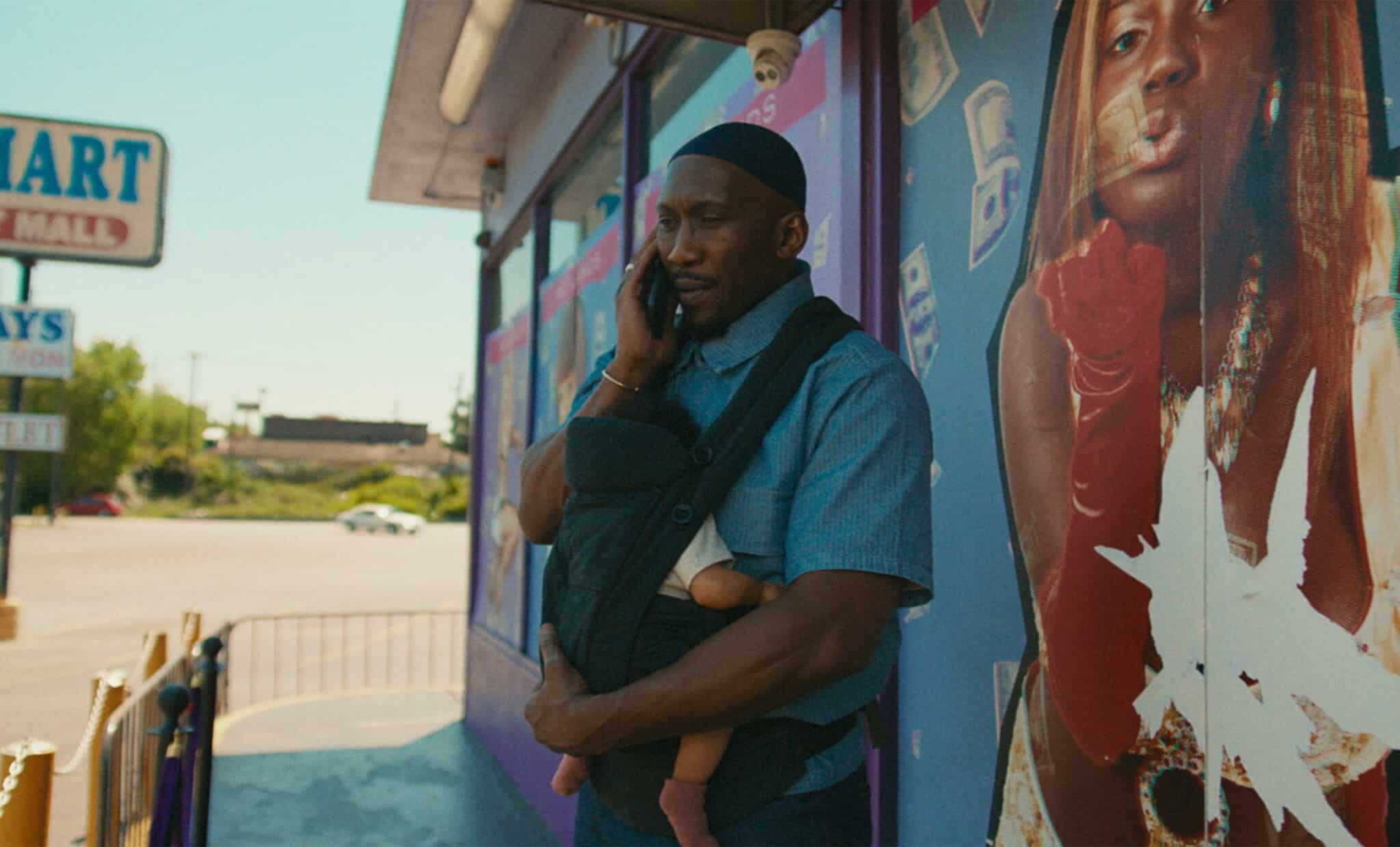
Mahershala Ali plays Latif, a widowed Black Muslim hitman caught in a crime war, trying to find breast milk for his baby.
Jaclyn Martinez, Amazon MGM
DS: What do you think the title means as a whole and for the characters in the film?
BT: For Latif, I don’t think it means anything yet, which is why I love it so much. I think it matters to the kids, it explains something that then allows them to be there to rescue their dad in a way. I don't think they even know that they're doing it. But sometimes that's what happens. I find in my own relationship with my children that I think I'm there to rescue them. But so many times, they're the ones that are piecing me back together.
Published on October 15, 2026
Words by Devan Suber
Devan Suber is a Philadelphia-based freelance film and TV critic whose work has appeared in such outlets as IGN, The AV Club, Polygon, The Film Stage, and many more. You can find him on Twitter @therealdsube or Bluesky @therealdsube.bsky.