
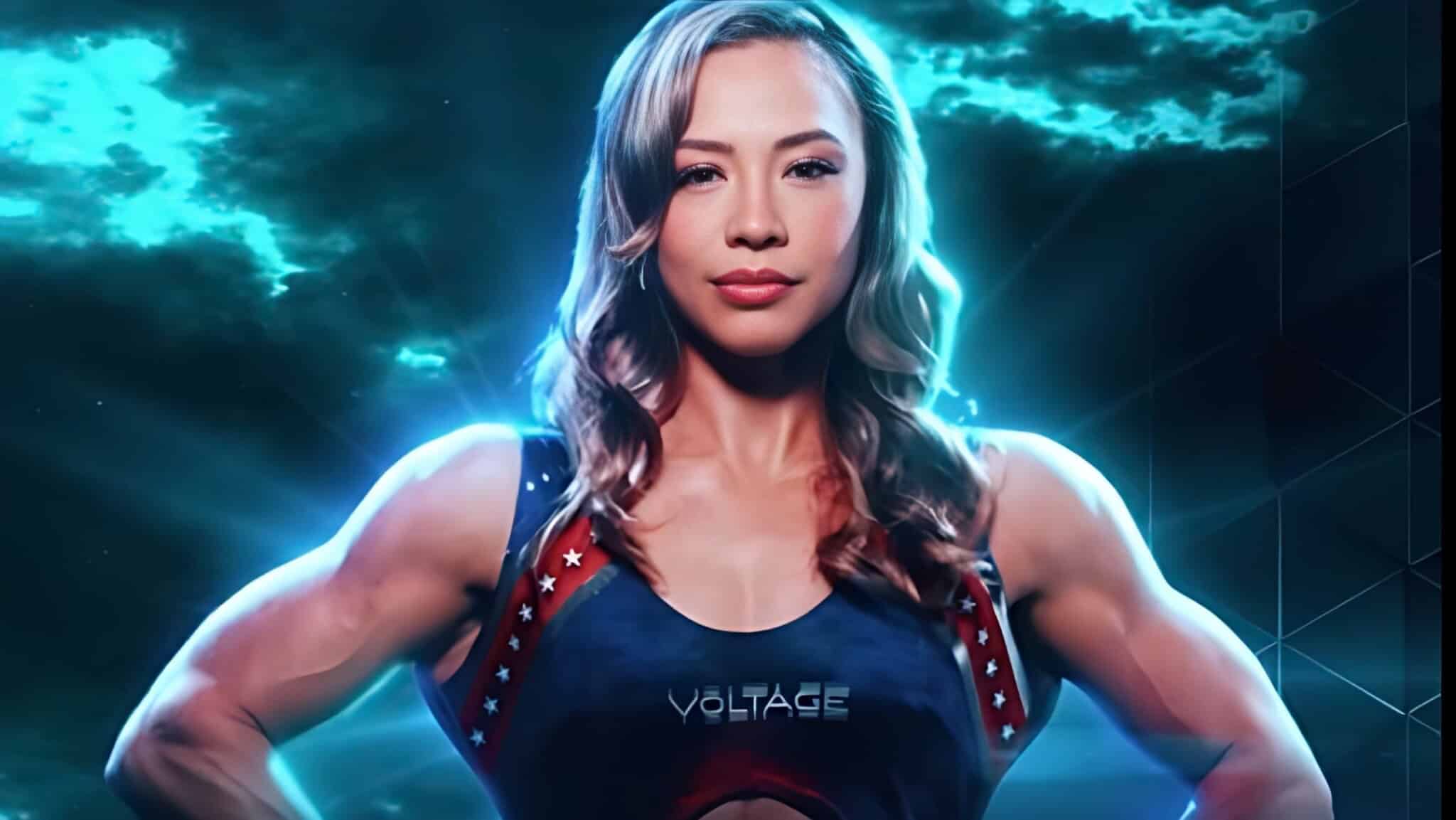
Daniella Means on rugby, Hong Kong, and becoming an ‘American Gladiator’
JoySauce catches up with the Hong Kong-based bodybuilder who joined this summer's Amazon Prime relaunch of the 1980s competition show
Daniella "Voltage" Means
Amazon Prime
Words by Helen Li
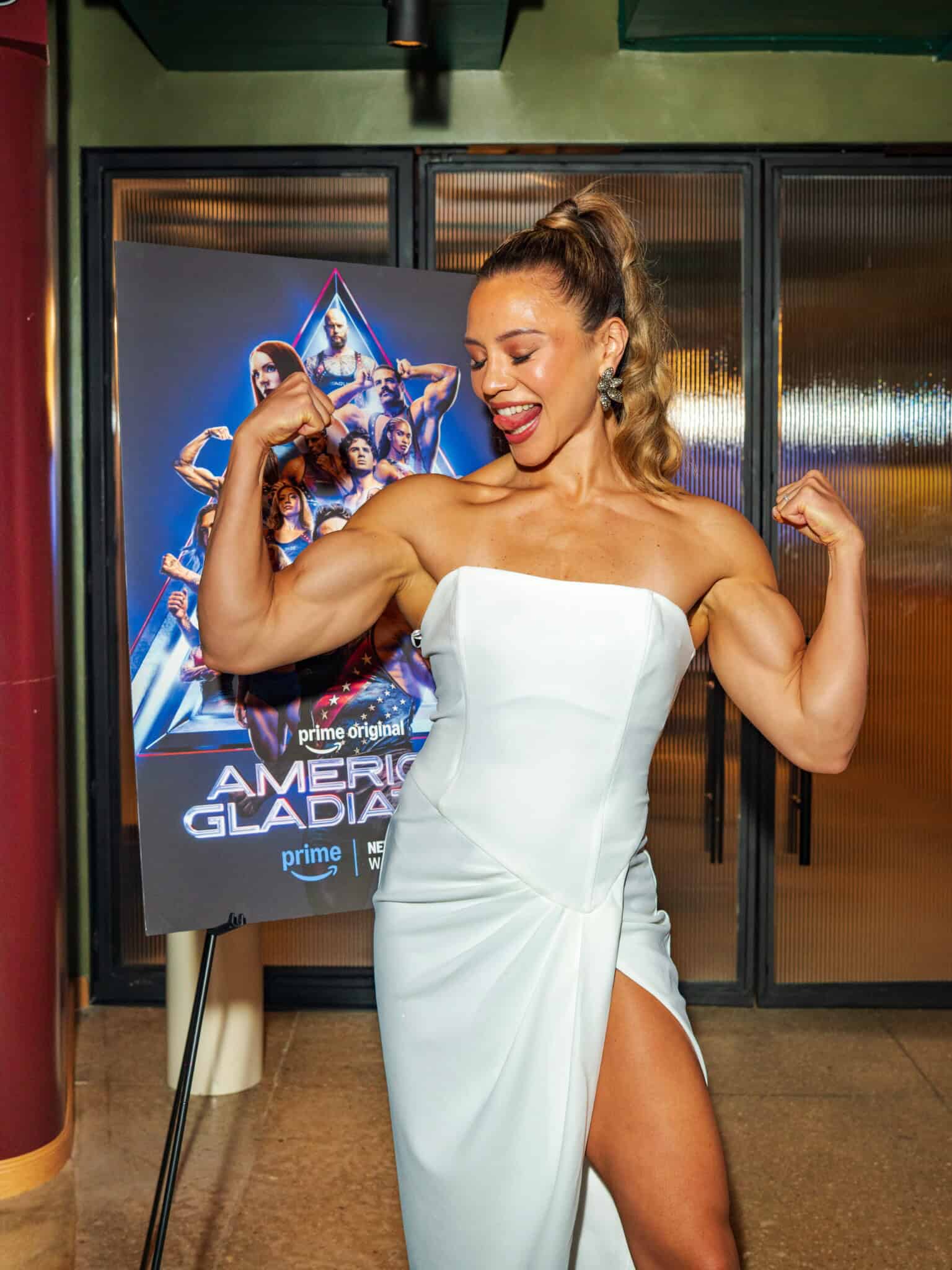
Daniella Means is big. On our Google Meet call, when she raises her arms and flashes her bicep muscles, it’s hard to not be in awe.
“I remember going to Thailand for the first time. I wanted to buy a pair of shorts, and I was like, ‘I don't know what size I am.’ And they're like, ‘Oh, you triple XL?’” she recalls.
The Hong Kong-born, LA-based 36-year-old bodybuilder and coach was once self-conscious about her body. But ultimately, this is the body that gave her the ability to compete on the rugby U-20s pitch, to win world powerlifting championships, and to take hard hits against competitors on American Gladiators.
Means is part of this summer’s relaunch of American Gladiators on Amazon Prime, a competition show on which weekend warriors try different challenges—from jousting to Hang Tough—against 16 gladiators to win $100,000. The show was a classic sit-down TV show in the 1980s before getting cancelled in the 2000s. Means is the only Asian gladiator in the new 16 staple lineup, a crown that she doesn’t carry lightly. She’s broken records before.
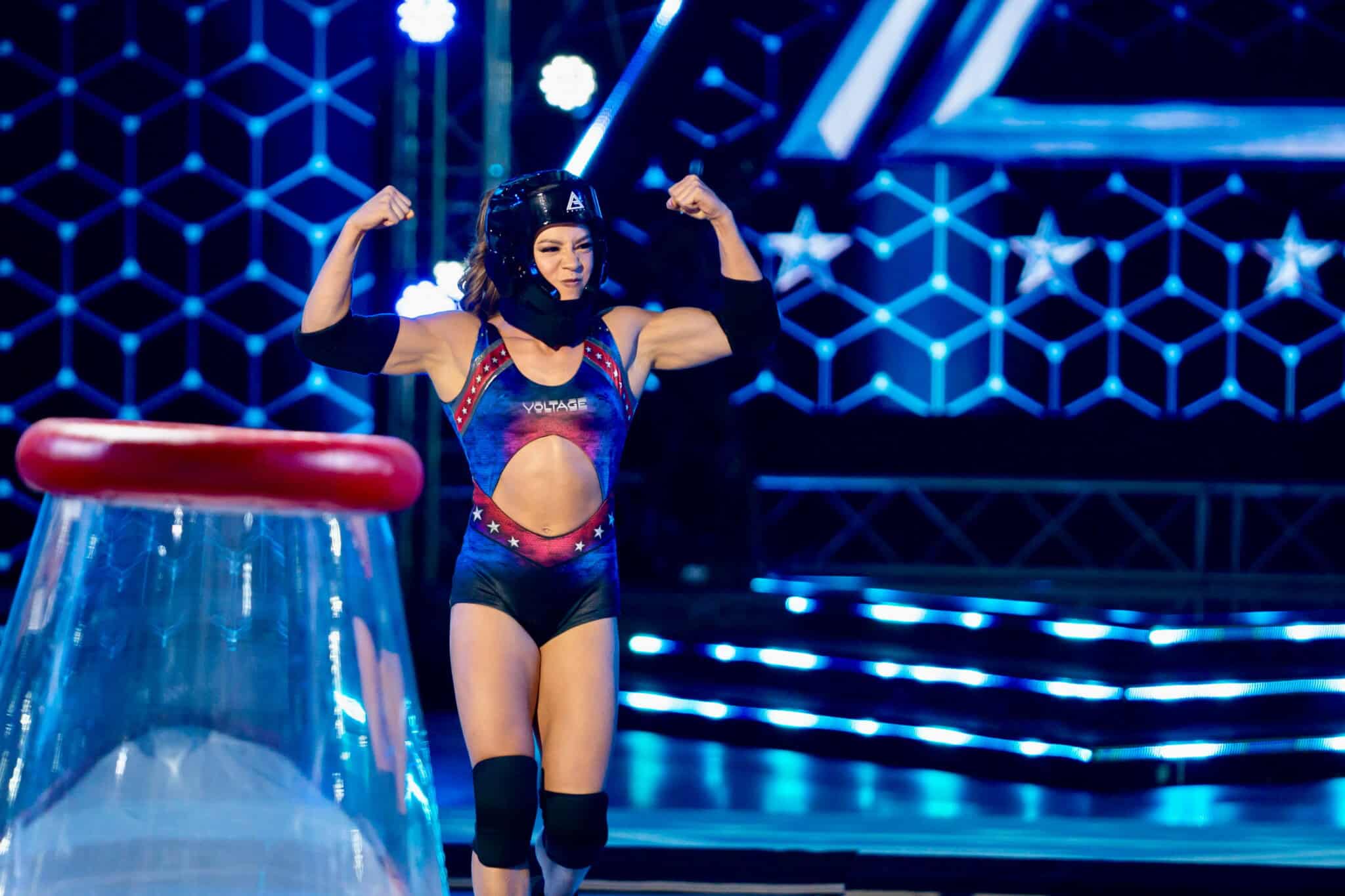
Daniella "Voltage" Means
Amazon Prime
Means recently sat down with JoySauce to talk about her experiences growing up in Hong Kong and how she ultimately views growth when it comes to consistently developing as an athlete.
This interview has been edited for clarity and length.
Helen Li: What does a typical day look like for you?
Daniella Means: I'm first and foremost a gym owner, a dog mom, an online coach, and an IMPB pro bodybuilder, so it's trying to fit everything in at once. Most days will start at like 5:30 a.m. with walking the dogs, making myself some coffee, and getting my butt into the gym. My gym is called Hybrid Gym LA in downtown Los Angeles. It is private personal training, so I usually have a couple of clients in the mornings. And then it's catching up on emails, making sure that everything business-wise is up to date. My husband and I very much believe in leading by example. He was a pro boxer, a pro MMA fighter. He's a black belt in jujitsu. He coached me as well. I do sales consultations, calls with online clients, cook at home, chill out, and then go to bed early. It's pretty boring to be honest, but that is consistency for me. I have a coach that I've been with for a long time, and he looks after my training and my nutrition because I can't be trusted to hold myself accountable.
HL: You grew up in Hong Kong as the daughter of a Malaysian mom and an American dad. How did they meet?
DM: It's a wild story. My dad, he's an Oregon boy. He worked for Nike before it was called Nike. He worked for Blue Ribbon Sports, and he was a runner. All the rubber trees (for shoe soles) used to be out in Malaysia. That's how he met my mom. He worked in the factories as a scientist. They ended up moving around Asia, where all the factories were, and so they happened to be in Hong Kong when I was born. They (later) divorced, and my mom decided to stay in Hong Kong. Now he lives in Vietnam because he's still working for shoe factories out there. Honestly, Hong Kong was such a blessing. For my mom, especially as a single working woman with two kids, Hong Kong just really lent itself to support that.
HL: Did you feel that you were a third-culture kid?
DM: When my parents moved to Hong Kong, they were very much under an expat contract. Then my mom decided to stay, our finances suddenly got very different, but she wanted to keep me in the international schools. It was very challenging being a kid in the international school, but obviously not have the international money. My mom's my hero. She didn't have a degree. She grew up very poor in Malaysia. Then she started working, and when she got married, it was like, “You stay home, take care of the kids.” Then they divorced. She started working again and managed to work her way up to marketing director of Asia Pacific for Hugo Boss, then CEO of Greater China for Victorinox.
HL: How did growing up in Hong Kong shape your sense of identity?
DM: Hong Kong is so special because it's such a multicultural place, so international, and so welcoming in some ways. Don't get me wrong, there's racism, obviously. But I never experienced real bullying. I never felt unsafe in Hong Kong. I could take the bus from home to my gymnastics class and back at 8 p.m. at the age of 12, and it would be totally fine. I was playing rugby on the weekends with CEOs, CFOs, accountants, architects, lawyers, and I was like 17 years old. You grow up and mature pretty quickly. I'm so lucky to have grown up in Hong Kong. Hong Kong is home, even though blood-wise, I'm Malaysian. But I never actually lived in the States until I was 28. I went to England for university because of Hong Kong being a British colony. Moving to the States was so alien.
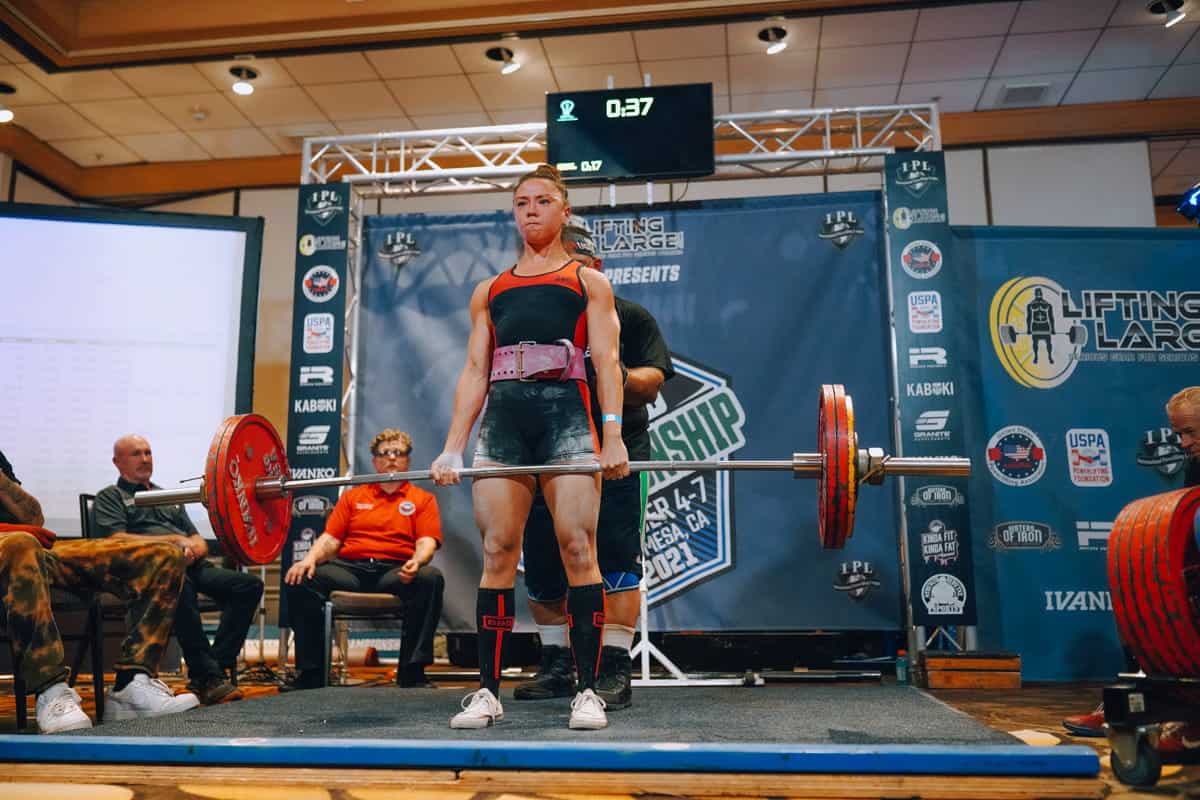
Daniella Means at a Weightlifting Championship
South China Morning Post
HL: You once played for the Hong Kong 7s national team. Can you tell me how playing rugby directly shaped you?
DM: I discovered rugby kind of late. I was 16 when I played my first game. I was a gymnast for eight years, and then I kind of fell out of love with it. My mom was like, "Look, how much do you love this? You're not gonna become a pro gymnast, what are we gonna do?" And then my friend was like, "Hey, do you want to come down and try rugby?" I knocked a girl out in my first game, and was like, “This is awesome.” I was encouraged to try out for the Hong Kong under-20s team, and then I was scouted to try out for the National Sevens team, because there were whispers and rumors about the Olympics. I got selected, and on my 18th birthday in 2008, I played in the Hong Kong Sevens, ironically, against the United States, and that scrumming down against U.S. women is terrifying. In Hong Kong, there's a big partying scene and rugby really saved me, gave me another focus: this is a chance to represent my country.
The Hong Kong rugby coach at the time was Zanio Yong. He was hardcore, no nonsense. He would always talk to me about mental toughness and I think that's really shaped a big part of who I am. No matter how hard things get, you always have to pick yourself back up, not just for yourself, but for the people around you.
HL: How about shaping your time on American Gladiator? How did those skills come in handy?
DM: Since I retired from rugby, I pursued more individual sports. So going into American Gladiators was going back to that team mentality, but in the sense of, we got to make this a great show. We want to make it awesome and exciting for the audience at home, but also for the people in their 30s, 40s, 50s, 60s, who remember the show from the 80s and 90s.
HL: You talked about transitioning later in life to bodybuilding. Was there a sense of stigma in the beginning at all?
DM: I grew up in the 90s, Kate Moss, chopsticks-thin legs era. My mom worked in fashion, and her friends would be like, "Oh, you should get Daniella to go try modeling." I went one time and the fitting person was like, “Oh no, you're too fat.” Even during the rugby days, (being big bodied) was still not seen as lady-like, it's not seen as aspirational. Attitudes in the States are changing. I get lots of Asian clients at my gym in downtown LA, and they'll be like, "Yeah, I want muscles," or they'll touch my arms and be like, "I want this. This is so nice."
It's very strange for me, because I'm so used to people saying to my face, "I don't want to look like you." After rugby, I started doing CrossFit, strongman, and power lifting, and even my own mother was like, "Are you strong enough yet?" And I used to ask her, "Do you ask a runner if they're fast enough yet?" The goal was never to get bigger. For me, it was just to get stronger. I competed in power lifting for eight years. I did win a world championship, and I won an Asia Championship. I won my pro card in my third show. I see bodybuilding more as an art form than a sport.
HL: It's great to see that culture is changing.
DM: In the age of (GLP1) weight-loss drugs, where you can literally just buy fat loss, I think it'll be interesting to see how building muscle becomes a sign of wealth. If you think about old school ideals in Asian society, if you have pale skin, that means that you're wealthy, because you can just be in the shade all day. Whereas now, if you have muscle, that means that you have time to build and train it, and you have that kind of self-discipline, and you care about your health.
HL: Did you grow up watching American Gladiators? How did they approach you for casting?
DM: I didn't grow up watching it, because it wasn't a thing in Hong Kong. I had first heard about it when the Netflix documentary came out about it. Someone slid into my DMs: "Hey, have you considered trying out for American Gladiators?" The next thing I knew, we were filming my casting video, and it wasn't until maybe six months later that they invited us down to a gym in LA for a fitness test. They had us do legless rope climbs, max push-ups, max sit-ups, max chin-ups, one-on-one tackling tire flips, and also an on-camera interview, because they wanted to see what our TV personality would be like. Walking out of that, in terms of athleticism, I knew that I nailed it. My background as an athlete prepared me. You couldn't have written a better story to be an American gladiator. It was the on-camera stuff that was terrifying. It was like, be this big, intimidating personality. I'm generally quite a friendly person.
HL: Why do you think they selected you?
DM: Rugby, 100 percent. Maybe the combination of rugby and bodybuilding, the powerlifting side of things. A lot of people look at bodybuilders and assume that bodybuilders are really strong, which they are in some ways. But there weren't many other female gladiators that had contact experience. Rugby, I think that got me a lot of kudos.
Daniella Means
Amazon Prime
HL: Why did you get the name Voltage?
DM: They came up with Voltage, and I wasn't sure about it, to be honest. With Voltage, the way that they explained it to me was, “You're small, you're fast, you're speedy, you're that bright spark of energy.You zip, you zap, you're all over that arena.” My initial reaction was, “Who are you calling small? You don't understand, I'm big in Asia, like I'm a prop in sevens. My high school PE teacher used to call me the Beast from the East.” But then as soon as we stepped into the arena, I kind of got it. Yes, I am the smallest, but I am the fiercest, with the most energy. I was fearless in that arena, because I've got a history of putting my body on the line.
HL: What is a tidbit that if we watch the show, we wouldn't notice, or a backstory you'd like to share?
DM: There's one part in the Collision event where Empire and myself are on the platform, trying to talk tactics of how we're gonna stop them from running across the bridge. Then we remember that we're on TV. We are serious, but we also need to be having fun, and so we end up doing the Macarena in front of a live audience of like 2,000 people.
HL: What are the lessons from American Gladiator that you'll be taking back to your own gym, your own life?
DM: I think as women, we tend to question our abilities more compared to men. And for me, I've always questioned my abilities, which is why whenever I do anything, I do it to the max. I played rugby for Hong Kong. On the show, I'm the only Asian American gladiator among the 16. I'm the token Asian representation, and I will wear that crown proudly. My husband's my biggest cheerleader. He's just been my rock throughout the whole process, and that voice of confidence. You are so much better than you think you are. I think it's more me realizing, if I've achieved all of this in 36 years of living, I've got so much more living to do.
HL: With that, what's next for you?
DM: I think I've got unfinished business there with bodybuilding. Bodybuilding takes a lot of sacrifice because there's routine, there's restrictions in terms of food, and as an Asian, food is a big part. They've been trying to bring American Gladiators back for many years. We'll see about future seasons.
Published on September 4, 2026
Words by Helen Li
Helen Li is a journalist and fact-checker based in Los Angeles. Her work has been featured in the Los Angeles Times, The Guardian, Rest of World, Semafor, and Business Insider. In her free time, she appreciates a good hike, watches NCAA gymnastics, and occasionally dives into Reddit rabbit holes where she finds fascinating stories. She also just completed her first women's rugby 15s season. You can reach her on Signal @hliwrites.99.