
‘Best of the Best’ is more than just a dance movie
Maitreyi Ramakrishnan and Hasan Minhaj on how they turned the collegiate South Asian dance circuit into a universal story
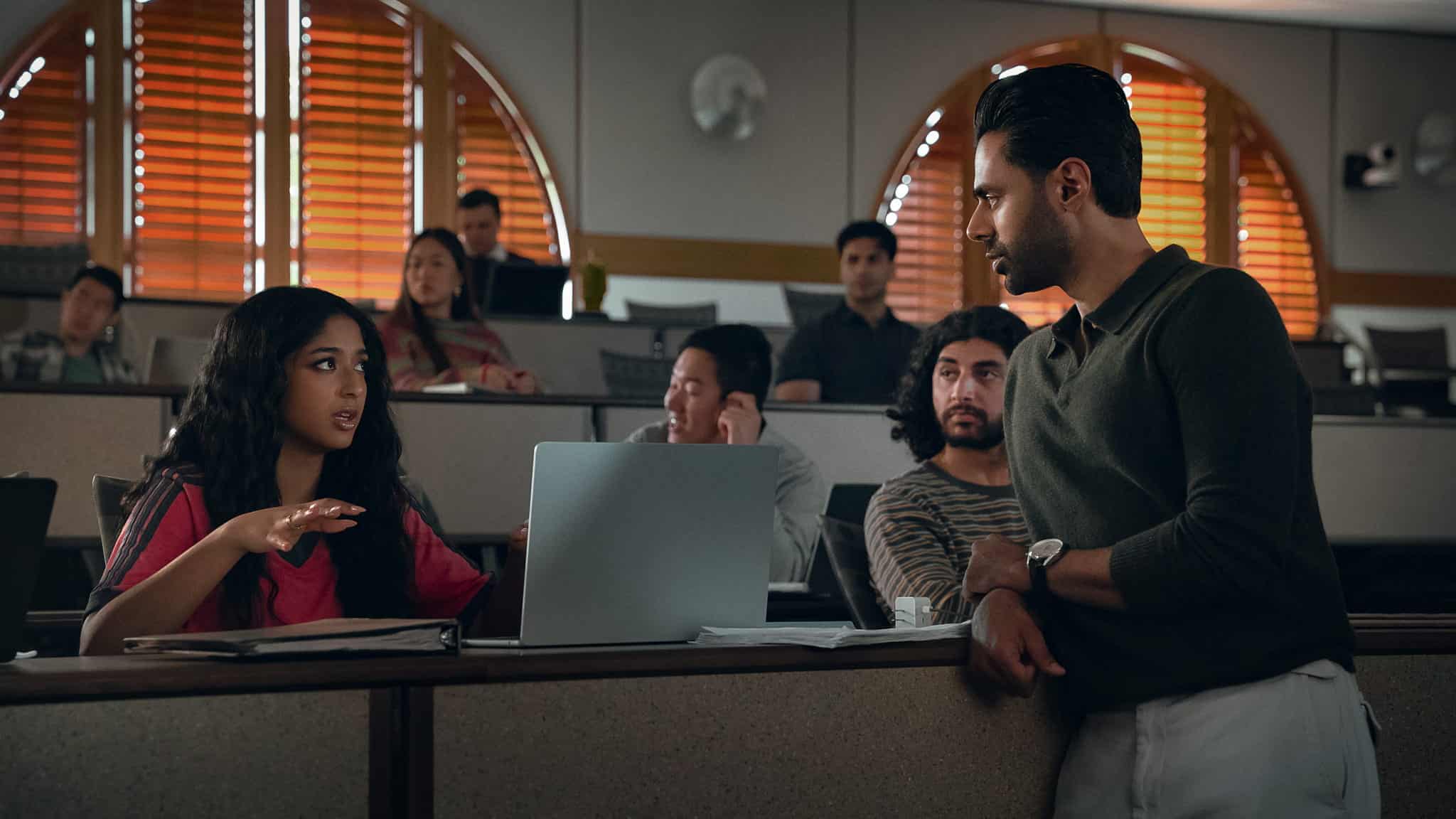
From left, Maitreyi Ramakrishnan as Maya and Hasan Minhaj as Hamza in "Best of the Best."
Emily V. Aragones/Netflix

Words by Rasha Goel
For me, Best of the Best isn’t just a movie about dance. It’s about finding yourself.
I watched it as a dancer/choreographer, and someone who has been in the competitive Bollywood college world. As an individual who has co-owned one of the top reputed Bollywood dance companies in Los Angeles. And that distinction matters.
When you have spent enough time around dance, you learn that what the audience sees onstage—the smiles, the formations, the sharp transitions and the apparent effortlessness—is only a fraction of the story.
Behind those few minutes are long hours of rehearsal. Repetition. Frustration. Friendship. Competition. Injuries. Ego. Laughter. And that strange feeling of knowing that the people standing beside you have become a second family.
That is what made Best of the Best catch my attention.
Netflix's new coming-of-age comedy, which comes out Friday, follows childhood best friends Maya and Anjali as they enter UCLA and join a competitive Bollywood-fusion dance team, eventually chasing a national championship while navigating friendship, ambition and the complicated transition into adulthood. Maitreyi Ramakrishnan (Never Have I Ever) plays Maya, Priyanka Kedia (Disclosure Day) plays Anjali, and Hasan Minhaj appears in the film while also serving as a writer and producer alongside his longtime creative collaborator Prashanth Venkataramanujam. The film is directed by Lena Khan (Flora & Ulysses, The Mysterious Benedict Society) and isn't presenting Bollywood dance simply as an exotic backdrop. The filmmakers say they wanted to introduce audiences to the collegiate South Asian dance circuit and its role as a creative and cultural outlet.

Maitreyi Ramakrishnan as Maya in "Best of the Best."
Emily V. Aragones/Netflix
The filmmakers have talked openly about drawing from the collegiate Bollywood dance culture they encountered themselves. Minhaj tells me how while he wasn’t on a dance team at UC Davis, he did participate in the culture shows and skits and has seen how competitive it can get. He jokes about how he’d “go to the afterparties to scope out (his) now wife.” Something common among South Asian college students.
For someone who has never experienced collegiate Bollywood-fusion dance, it might be easy to look at the choreography and think, “That's fun. That's colorful. That's energetic.” For dancers, it’s another layer. Dance is a memory, discipline, and culture. And sometimes, it is the one place where a group of people who may have completely different personalities, academic interests, and family expectations, can speak the same language. That is particularly important in the South Asian American experience portrayed in Best of the Best. Something I personally experienced.
Ramakrishnan says there was an added pressure of living up to the expectations of dance and the community. “I don’t want to do anything less than what the community deserves.” Not having a dance background prior to booking the role, she went through four months of rigorous dance training before filming even began.
What the audience might not realize right away is that authenticity matters. South Asian college dance teams are not simply extracurricular clubs. They can become communities. For many students, college is the first time they are deciding what parts of their identity belong to them rather than to their parents or their family expectations. It becomes a space to navigate the in-between, where being South Asian and American aren't competing identities but two parts of the same person.

Hasan Minhaj as Hamza in "Best of the Best."
Emily V. Aragones/Netflix
Then there is dance. There is joy. Suddenly, something that existed at weddings, family parties or cultural events becomes an arena for serious artistic ambition. And they get to figure themselves out without having to represent every South Asian person watching.
And Minhaj and Venkataramanujam weave in these personal touches beautifully. If you know Minhaj primarily from Homecoming King, Patriot Act, or his other work, you are familiar with a version of him that is highly personal, analytical and outward facing. He’s skilled at turning complex issues into comedy. His standup has continued to draw heavily on personal experience and identity. Minhaj has shared he wanted to write a "love letter" to the South Asian community, capturing the nostalgia of growing up with the music, movies, and college memories that shaped his generation. And it’s safe to say, Bollywood dance still continues with the younger generations today.
Minhaj hopes people see the “love and joy that went into making the film” and the significant relationship of sisterhood. He also expresses how he sees the film as a breakout moment for Ramakrishnan. “I’m watching this at the premiere. I am watching a movie star!”
To me, that may be the most meaningful evolution in Minhaj and Venkataramanujam’s collaboration. They aren't just telling us about the culture anymore. They're building a world inside it.
Sometimes the point isn't about being “the best.” It's finding the people and place where your rhythm makes sense.
In a chat with JoySauce, Ramakrishnan and Minhaj share their connection to this story, the impact, and why it’s a universal story.
Published on September 17, 2026
Words by Rasha Goel
Rasha Goel is a journalist and three-time Emmy-nominated host/producer. Her beats include entertainment and human interest. Rasha is curious about life and finds her greatest joy in telling stories of marginalized communities. She is also a Reiki practitioner and enjoys sharing her healing gifts with people. Follow her on Instagram at @rashagoel.