
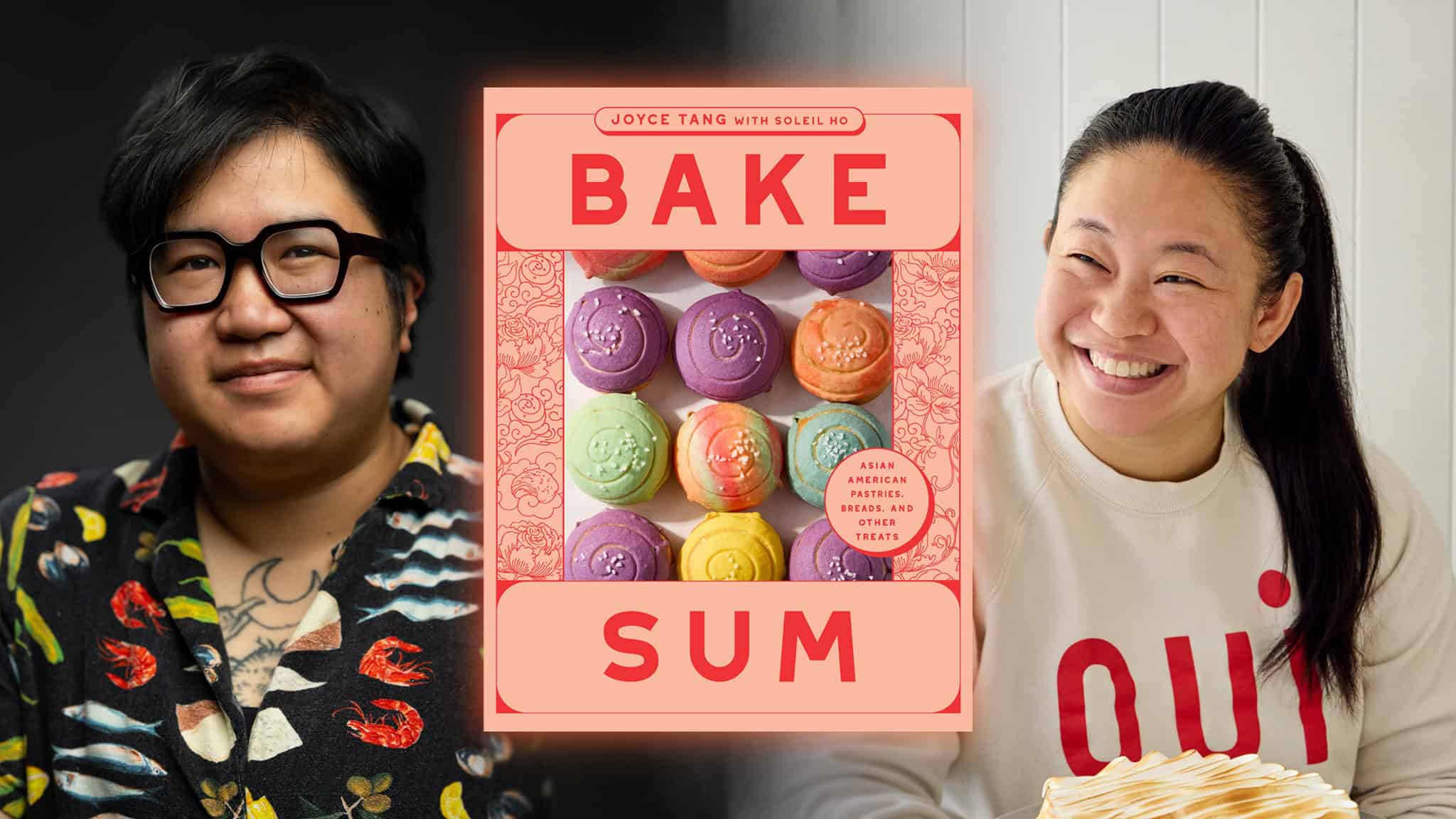
‘Bake Sum’ cookbook reminds us that we have to look back to move forward
The book explores the history of Asian American pastries and how you can make them at home with Joyce Tang and Soleil Ho
From left, Soleil Ho and Joyce Tang, co-authors of cookbook "Bake Sum," released Sept. 1.
Author portraits courtesy of Soleil Ho and by Aya Brackett

Words by Aleenah Ansari
In the Asian American diaspora, food is rarely just food. It’s how we connect, say “I love you,” and remember where we’ve been and where we’re going.
This rings true for Joyce Tang, whose culinary art of choice is baking. She’s the founder, owner, and chief baking officer of Bake Sum, an Asian American bakery serving baked goods from its two locations in Oakland and Alameda in California.
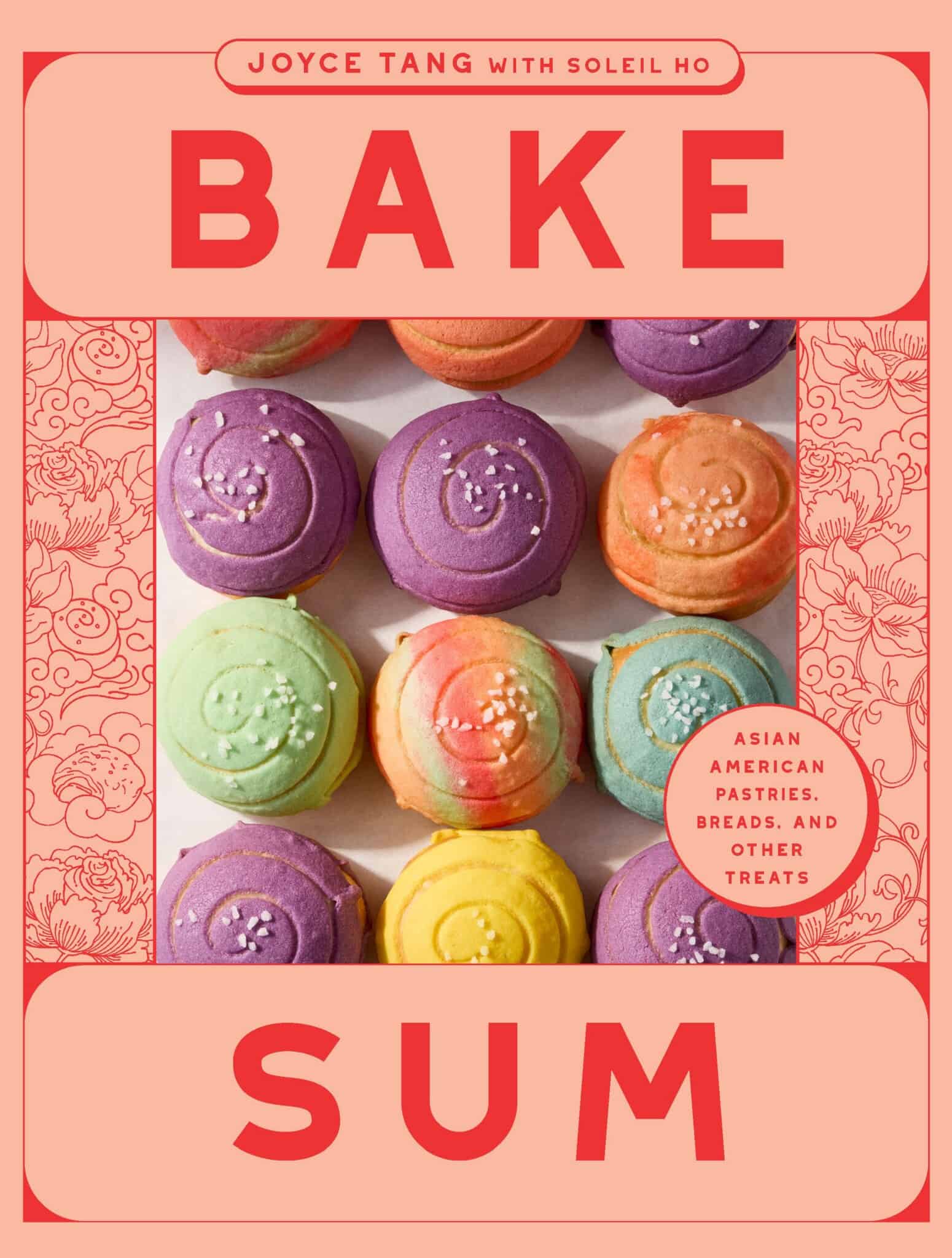 Now, Tang is continuing this mission in her cookbook, Bake Sum: Asian American Pastries, Breads, and Other Treats (now out), which features 75 recipes, including classic Asian puddings and jellies, layer cakes, breads, laminated pastries, and drinks. In addition, Soleil Ho, co-author and food writer based in Berkeley, California, contributed to the cookbook with essays about the history of some of the key ingredients and pastries featured in the book.
I sat down with Tang and Ho to discuss the two-year journey to bring this cookbook to life, the nuanced history of pastries, and how rejection proved to be redirection.
This interview has been edited for clarity and length.
Aleenah Ansari: Joyce and Soleil, you’ve been working on this cookbook together for two years. How did this collaboration come to be?
Joyce Tang: Serendipity. Almost two years ago, I decided that Bake Sum should have its own cookbook. I signed with an agent, and the first thing they said was, “You need a writer.” When I heard Soleil was potentially interested, it was an easy sell because I had read a lot of Soleil’s work for many years.
Soleil Ho: I was a fan of Joyce already, and I happened to be wrapping up the other cookbook I was working on. I was working at the San Francisco Chronicle as a contributing writer in the opinion section, so I had a lot of space for culinary writing outside of that.
AA: What was your approach to structuring the cookbook?
JT: It’s ordered from easy to hard, similar to how bakers are brought on board. We have beverages at the beginning because that’s the easiest place to dive in and purchase some of the ingredients that you may be less familiar with. Then, it moves on to pudding and jellies, which don’t have gluten, so all you have to do is mix and cook the ingredients. Then it moves on to milk breads and shaping milk breads, and then croissants and tarts.
AA: Tell me more about the introductory essay and how it sets the tone for the rest of the cookbook.
SH: In the introduction, I pushed Joyce to talk about how she moved from tech into the baking world and what motivated her. How is that labor different? I could relate to that. If you’ve been working within abstraction, and then you can make someone smile right in front of you in the physical realm, that means a lot. I treasure being able to share that perspective through this cookbook, especially one that is resonant to people in the Bay Area.


AA: Joyce, what was your journey of moving from tech to baking?
JT: It was something simmering in my head before I got up the courage to do it. I would beg the pastry chefs at the Facebook and Google kitchens to let me hang out with them, and they encouraged me to see if I was still interested in baking after seeing how physically demanding and mentally taxing that work could be. I worked at a bakery in the morning before going to work at Facebook, and then I worked on the dessert and salad line. I felt like I wasn’t committed enough because I was only doing it two days a week. In 2015, with the blessing of my husband, I decided to quit and enroll in culinary school. There was a long dip downward while I was figuring things out. I got a lot of rejections, but I got a couple of yeses, and a lot of folks were formative in my culinary journey.
AA: As you worked on this cookbook, was there a storytelling thread that emerged?
SH: What was so interesting about Joyce’s story was this question of how someone finds themselves in the world of pastries. Joyce takes the field of French pastry by the neck and brings herself and the flavors she and others care about, so much so that people ask, “Why wouldn’t people put the Spam in a croissant?” That narrative of redemption occurred during the course of writing the book.
JT: The earliest iteration of the croissubi (croissant with Spam) was made at a cooking commissary, and then I’d walk across the street and sell it at the biergarten. They’d ask what Spam is, and I’d explain that it’s pork shoulder in a can that kept a generation of people alive during wartime, and it’s a modern marvel of food engineering. A couple of years later, a New York Times food reporter called the croissubi one of the best dishes of 2024. It was a complete 180 from where I had been. It’s crazy that we can take so many steps forward in only a few years.
AA: In one interview, you talked about how the croissants at Bake Sum, your bakery, have 27 layers of butter, and that they take three days to make. That sounds like a labor of love.
JT: It’s true, it takes an incredible amount of labor, and I don’t think that most people realize that when they eat a croissant in under a minute or two. We’re sourcing cultured butter straight from France, and we mix, pre-ferment, laminate the dough by putting the layers of butter in, cold store it overnight so it’s proofed, and then add an egg wash. Our team is meticulous about getting every element right.


AA: How did you adapt the recipe for your croissubi, and others, for home bakers, or even novice bakers?
JT: If you don’t want to make your own croissant dough, I’ll show you how to do that with store-bought pastry dough. It’s an easy out if you don’t want to sign up for a couple hours' worth of work. If you’re going to make the okonomiyaki Danish, you can pick up puff pastry dough from the store. For the green onion croissant, you need something thicker, like Pillsbury Crescent.
We tested out recipes with our Instagram followers, who were split into beginner, intermediate, and advanced bakers. If the failure rate on a recipe was too high, it would be cut to help ensure that everyone could succeed with the recipes included.
AA: Do each of you have a recipe or section that you’re particularly attached to?
JT: I’m partial to the croissant after spending so much time with it. The recipe is very special, and I hope it finds a place in people’s homes and repertoires so it’s not just a recipe that gets stuck in a book.
SH: My favorite is the part we wrote about the history of conchas, which evolved from an enriched dough that came to Latin America during the colonial era and expanded into Asia because of the forced deportation of Chinese Mexican families during the Exclusion era. A lot of them were Chinese men who married Mexican women, and they sold baked goods in places like Macau and Hong Kong, and that’s how we have the pineapple bun, melon breads, and similar pastries.
AA: How did you decide to unravel the history of food in addition to recipes, especially the parts of history that are less savory?
JT: Authenticity is extremely fluid, and these recipes aren’t the only ones of their kind. What we have in the bakery is a culmination of shared history, culture, and migrations. Looking backward informs what we’re doing in the future and where we’re going. You can’t know where you’re going if you don’t know where you’ve been.
SH: I work on many cookbooks, and one commonality is the idea of looking back so you can go forward. Within the African diaspora, there’s this concept of sankofa—that it’s not wrong to look back and use the past as a way to go forward. That mindset enables the type of cooking that Joyce and her contemporaries do. It isn’t just about ingredients, but a bigger idea of reconciling themselves and their past selves in their work.
Published on September 3, 2026
Words by Aleenah Ansari
Aleenah Ansari (she/her) is equal parts storyteller, creative problem solver, and journalist at heart who's rooted in the stories of people behind products, companies, and initiatives. She’s written about travel, entrepreneurship, mental health and wellness, and representation in media for Insider, CNBC, The Seattle Times, Kulfi, and more. You can usually find her searching for murals in Seattle and beyond, reading a book by a BIPOC author, and planning her next trip to New York. Learn more at www.aleenahansari.com.