
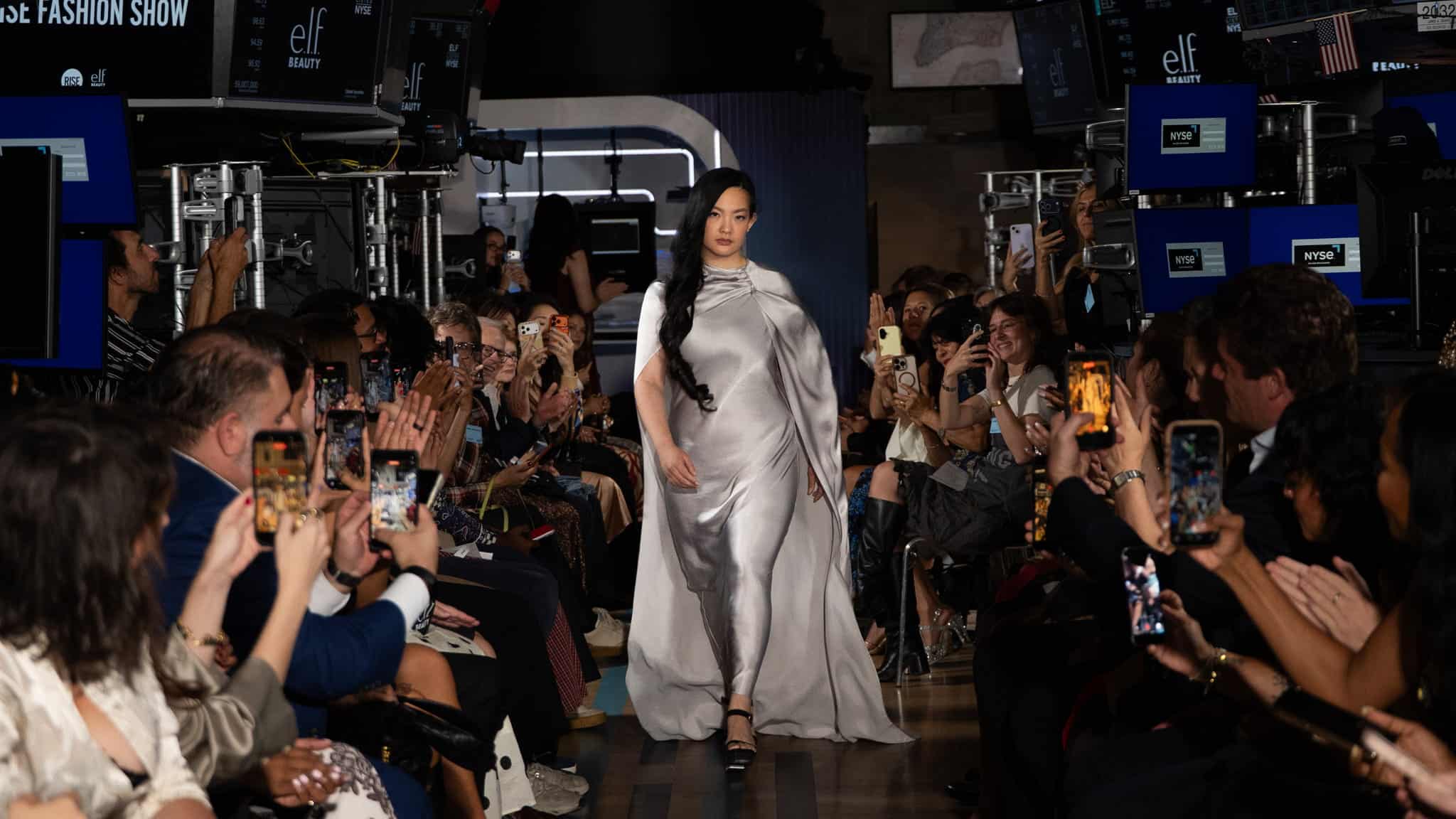
At New York Fashion Week, Amanda Nguyen asks, ‘What is the cost of sexual violence?’
The nonprofit Rise brought back its Survivor Fashion Show, using fashion to confront the financial and personal costs of sexual violence
Amanda Nguyen walking this year’s Survivor Fashion Show.
Courtesy of Rise

Words by Xintian Wang
On the trading floor of the New York Stock Exchange, where numbers ordinarily measure the rise and fall of companies, another calculation appeared across the monitors on Sept. 14: “What is the cost of sexual violence?”
This question was the central theme of this year’s Survivor Fashion Show, hosted by nonprofit Rise, which Amanda Nguyen founded in November 2014 to protect the civil rights of sexual assault and rape survivors. Held during New York Fashion Week in partnership with e.l.f. Beauty, the show brought astronauts, athletes, actors, and survivors onto the runway to draw attention to a cost that is harder to see on a balance sheet.
As a social entrepreneur, civil rights activist and the first woman of Vietnamese and Southeast Asian heritage to travel into space, Nguyen wears many hats. Long before she became an astronaut, she dreamed of going to space. But after she was raped as a college student studying national security at Harvard University, she had to put that dream on hold as she navigated the legal and emotional aftermath of sexual violence. That experience ultimately led her to campaign for stronger legal protections for survivors.
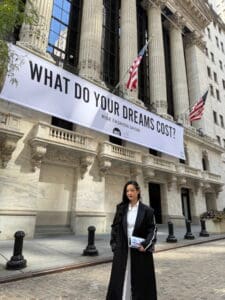
Amanda Nguyen.
Courtesy of Rise
In April 2025, Nguyen fulfilled her childhood dream of traveling to space aboard Blue Origin’s NS-31 mission. But she no longer sees that dream as a single destination. “I am unbelievably, profoundly grateful to know that dreams can come true,” she tells JoySauce. “I love space, and I will always love it. And I want to fly again. That dream isn’t just this one crowning moment. It is a true passion.”
That distinction runs through the fashion show. “What do your dreams cost?” Nguyen asked during her welcoming remarks. The cost of violence is not simply what happens in the immediate aftermath of an assault. It can follow survivors through the lives they are still trying to build.
According to a 2017 study by researchers at the Centers for Disease Control and Prevention, the estimated lifetime economic cost of rape is $122,461 per survivor (which comes out to about $167,467 today, when adjusted for inflation—though this does not reflect how underlying costs may have changed), amounting to a population-level economic burden of nearly $3.1 trillion (about $4.24 trillion in today’s dollars). Those costs include medical care, lost productivity, criminal justice expenses, and other related losses.
While most models walked without being individually introduced, several public figures chose to show up for the cause, including actor and activist Ashley Judd, Olympic champion foil fencer Jacqueline Dubrovich, Reading Rainbow host Mychal Threets, and Nguyen herself. Designers represented in the show included 3.1 Phillip Lim, Prabal Gurung, Kim Shui, Tanya Taylor, Veronica Beard, Bach Mai, and others. The show deliberately did not introduce most of the models walking the runway, emphasizing that anyone can be a survivor and that the costs of surviving violence can look different for every person.
But the show’s relationship to fashion goes beyond celebrity casting or designer clothes. Its origins lie in a question familiar to many survivors: “What were you wearing?” It is a phrase that can carry completely different meanings depending on who is asking. On a red carpet or at a fashion show, “Who are you wearing?” can invite someone to talk about taste and self-expression. Directed at someone after an assault, “What were you wearing?” can suggest suspicion and victim blaming.
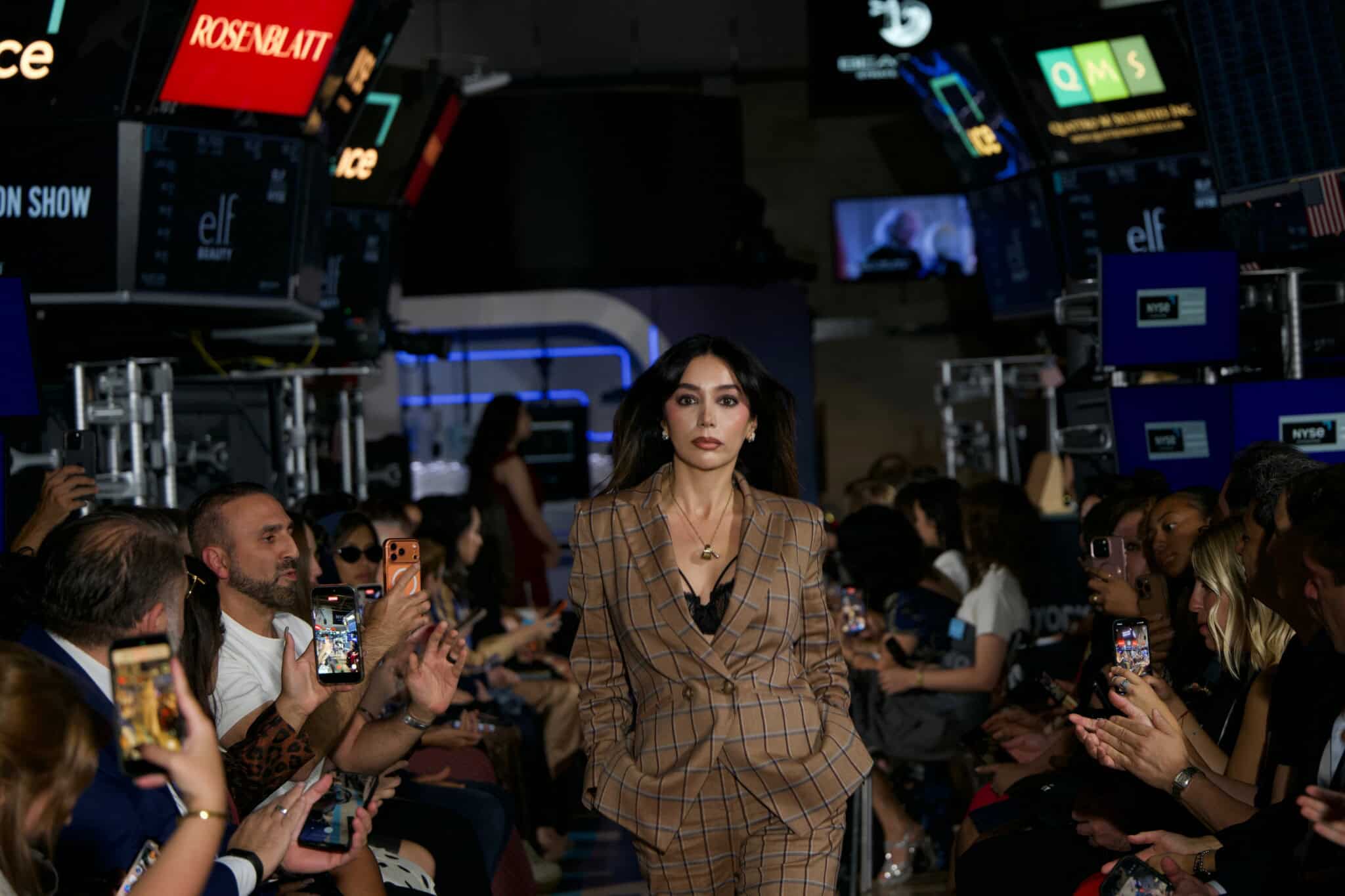
Iranian writer, actor, and entrepreneur Shima Katouzian.
Courtesy of Rise
Nguyen remembers recognizing that contradiction while attending a fashion show. “There was a specific moment where I realized I wanted to reclaim the question,” she says. Someone complimented her outfit and asked who she was wearing. The experience of answering from a place of pleasure felt strikingly different from hearing similar words after her rape. “These are the exact same words,” Nguyen recalls thinking. “In one context, it’s celebrating you. And the other one, it’s shaming you.” She wanted other survivors to experience that reversal. Rise first presented its Survivor Fashion Show as performance art at New York’s Museum of Modern Art in 2021, transforming fashion into a vehicle for reclaiming a question historically used against survivors.
Nguyen’s own relationship with clothes has changed, too. “Clothing absolutely is personal,” she says. “To me, clothing can be armor.” As someone from an underrepresented community working in advocacy spaces, Nguyen said she once felt pressure to code switch and dress in formal business attire to be taken seriously, particularly when testifying before state legislatures or at the United Nations. Over time, she began thinking differently about what professionalism could look like.
“Now, I have realized that there is power to leaning into authenticity, and that’s how I want to choose to express myself,” she says. That has included wearing the traditional Vietnamese ao dai while testifying at the United Nations and bringing pieces of her family history into some of the biggest moments of her career. When Nguyen went to space, she wore a necklace she made with seashells from the island where her mother had lived as a refugee. “She came on a boat, and I was able to fly on a spaceship,” Nguyen says. “That represents to me that all dreams are possible, no matter who you are or where you come from.”
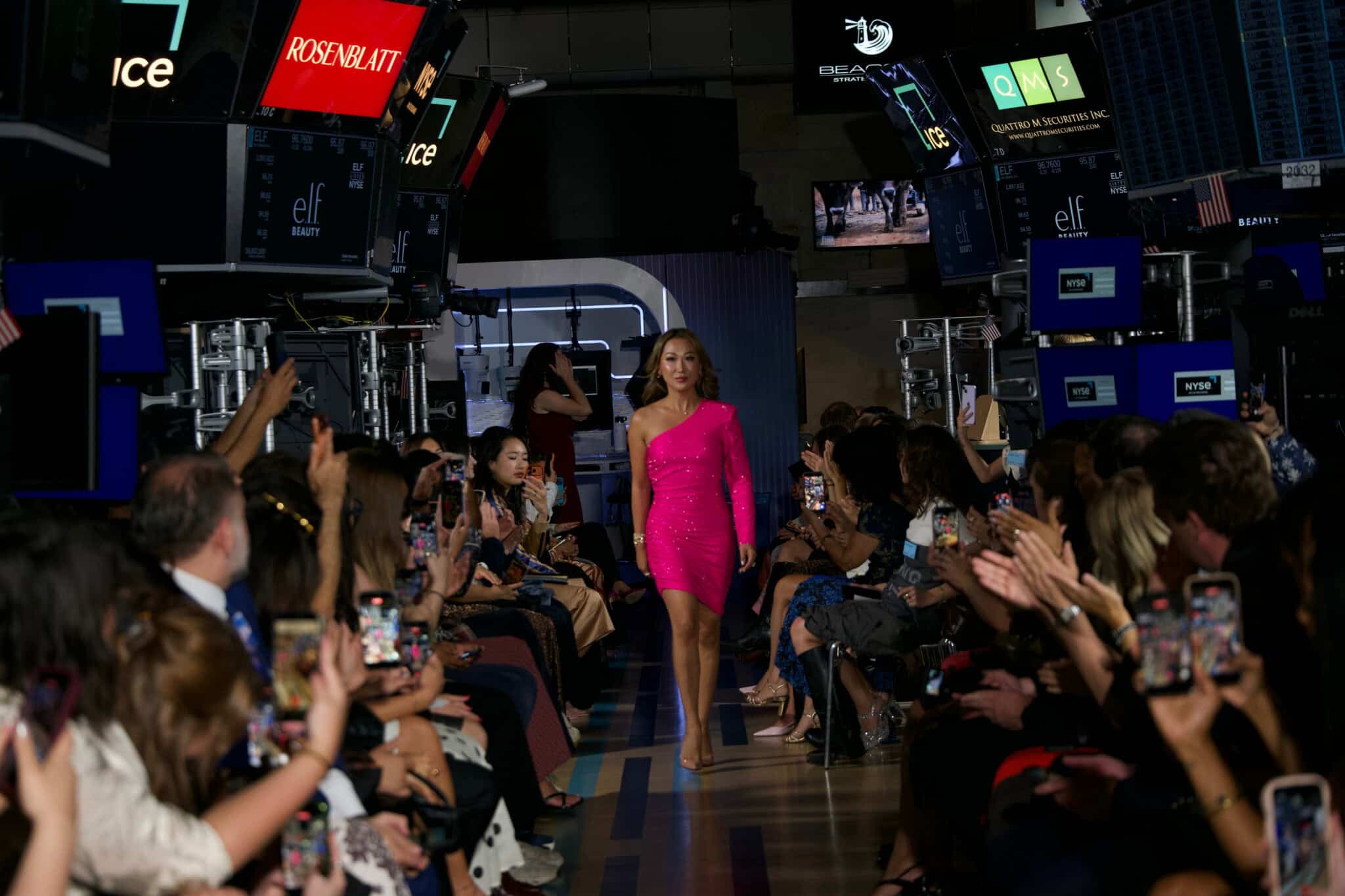
Anesthesiologist, entrepreneur, and author Tiffany Moon.
Courtesy of Rise
For Nguyen, however, ambition has never existed separately from the expectations she grew up with. She says her family and cultural upbringing “1,000 percent” shaped the way she initially responded to trauma. As a girl, Nguyen remembers her mother telling her that obedience and not talking back were among the most important qualities she could possess. “I absolutely revolted around the expectations of staying quiet,” she says. The combination of those expectations and the sexual violence she experienced became, in her words, “a pressure cooker.” Nguyen explores those experiences in her memoir, Saving Five: A Memoir of Hope (2025), including the guilt that can accompany telling a story that involves people one still loves.
For Asian American women who may recognize similar pressures around obedience, family expectations, and achievement, Nguyen’s advice is especially resonant: “Your stories matter. What you want matters.”
The fashion show widened that invitation beyond its recognizable names. Danette Batiste and Myra Betron also walked the runway after being chosen through Next Runway Star, a digital charity competition that drew 72,000 applicants and invited people across ages, body types, and levels of modeling experience to compete for a place in the show.
Their presence reinforced the premise behind Rise’s work: survivors should not be reduced to what happened to them, and role models do not have to fit a single image. On Oct. 7, 2016, Nguyen and the Rise team helped pass the Sexual Assault Survivors’ Bill of Rights unanimously through Congress. Since then, the organization’s Team America campaign has worked to pass survivor-rights legislation at the state level across the country. Since its founding, Rise says its advocacy has helped pass more than 129 laws affecting more than 106 million survivors.
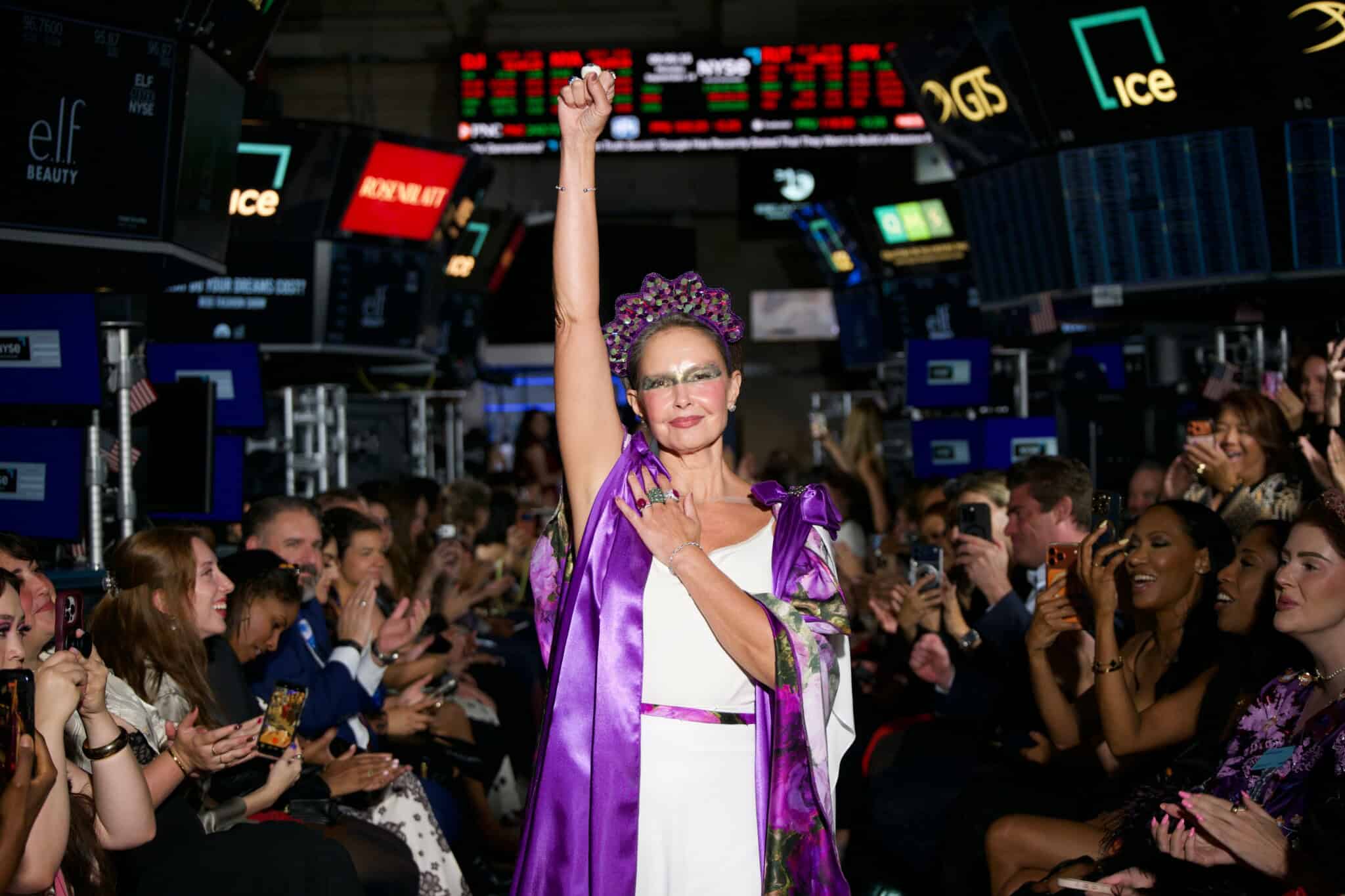
Actress Ashley Judd.
Courtesy of Rise
Still, public victories are only one version of recovery. “I definitely heal out loud,” Nguyen says. “There’s a reason why people want to keep us quiet.” But healing, she adds, also happens away from legislation, cameras and public recognition. It can mean making something she enjoys to drink, reading a good book, or spending time in nature. “It is the amalgamation of small healing moments,” she says, “that I think have built a foundation.”
For Nguyen, reaching space did not close her story. Her journey to illuminate for the community had only entered a new chapter.
Published on September 23, 2026
Words by Xintian Wang
Xintian Tina Wang is a bilingual journalist covering cultural stereotypes and innovations, including gender and sexuality, arts, business, and technology. Her recent work appears in TIME, ARTNews, Huffpost, Teen Vogue, VICE, The Daily Beast, Inc. Magazine etc. She is also the board director for the Asian American Journalist Association (AAJA) New York Chapter. As a journalist of color and a visual storyteller, she is constantly speaking for cultural minority groups whose voices are buried in mainstream discourses. Her documentary Size 22 won the "Best Short Documentary" at the Boston Short Film Festival and an "Audience Award" at the New England Film Festival. Her photography work is featured in TIME, HuffPost, The Sunday Times, Air Mail, etc. Visit her website at www.xintianwang.net.