
‘All of a Sudden’ taught Ryūsuke Hamaguchi and Virginie Efira to be present
The film's director and one of its lead actresses discuss its spiritual undertones and how it sees talking as a movement
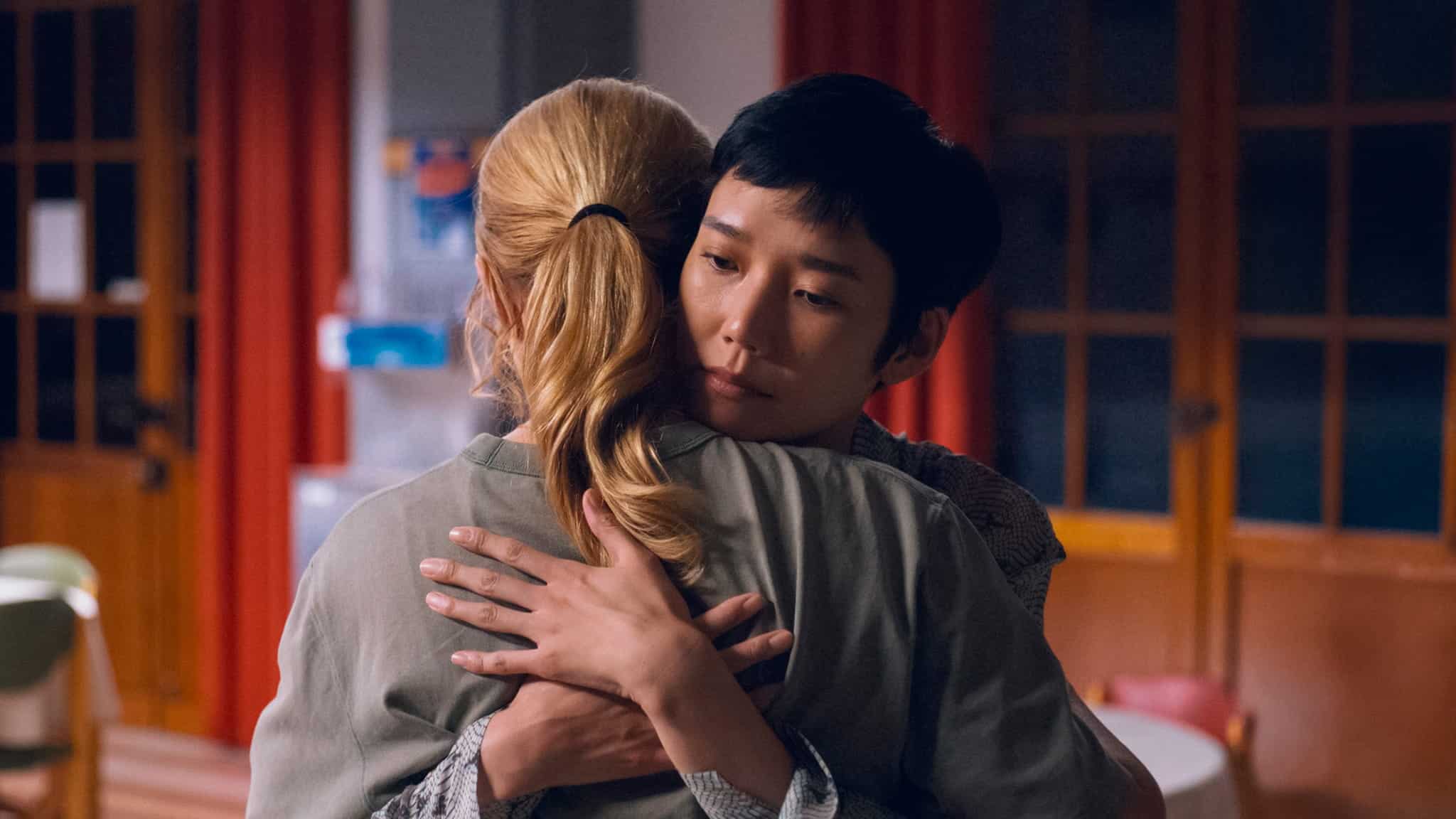
From left, Virginie Efira as Marie-Lou Fontaine and Tao Okamoto as Mari Morisaki in "All of a Sudden."
NEON

Words by Zachary Lee
Editor’s note: All of a Sudden is part of the San Diego Asian Film Festival and will screen at 12:15 p.m. PT on Nov. 7.
Director Ryūsuke Hamaguchi’s All of a Sudden is a tender, 196-minute journey that follows the musings, realities, and livelihoods of Marie-Lou Fontaine (Virginie Efira) and Mari Morisaki (Tao Okamoto), a terminally ill Japanese playwright. Marie-Lou runs a nursing home in Paris that is characterized by its unconventionally compassionate care for its dementia patients, which causes some clashes among her colleagues who are used to systems that are faster paced. When she meets Mari via an actor, Tomoki (Kodai Kurosaki), the two strike up a conversation, discussing everything from the impact of late-stage capitalism to what reimagining health care can look like.
What we see is friendship come to full bloom, and the film’s languid, tranquil pace invites us to see the world anew: not as a resource to exploit, but a gift to cherish.
Since its premiere at Cannes, All of a Sudden has been traveling the festival circuit, with its latest stop at the San Diego Asian Film Festival, as part of the Masters section. While Hamaguchi and Efira presented the film at the New York Film Festival, I spoke with them—through translators Aiko Masubuchi and Assia Turquier-Zauberman—about framing talking as an action, the spiritual undertones of the film, and how the film has shaped what it means for them to be present in a fast-paced world.
This interview has been edited for clarity and length.
Zachary Lee: Both of you have discussed how the body, particularly the face, has its own language, and Virginie, you’ve spoken about how “talking is a movement.” Can you both speak more to this idea, about how you approached depicting conversation, which can easily be portrayed as passive, but in this film, radiates it with a kind of tactility and physicality?
Virginie Efira: As a spectator, what really moves me is when I see somebody whose thoughts and body seem to somehow be in synchronicity, or when you see them moving together. I think of the moment when we see the characters lock and hold hands; when people vibrate at the same place and work symbiotically together, it’s quite beautiful.
Interestingly, Hamaguchi has come to France to make a film that is so based on language because we have such a tradition of it with figures like Éric Rohmer and Jean Eustache. For filmmakers like that, conversation is always seen as a filmic object. It ties back to the idea that thought itself is movement. We start from someplace, and we end up somewhere else, and there's this going toward that drives it on. If that going forward is just and right, then the body will follow, and it becomes a physical movement too, so those ideas were influencing the “activeness” you’re describing in our scenes.
It is rare for the two speaking subjects to be two women who are going to be taking on a conversation about very big questions, but also very big emotions without that emotion being based in romantic love. That is not something that we get a lot of.
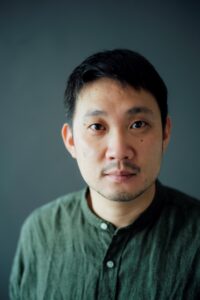
Director Ryūsuke Hamaguchi.
Courtesy of NEON
Ryusuke Hamaguchi: As you and Virginie have said, conversation or talking is a movement in themselves, and I think really Rohmer is the filmmaker that taught me about that. Until then, I would say whenever I was writing a script for me, I could never really be inspired to write a script from an image; usually I would have to start from dialogue. By watching Romer's films, I realized that words can really move people and that movement can be born from words. There’s something beautiful and alluring about that.
There was an issue that I faced, though, which is that Japanese people don't tend to move too much. But in this film as well, if you actually watch the film and look at where the peak of the emotions happens, you realize that the two women are not moving that much either. There is still something that is moving, even if it's internal. Even from a material point, yes, the lungs are moving, the gut is moving, but when those things move, it creates a change in their voices. So the “movement” appears in how their voices change. I think you can really understand and feel the depth of people's emotions through somebody's voice.
ZL: Virginie, this may be an odd comparison, but watching this film made me think about a work of yours, Benedetta, because that is a project that focuses on spirituality and the body, not unlike this. How do you feel like working on these two projects—and I’m sure there are others from your filmography that are kismet—reshaped your approach to exploring spiritually cinematically?
RH: I actually want to speak on this first [Laughs]. For me, to hear you compare the film with Benedetta actually makes me very happy because I love the film and, of course, I love Virginie in it. She carries the film, and having seen this film, it made it easy for me to cast her. A similarity that I see personally is that both All of a Sudden and Benedetta are roles that require the actor to really throw themselves into the role, into the situations she finds herself in, and be open to transformation through the process of total surrender. That is something that the characters do share in common, and whether to call that spirituality or not, there's something sort of spiritual about that.
VE: I like that when different films have a dialogue and are in conversation because it means that the characters are in conversation. I think both characters, Benedetta Carlini and Marie-Lou Fontaine, what they fundamentally share is a sense of mission. They have something to fulfill, and then beyond that, they’re grappling with this question of “What does it mean to be a believer?” They wrestle with what it means to have faith and commitment.
You also have this relationship between them in how they’re striving and reaching for something that goes beyond individual destiny. They’re seeking a kind of metaphysical totality that also goes beyond their individual service. I think what Paul Verhoeven and Hamaguchi share is a certain amount of trust in what the film is going to be. I think that one of the qualities that allows these films to carry such spiritual possibilities is that their trust—or faith—means that they're not afraid of the participation of each person on the crew. They're not afraid of what the actors might bring to the table because they understand that nothing's going to be taken away from them.
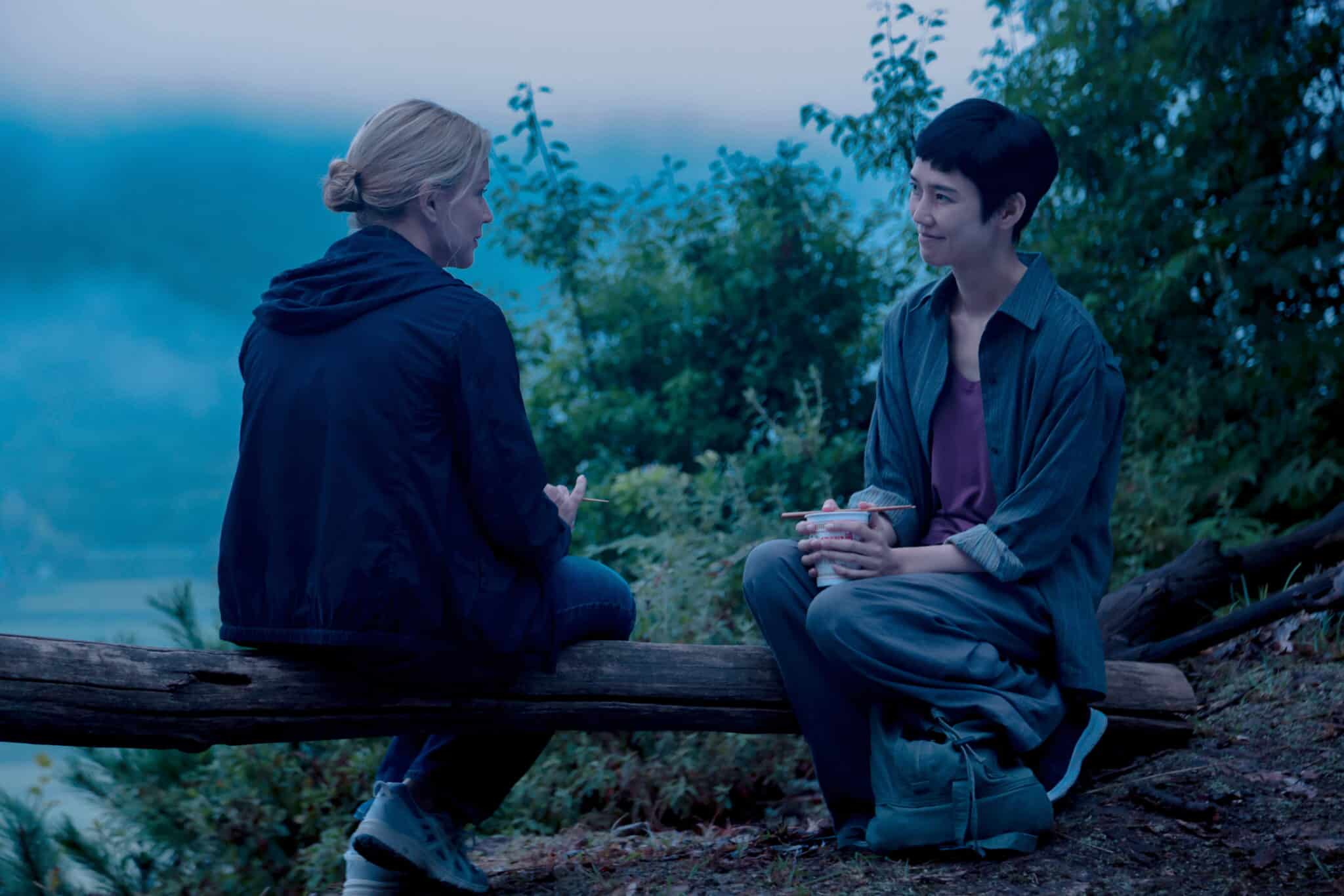
"All of a Sudden" follows the blooming friendship between Marie-Lou Fontaine and Mari Morisaki.
Courtesy of NEON
ZL: There’s a striking moment in the film where Mari breaks down the tenets of capitalism and says that capitalism only makes us think about “the here and now.” It makes me think about how so much of our lives, everything is so hurried, immediacy is king, that it can be hard to have the faith to embody patience. What helps you resist, what gives you the ability, despite a culture that forces you to think about the here and now, to consider what lies beyond?
RH: I can try to speak to this as a filmmaker. I don't think it's always a bad thing to be in the here and now, and I think that goes without saying in a way. In fact, I want my actors to be very present and here and be concentrated on that present, and I think it's my job to create an environment for the actors to be able to do that. I think oftentimes actors are placed into situations where they're unable to concentrate in the present because what it means to be in the present is that you have to dive into the situation, as we talked about earlier, and be vulnerable to change, ultimately, vulnerable to transformation that happens. To be vulnerable is to be able to be in a situation or a condition where you could get hurt. I think that's why it's really difficult to be in these conditions.
When considering how to make the process of being present easier, I think it comes down to trying not to think about unnecessary things. I think when we consider the here and now, what becomes really important is to be able to present our emotions directly and without fear. When I think about the context of a film set, if an actor is not present, they may try to solve an issue in the moment by thinking about how they solved an issue in the past. They might bring in a certain kind of way of acting that has been sort of the correct answer in the past. I want to create conditions where that doesn't have to happen. I know my power is limited in that respect, and one person cannot change the environment by themselves, but one person can try to support the other or help the other.
VE: What is striking to me when I hear you speak is that there is something paradoxical that occurs where I think you can have the clearness of mind and lucidity to see that a situation is hopeless and still not be resigned to it. Stressing that contradiction was important. When I worked on this film, I brought into it my anxieties, and there was something so refreshing and life giving about a movie that was championing the importance of looking at each other. Reading the script and watching the film put these ideas close to my heart, but it’s easy to forget; you work on other projects, you live a normal life, and those ideas seem far away. I’m wondering what ways I can keep reminding myself of what I learned in a previous “here and now,” even while I live in my actual “here and now.” I think part of what has helped is traveling with this film; I meet people who tell me a sentence of the movie, and when that dialogue is spoken back to me, I am reminded of the simplicity and potency of Marie-Lou’s and Mari’s relationship.
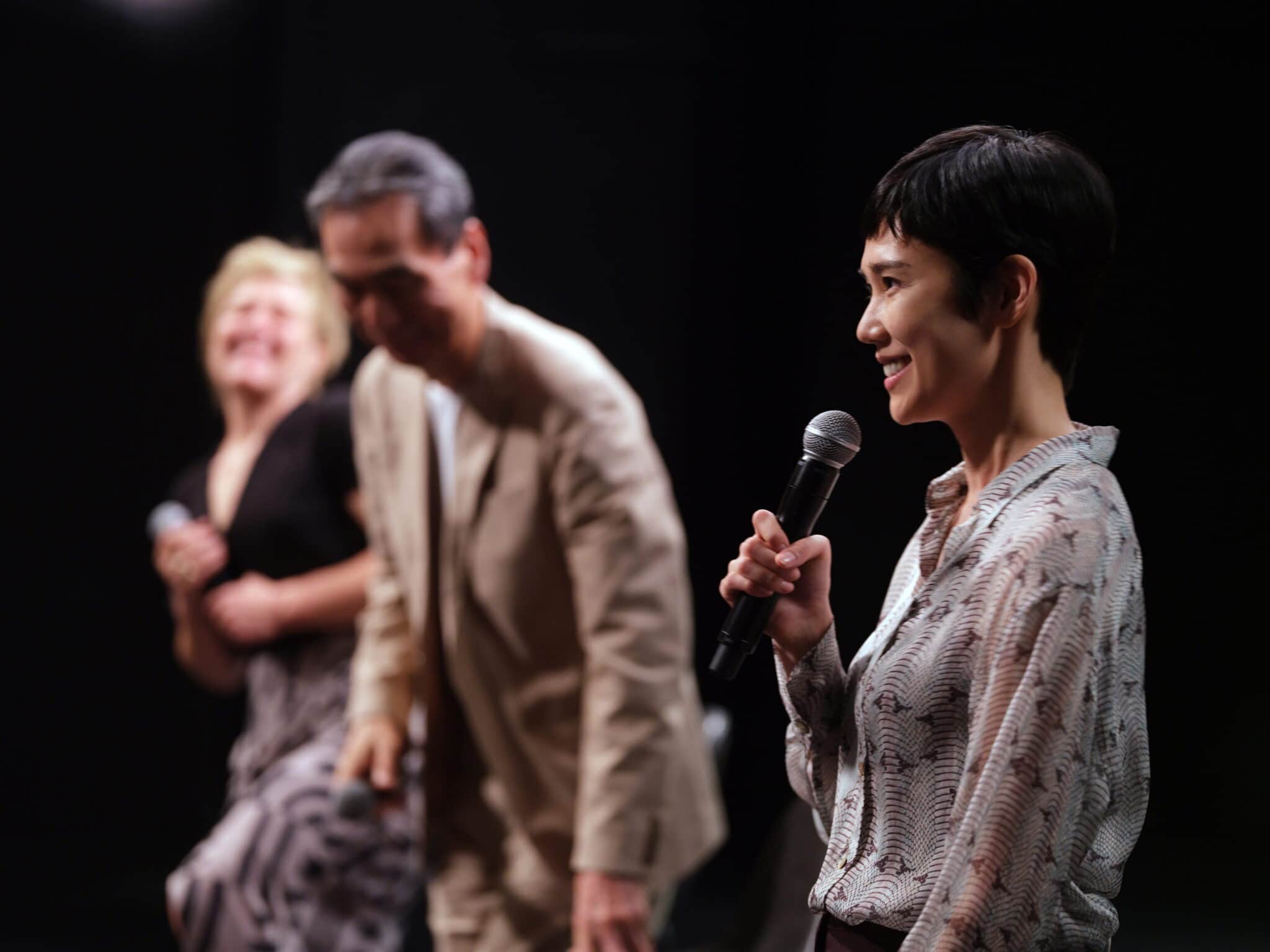
"All of a Sudden" premiered at Cannes and is part of the San Diego Film Festival.
Courtesy of NEON
RH: If I can add one thing, something I thought about as I was listening to Virginie talk is that in the scene where Mari's talking about capitalism and the issues of capitalism, she's talking about the “here and now” within this context that capitalism makes it seem as if that here and now is “working” by exploiting the resources that are happening outside. We of course know that it’s not working; the resolution is fake. What Mari is saying is that what we actually need to do is to have a real sense of here and now, and that might mean actually listening, actually looking at somebody, to take back the kind of time and action to ourselves.
Published on November 4, 2026
Words by Zachary Lee
Zachary Lee is a freelance film and culture writer based in Chicago. You can read his work at places like RogerEbert, The Chicago Reader, Dread Central, Sojourners, and The National Catholic Reporter. He frequently writes about the intersection between popular culture and spirituality. Find him hopelessly attempting to catch up on his watchlist over on Letterboxd.